
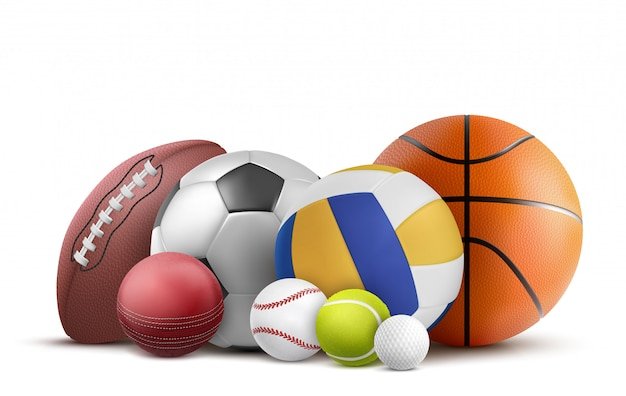
Soccer and basketball are two of the world’s most recognizable team sports, but they create very different kinds of games. Soccer is played primarily with the feet on a large field, while basketball is played primarily with the hands on a much smaller court. Soccer typically produces fewer scoring events and longer stretches of continuous play. Basketball produces more possessions, more frequent scoring, and more substitutions and stoppages. Both sports reward speed, coordination, awareness, teamwork, conditioning, and technical skill. Yet the way those abilities are used differs substantially. A soccer player may run and reposition for long periods without touching the ball, while a basketball player is involved in a much denser sequence of passes, screens, dribbles, rebounds, and shots. This updated comparison explains the rules, playing areas, scoring systems, positions, physical demands, strategy, equipment, substitutions, fouls, and practical differences between soccer and basketball using current IFAB and FIBA rules. This soccer vs basketball guide keeps that focus central to the discussion.
Soccer vs. Basketball at a Glance
| Feature | Soccer | Basketball |
|---|---|---|
| Players on court/field | 11 per team | 5 per team |
| Main ball control | Feet, head, torso; goalkeeper may use hands in penalty area | Hands |
| Playing area | Large rectangular field | Smaller hard court |
| Typical game length | Two 45-minute halves plus added time | Four 10-minute quarters under FIBA rules |
| Scoring | 1 goal per score | 1, 2, or 3 points |
| Substitutions | Limited according to competition rules | Frequent substitutions during stoppages |
| Goal/basket | Large goal at ground level | 18-inch rim mounted 10 feet high in standard adult play |
| Pace | Continuous, lower-scoring, space-oriented | High-possession, high-scoring, transition-heavy |
How Many Players Are on Each Team? Under the Laws of the Game, soccer is played by two teams with no more than 11 players each, one of whom must be the goalkeeper. Basketball is played with five players from each team on the court. Teams also have substitutes who can enter during permitted stoppages. The difference in team size is partly related to the playing area. Soccer players must cover a much larger surface, which encourages broader positional specialization and spacing.
Playing Area: Soccer Field vs. Basketball Court
The International Football Association Board allows a range of soccer-field dimensions. Under the 2026/27 Laws of the Game, the touchline must be longer than the goal line. For international matches, the field length is generally 100–110 meters and the width 64–75 meters. FIBA’s standard basketball court is 28 meters long and 15 meters wide. This enormous difference in space changes nearly everything about the sports. Soccer requires long-distance movement and large-scale positional awareness. Basketball requires rapid reactions in crowded spaces. Soccer transitions may unfold across 60 or 80 meters. Basketball transitions can reach the other basket within seconds. How the Ball Is Used: The most obvious difference is the part of the body used to control the ball. In soccer, outfield players generally use their feet, legs, torso, and head. Deliberate handling by an outfield player is restricted. Goalkeepers have special permission to use their hands within their own penalty area, subject to the laws. Basketball players handle the ball directly with their hands. They pass, dribble, shoot, and rebound using hand-eye coordination. This makes the technical learning curve different. Soccer players must develop foot-eye coordination and control a moving ball without grabbing it. Basketball players must learn dribbling while moving, shooting mechanics, passing angles, and ball protection. How Scoring Works: Soccer: A goal is scored when the whole ball crosses the goal line between the goalposts and under the crossbar, provided no offense occurred in the buildup. Each goal counts as one. Basketball: Basketball has multiple scoring values: 1 point for a successful free throw. 2 points for a field goal made from inside the three-point area. 3 points for a field goal made from beyond the three-point line.
Because basketball produces many more scoring attempts, individual possessions matter differently. A soccer team can dominate play and still lose 1–0. A basketball team has far more opportunities to recover from one defensive mistake. For current rules, the comparison should follow the governing bodies rather than informal summaries. Soccer’s official framework is set out in IFAB — Laws of the Game: The Players, IFAB — Laws of the Game: The Field of Play, and IFAB — Laws of the Game: Duration of the Match. Basketball rules vary by competition, but FIBA — Basketball and FIBA — Official Basketball Rules and Resources provide the international baseline used throughout this comparison.
Game Duration
A standard soccer match consists of two 45-minute halves. The referee adds time for substitutions, injuries, disciplinary delays, goal celebrations, video reviews where applicable, and other significant interruptions. Under current FIBA rules in force before the new 2026 edition takes effect on October 1, 2026, basketball is played in four 10-minute quarters. If the score is tied, overtime periods are used until a winner is determined. Basketball’s game clock also stops in many situations, so 40 minutes of official playing time takes considerably longer in real time. Positions in Soccer: Soccer positions are commonly grouped into four broad categories: Goalkeeper. Defenders. Midfielders. Forwards. Modern roles are more specialized. A fullback may become an attacking wingback, a central midfielder may operate as a defensive pivot, and a forward may drop into midfield to create space. Unlike older descriptions of the sport, it is not accurate to say soccer players are strictly “offensive” or “defensive.” Modern teams defend and attack collectively. Forwards press defenders, and defenders may contribute heavily to buildup and set pieces. Positions in Basketball: Traditional basketball positions are: Point guard. Shooting guard. Small forward. Power forward. Center. Modern basketball has become more positionally flexible. FIBA notes that players increasingly perform multiple roles. A taller player may handle the ball, while a guard may switch defensively onto larger opponents.
Which Sport Requires More Running?
Soccer generally involves greater total distance because of the field size and continuous nature of play. Players repeatedly move between walking, jogging, running, and sprinting. Basketball covers less total distance but involves more frequent accelerations, decelerations, jumps, cuts, and changes of direction in a confined area. So “which is harder?” depends on the type of physical demand: Soccer emphasizes aerobic endurance and repeated long-range movement. Basketball emphasizes repeated explosive efforts, jumping, lateral movement, and short recovery periods. Endurance vs. Explosiveness: Elite players in both sports require a mixture of aerobic and anaerobic fitness. A soccer midfielder may need to sustain high work rates across 90 minutes while repeatedly accelerating into space. A basketball guard may need to sprint, stop, change direction, defend, jump, and then immediately initiate another possession. Training therefore differs even when both athletes are considered highly conditioned. Substitutions: Basketball substitutions are frequent and can be used to manage fatigue, fouls, matchups, and tactical situations. Soccer substitutions are more limited and controlled by competition regulations. Once a player leaves in most senior competitions, that player generally cannot return, although youth and recreational rules may allow return substitutions. This makes fatigue management more strategically important in soccer. Coaches cannot rotate players every few minutes in the same way basketball coaches can. Fouls and Discipline: Soccer: Soccer fouls can lead to direct free kicks, indirect free kicks, penalty kicks, yellow cards, or red cards. A red card removes the player from the match and leaves the team with fewer players for the remainder of the game, except under specific competition protocols where applicable. Basketball: Basketball uses personal, technical, and other categories of fouls. A player who reaches the applicable foul limit can no longer participate in the game. Team fouls can also lead to free throws, meaning discipline affects not only individual availability but the opponent’s scoring opportunities.
Possession and Turnovers
Basketball possessions are more clearly defined. Teams repeatedly alternate control of the ball, and shot-clock rules require an offensive team to attempt a shot within a limited period. Soccer has no equivalent possession clock. A team can circulate the ball for an extended period as long as play remains legal. This creates different strategic questions. In basketball, coaches ask: How efficiently are we using each possession? Can we create a high-value shot before the shot clock expires? Can we force a turnover? In soccer, coaches may focus on: Can we progress the ball through pressure? Can we create numerical superiority in certain areas? When should we accelerate an attack? When should we retain possession? Why Soccer Is Usually Lower Scoring: The soccer goal is physically large, but scoring is difficult because players cannot normally use their hands, goalkeepers protect the target, defenders can block shots, and the attacking team must often move the ball through a much larger area before creating a high-quality chance. Basketball scoring is more frequent because teams reach shooting range quickly, players can control the ball with their hands, and the possession structure creates repeated attempts. Low scoring does not mean soccer is determined mainly by luck. Skill, tactics, finishing, defensive organization, goalkeeper performance, set pieces, and randomness all contribute. Because goals are rare, however, one unusual event can influence the final result more strongly than one isolated basket usually does. Equipment: Soccer: Basic soccer equipment includes: Ball. Goals. Shin guards. Appropriate footwear. Team uniform. Basketball: Basic basketball equipment includes: Basketball. Hoops and backboards. Marked court. Appropriate shoes. Team uniform.
Informal versions of both sports can be played with much less equipment. Soccer can be improvised with an open space and two markers for goals. Basketball requires a hoop, but a small hard-surface court can support many players in a compact area. Goal Size vs. Basket Size: A standard full-size soccer goal is 7.32 meters wide and 2.44 meters high, equivalent to 24 feet by 8 feet. A standard basketball rim is 18 inches in internal diameter and is mounted 10 feet above the floor in adult regulation play. The original article compared these targets but implied that their size alone explained scoring. The more meaningful difference is the complete scoring environment: legal ball control, goalkeeper presence, shooting distance, defenders, field size, shot frequency, and possession rules. Strategy in Soccer: Soccer strategy involves formations, spacing, pressing, transition, buildup, set pieces, defensive compactness, and management of field zones. Common formations include 4-3-3, 4-2-3-1, and 3-5-2, although formation numbers cannot fully describe how a team behaves. Teams may: Press high. Defend in a low block. Build through short passes. Use direct long passing. Attack through wide areas. Control possession. Counterattack quickly. For another discussion of football and youth participation, see MyArticles’ Rogerian argument on children playing football. Strategy in Basketball: Basketball strategy is more possession-oriented and can be adjusted repeatedly during stoppages. Common offensive ideas include: Pick-and-roll. Spacing. Motion offense. Post play. Fast breaks. Drive-and-kick action. Defenses may use man-to-man coverage, zone concepts, switching, trapping, or combinations depending on the opponent and competition. Which Sport Is Easier to Start Playing? At a basic recreational level, both are accessible. Soccer can be easier to organize outdoors because almost any open area can become a temporary field. Basketball requires a hoop and reasonably hard playing surface, but smaller numbers of players can have a complete game in less space. Learning basic competence depends on the individual. Some people find hand control more intuitive; others enjoy kicking and running.
Injury Considerations: Both sports involve injury risk. Soccer commonly involves lower-extremity injuries associated with running, cutting, tackling, and kicking. Basketball also produces ankle and knee injuries, along with finger injuries and impacts associated with jumping and contact. Risk varies with age, competition level, playing surface, training load, technique, and conditioning. Warm-ups, progressive training, appropriate footwear, and adequate recovery can help reduce preventable risk. Soccer vs. Basketball for Young Players: For children and teenagers, the best sport is usually the one they enjoy enough to keep playing. Soccer may appeal to young athletes who enjoy: Outdoor space. Continuous movement. Foot skills. Team shape and passing over distance. Basketball may appeal to those who enjoy: Frequent touches. Fast scoring. Hand-eye coordination. Jumping and rapid direction changes. Playing multiple sports can also develop a wider range of movement skills. Which Sport Is More Tactical? Both are highly tactical, but the tactics operate at different scales. Soccer strategy unfolds over a large field with 22 players and relatively few stoppages. Players must solve positional problems while the game continues. Basketball strategy unfolds in a smaller space with 10 players, repeated possessions, set plays, and more opportunities for coaches to intervene. Calling one sport “more tactical” usually reflects familiarity rather than an objective difference.
Conclusion
Soccer and basketball are built around very different constraints. Soccer spreads 22 players across a large field, limits most players from using their hands, and creates a low-scoring contest in which space and patience are critical. Basketball concentrates 10 players on a small court, allows direct hand control, and produces rapid possessions and frequent scoring. Neither sport is simply a matter of skill versus luck, offense versus defense, or endurance versus speed. Both demand technical ability, conditioning, tactical awareness, communication, and teamwork. The better choice for a player depends on personality, available facilities, preferred movement style, and enjoyment. For spectators, the contrast itself is part of the appeal: soccer builds tension through scarcity, while basketball creates drama through constant change.