
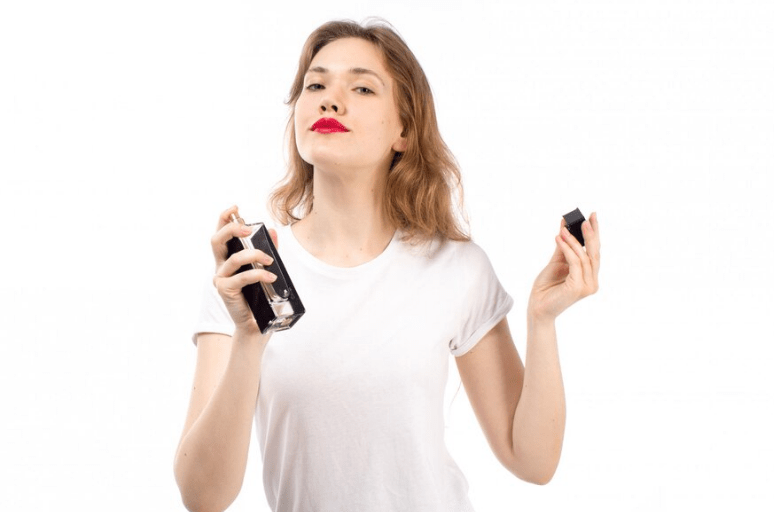
Fragrance is personal, but the air around you is shared. A perfume that feels subtle after you have worn it for an hour can still be very noticeable to someone sitting beside you in an office, restaurant, aircraft, clinic, classroom, train, theater, or rideshare. Good scent etiquette is therefore not about memorizing one universal number of sprays. It is about adjusting fragrance strength to distance, ventilation, duration of exposure, the type of setting, and the fact that other people may not be able to move away. There is also a genuine health and accessibility dimension. Fragrance reactions vary widely, and the science around specific mechanisms is complex, but major health organizations acknowledge that some sensitive individuals report headaches, migraine, respiratory irritation, wheezing, nausea, or asthma symptoms around fragranced products. The U.S. EPA notes that fragrance exposure can cause asthma episodes and other adverse effects in some sensitive people, while the American Lung Association advises fragrance reduction for people affected by indoor-air pollutants. Courtesy therefore has a practical health benefit even when you personally enjoy strong scents.
The Best Rule Is to Keep Fragrance Inside Your Personal Space
A useful target is that people who come close to you can notice the fragrance, while someone several desks away does not. The University of Toronto’s scent guidance offers an especially practical benchmark: if scented products are used, the scent should generally not be detectable more than about an arm’s length away. This is not a scientific dose limit, but it captures the etiquette goal well—fragrance should accompany you rather than occupy the entire room. Large outdoor venues can tolerate more projection than an elevator or small meeting room. The same perfume and number of sprays can therefore be appropriate in one environment and intrusive in another. Nose Blindness Is Why People Accidentally Overspray. Olfactory adaptation means you notice a familiar scent less after continuous exposure. The wearer may believe the fragrance disappeared while people entering the room can still smell it immediately. Reapplying simply because your own nose stopped detecting the perfume is one of the most common ways a moderate fragrance becomes overwhelming. Before adding more, step into fresh air, wait a few minutes, or ask someone you trust whether the scent is still noticeable. A fragrance that lasts six or eight hours rarely needs repeated full applications through the day. Projection and Sillage Are Not the Same. Projection describes how strongly a fragrance radiates around the wearer, while sillage describes the scent trail left behind as the person moves. A fragrance can remain relatively close to the skin while still leaving a noticeable trail on clothing, or it can project strongly for the first hour and then settle down. Concentration, formula, skin temperature, weather, fabric, and application all affect both behaviors. This is why concentration labels such as eau de toilette, eau de parfum, and parfum are only rough clues. One bright EDT can project more aggressively than a dense parfum. Test the actual fragrance rather than assuming the label tells you exactly how many sprays are polite.
Offices and Shared Workplaces Require Restraint
Work is one of the settings where scent etiquette matters most because coworkers may spend eight hours nearby and cannot always move desks. Apply fragrance before arriving rather than spraying it at the workstation, avoid reapplication in shared bathrooms or elevators, and follow fragrance-free or scent-reduction policies even if your own perfume seems mild. If a colleague says the fragrance is triggering headaches, coughing, migraine, or breathing difficulty, the courteous response is to reduce or stop wearing it in that environment. You do not need to decide whether the person’s reaction is “real enough.” Shared-space etiquette is about reducing avoidable discomfort. Job Interviews Are Better With Little or No Fragrance. An interview is a situation where you do not know the room size, ventilation, interviewer’s sensitivity, or workplace policy. Your preparation, communication, and experience should be memorable—not your perfume. A small amount or no fragrance at all is the safest choice. This also avoids a subtle bias problem: fragrance preferences are highly personal. A scent you love may remind the interviewer of something unpleasant or simply distract them. There is little upside to making scent a major part of a professional first impression. Healthcare Settings Call for Extra Caution. Hospitals, clinics, pharmacies, rehabilitation facilities, and care homes can include people with asthma, COPD, migraine, nausea, pregnancy-related sensitivity, or chemical sensitivities. Strong fragrances can add discomfort to an environment where patients are already vulnerable. Many healthcare organizations therefore encourage fragrance-free or reduced-scent practices. If you are visiting, working, or attending an appointment in a medical setting, skipping perfume is usually the most considerate option. Clean clothing and ordinary hygiene are enough.
Restaurants and Tasting Environments Depend on Smell
Smell is part of flavor perception, so strong perfume can interfere with the experience of food and drink. In a fine-dining restaurant, wine tasting, coffee cupping, or culinary event, a heavily projecting fragrance can affect not only your table but people nearby. Use a lower dose than you might choose for an outdoor social event. The same principle applies to chefs, servers, sommeliers, and food professionals. Strong personal scent can compete with the products they are evaluating or serving. Public Transport and Air Travel Are High-Exposure Spaces. Trains, buses, rideshares, elevators, and aircraft put strangers close together with limited ability to move away. On a long flight, a person may sit beside your fragrance for many hours. Air circulation does not make strong perfume harmless or invisible, and reapplying inside the cabin is particularly intrusive. For travel, use very little fragrance or skip it. If you want to freshen up before arrival, wait until you are in a private or well-ventilated location where other people are not forced to breathe the spray cloud. Gyms Are Not the Place to Mask Odor With Perfume. Heat, sweat, elevated breathing, and close equipment spacing can make fragrance feel stronger. Applying extra perfume to cover body odor often creates a mixture that is more noticeable rather than cleaner. Fresh clothes, showering, and deodorant are more effective for hygiene. Many people exercise because of respiratory or health needs, so heavy fragrance in a gym can be especially uncomfortable. Keep scented products minimal.
Schools, Childcare, and Religious Spaces Have Their Own Norms
Schools and childcare settings may have scent policies because children and staff can have asthma or sensory sensitivities. Religious communities vary widely: some traditions value fragrance while others emphasize restraint, and crowded worship spaces can amplify scent. Respect the local norm rather than assuming that a pleasant fragrance is universally welcome. At funerals and memorials, subtlety is generally safer because mourners may be sitting close together for a long period. At weddings, there is more freedom, but indoor seating, hot weather, and meal service still reward moderation. Date Night Is About Invitation, Not Announcement. Fragrance can be an enjoyable part of personal presentation on a date, but the ideal effect is usually that someone notices it when they come close, not when you enter the building. A strong scent can dominate conversation, food, and the other person’s own fragrance preferences. Apply early enough for the opening alcohol and strongest top notes to settle. If the date involves dinner, an intimate scent bubble is usually more attractive than room-filling projection. Weather Changes How Fragrance Behaves. Heat can make fragrance evaporate and project more quickly, so an intense sweet or resinous perfume that feels comfortable in winter can become overpowering in hot weather. Cold outdoor air may suppress projection temporarily, but a heavy application can become strong again when you step into a heated indoor space. Humidity, skin temperature, and clothing also change longevity. Build experience with the perfume in the actual season before deciding on a normal dose.
Layering Can Make the Total Scent Much Stronger Than Expected
Perfume is only one source of fragrance. Shampoo, conditioner, body wash, deodorant, lotion, hair products, laundry detergent, fabric softener, scent boosters, room sprays, and car fresheners can all combine. Someone wearing two sprays of perfume may still project strongly if every other product is heavily scented. If you want the perfume to be the focus, using unscented or lightly scented grooming and laundry products often produces a cleaner result and makes dosage easier to judge. Apply Fragrance Where It Will Not Become Everyone Else’s Problem. Spray in a private or well-ventilated place rather than in an elevator, office, train, aircraft cabin, shared restroom, or car with passengers. Avoid spraying directly toward hair or clothing while someone else is standing close enough to inhale the mist. If you apply to fabric, test first because perfume oils can stain delicate materials. Pulse points such as the wrists, neck, or chest can work, but there is no need to apply to every location. Start with fewer sprays and increase only after you understand the fragrance’s real projection. Do Not Rub Fragrance Aggressively Into the Skin. After spraying the wrist, allow the fragrance to dry rather than rubbing the wrists together repeatedly. Rubbing is not a disaster, but it is unnecessary and can change how the top notes evaporate. The bigger etiquette issue is dosage, not the exact application ritual. If your own skin develops rash, burning, or persistent irritation, stop using the product and seek medical advice if symptoms continue. Skin allergy is different from smell-triggered headache or respiratory sensitivity.
Sample Before Buying a Full Bottle
Fragrances can change substantially over several hours. A scent that smells bright and clean in the first five minutes may become sweeter, heavier, more woody, or more musky during the dry-down. Sampling on skin helps you learn both the scent and its projection before wearing it to a shared environment. A perfume subscription can be one way to try smaller quantities before buying full bottles. As with any subscription, check current pricing, shipping, selection, renewal, and cancellation terms rather than joining only because a fragrance reviewer recommended it. Retail Testing Should Not Turn You Into a Walking Scent Cloud. Perfume counters encourage experimentation, but after several skin sprays your sense of smell becomes less useful and the combined fragrance can overwhelm people around you. Start with blotter strips, narrow the choices, then test one or two on skin. Give them time before deciding. Avoid spraying heavily in a store immediately before boarding public transport or entering a restaurant. A fragrance test is still fragrance exposure for everyone standing nearby.
Compliments Are Not Instructions to Double the Dose. People usually compliment fragrance when they notice it at conversational distance. That does not mean the scent should be made strong enough for everyone in the room to notice. A compliment tells you the fragrance works in that moment, not that more would be better. If nobody comments on your perfume, that is not evidence that it disappeared. Many people simply do not discuss another person’s scent, especially at work.
What to Do if Someone Says Your Fragrance Is Too Strong
The most effective response is simple: acknowledge it and reduce the exposure. If possible, move farther away, wash some fragrance from the application area, or avoid reapplying. For future days in that setting, use fewer sprays or none at all. Arguing about your perfume’s quality does not solve the other person’s discomfort. Repeated problems in the workplace should be handled through the employer’s normal accommodation or safety process where appropriate. A respectful response protects both the relationship and the shared environment. Fragrance-Free Policies Are About Access, Not Taste. Some institutions ask employees, students, visitors, or patients to avoid fragranced products because a portion of the community experiences significant symptoms. These policies are not declarations that perfume is inherently bad or that everyone reacts the same way. They are an attempt to make an unavoidable shared environment usable for more people. If the venue says fragrance free, the polite response is to follow the policy rather than deciding that your fragrance is “too natural” or “too subtle” to count. Shared Homes Need Scent Etiquette Too. Perfume can linger on coats, bedding, upholstery, towels, and furniture long after application. In shared homes, strongly scented laundry products, candles, plug-ins, body products, and perfume can combine into a much heavier background scent than anyone intended. If a family member is sensitive, apply fragrance in a private ventilated area and choose lower-scent household products where possible. This is especially useful in small apartments where ventilation and room separation are limited. Personal preference works best when it does not become permanent environmental exposure for everyone else.
A Simple Setting-Based Guide
| Setting | Best approach |
|---|---|
| Office or interview | Very light or none; follow workplace policy |
| Hospital or clinic | Prefer no added fragrance |
| Restaurant | Keep projection low so it does not compete with food |
| Plane, train, bus, rideshare | Minimal or none because others cannot easily move away |
| Outdoor social event | More flexibility, still avoid overwhelming projection |
| Date or wedding | Moderate, personal scent bubble rather than room-filling application |
Conclusion
Good scent etiquette is contextual rather than numerical. The same fragrance that works beautifully outdoors can be intrusive in an office, aircraft cabin, clinic, restaurant, classroom, or crowded train. Apply conservatively, remember that your own nose adapts, consider all the other scented products you use, and respect fragrance-free policies and direct requests for less scent. Perfume should be something people notice when they enter your personal space—not an environmental condition everyone nearby is required to experience. That approach lets fragrance remain enjoyable and expressive while making shared spaces more comfortable for people with very different sensitivities and preferences.