
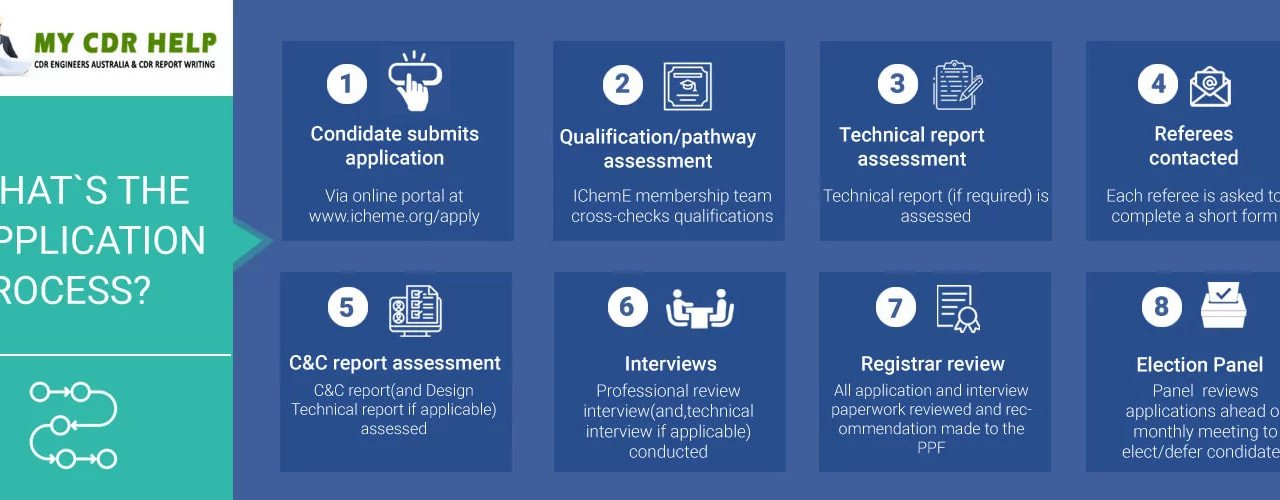
The IChemE Competence and Commitment (C&C) report is one of the central pieces of evidence used in the Chartered Chemical Engineer professional review process. It is not an academic essay, a CV, or a list of projects. Its purpose is to show, through specific examples from your own professional practice, that you have developed the competence, judgment, responsibility, and professional commitment expected of a Chartered Member. That distinction is especially important in 2026 because IChemE is preparing to introduce an updated C&C report structure in March 2027. IChemE says the new structure aligns more directly with UK-SPEC and includes new questions requiring additional evidence, but the underlying professional standards for Chartered Membership are not changing. Applicants who are already preparing under the current structure can still use it until the end of March 2027; applications submitted after that point will need to use the updated structure. This guide explains what the C&C report is for, how to choose strong evidence, how to write convincing examples, what verifiers and referees do, how the professional review works, and how applicants can prepare for the 2027 transition without turning the report into a generic engineering autobiography. IChemE – Preparing for Chartered Membership explains the professional-registration pathway and should be the starting point for applicants deciding what evidence they need. The C&C report is not simply a long technical CV; it is the applicant’s structured evidence that they meet the competence and commitment expectations for Chartered Chemical Engineer status. The original version also referenced this third-party MIChemE guide. It can be used as supplementary context, while IChemE’s current official guidance should remain the controlling source for requirements and deadlines.
What the IChemE C&C Report Is Designed to Show
The C&C report is the part of the Chartered Membership application where you demonstrate how your professional experience meets the required competence and commitment standards. In practice, that means showing evidence of things such as: Applying chemical engineering knowledge and understanding.; Using engineering judgment in real situations.; Solving technical and operational problems.; Managing risk, safety, quality, or environmental performance.; Taking responsibility for decisions.; Communicating with colleagues, clients, contractors, regulators, or other stakeholders.; Developing yourself and supporting others.; Working ethically and professionally.; Maintaining continuing professional development. The exact prompts and format depend on whether you are using the current or new 2027 structure, so applicants should always download the latest IChemE template and applicant guidance directly from IChemE before drafting.
Write Evidence, Not a Career Biography
A weak report often sounds like this: “I worked as a process engineer for three years. I was involved in projects, reviewed designs, attended meetings, and supported operations.” That tells the reviewer where you worked, but not what level of professional competence you personally demonstrated. A stronger example explains: The situation.; Your specific responsibility.; The technical or professional challenge.; The action you personally took.; Why you made that decision.; The result.; What you learned or would do differently. The C&C report is strongest when the reviewer can see your judgment, not just your job title. Use Specific Professional Examples. Chartered-level evidence is usually more convincing when it comes from identifiable pieces of work rather than general claims. Examples may include:
Designing or modifying a process.; Investigating a plant problem.; Leading a hazard study.; Changing an operating procedure.; Evaluating a technical option.; Managing a project or work package.; Responding to a safety or environmental issue.; Commissioning equipment.; Improving reliability or energy performance.; Negotiating with contractors or suppliers.; Mentoring a junior engineer.; Developing or implementing a technical standard. The same project can sometimes support more than one competence, but the report should not repeat the same story mechanically under every heading. Show What You Did, Not What “We” Did. Engineering is team-based, so it is natural to write “we designed,” “we reviewed,” or “we decided.” But professional review assesses your competence. Use the team context, then make your role explicit. For example: Too vague: “We reviewed the relief system and changed the design.” Stronger: “I recalculated the required relief load after identifying that the original case did not include blocked-outlet vapor generation. I presented the revised basis to the process-safety team, recommended a larger relief valve and discharge-line modification, and supported the change through management of change.” The second version gives reviewers evidence of analysis, judgment, communication, and responsibility. A third-party explanation of the Competence and Commitment (C&C) Report may be useful when comparing how evidence is organized, but the wording of competence requirements and the submission format should always be checked against the current IChemE documents.
A Practical Structure for Strong Competence Evidence
You do not need to label every paragraph with a formal framework, but a structure similar to STAR can help:
| Element | What to Explain |
|---|---|
| Situation | What problem, project, or responsibility existed? |
| Task | What were you personally responsible for? |
| Action | What analysis, decision, communication, or leadership did you provide? |
| Result | What changed because of your work? |
| Reflection | What did you learn, and how did it affect later practice? |
Reflection is especially valuable because chartered status is not only about completing tasks. It is about demonstrating professional judgment and development. Evidence Should Show Increasing Responsibility. An early-career example can still be useful, but the complete report should show progression. Reviewers are looking for signs that you can operate with professional responsibility rather than only follow instructions. Progression might appear as movement from: Performing calculations to selecting the design basis.; Following procedures to improving procedures.; Attending hazard studies to facilitating or leading them.; Producing drawings to deciding among engineering options.; Receiving supervision to supervising or mentoring others.; Reporting problems to owning their resolution. You do not need to be a line manager to show responsibility. Technical ownership can demonstrate chartered-level competence just as clearly.
Technical Judgment, Safety, and Professional Responsibility
Chemical engineering competence can be demonstrated through design, operations, process safety, control, project work, research, manufacturing, consultancy, energy, sustainability, commissioning, or many other professional settings. Strong technical evidence often explains: What engineering principles you applied.; What data you used.; What uncertainty existed.; What standards or codes mattered.; How you compared alternatives.; How you managed constraints.; Why the final solution was appropriate. A report does not need to reproduce pages of equations. It needs enough technical detail for a competent reviewer to understand the level at which you worked. Process Safety Evidence. For many chemical engineers, process safety provides strong competence evidence because it combines technical analysis with professional responsibility. Examples might include: HAZOP or LOPA participation.; Relief-system design.; Management of change.; Control of major accident hazards.; Permit-to-work improvements.; Incident investigation.; Alarm management.; Functional safety.; Human factors. A strong example should show what you personally contributed, not simply state that you attended a HAZOP.
Show Engineering Judgment. Professional judgment becomes visible when there is no single obvious answer. You might explain why you rejected one design, accepted a temporary operating measure, escalated a concern, chose a conservative assumption, delayed commissioning, or changed a process despite cost or schedule pressure. Useful questions include: What alternatives did I consider?; What evidence influenced my choice?; What risk did I identify?; Who did I consult?; What trade-off did I have to manage?; How did I justify the final decision?.
Leadership, Communication, and Ethical Commitment
Applicants sometimes under-report leadership because they assume leadership means being a department manager. You can demonstrate leadership by: Coordinating a technical team.; Taking ownership of a plant problem.; Mentoring graduates.; Leading a safety review.; Influencing a client.; Driving implementation of a recommendation.; Setting technical standards.; Organising commissioning activities. The evidence should show influence, responsibility, and outcome. Communication Evidence. Chartered engineers need to communicate with audiences who do not all share the same technical background. Useful examples include: Explaining technical risk to senior management.; Presenting an investment case.; Writing a technical report.; Briefing operators.; Negotiating a scope with a contractor.; Communicating with regulators.; Training colleagues. The strongest evidence shows how you adapted the communication to the audience and what happened as a result. Ethics and Professional Commitment. Professional commitment is not proved by writing “I always act ethically.” Stronger evidence describes situations where professional standards shaped your behavior. Examples may involve: Raising a safety concern despite schedule pressure.; Rejecting unsupported technical claims.; Protecting confidential information.; Managing a conflict of interest.; Recognizing the limits of your own competence.; Seeking specialist advice when needed.; Considering environmental or societal impacts.
CPD, Underpinning Knowledge, and Reflection
IChemE expects Chartered Members to continue developing throughout their careers. Your evidence can show a cycle: Identify a development need.; Plan how to address it.; Complete learning or experience.; Apply the learning.; Reflect on the outcome. CPD does not need to consist only of formal courses. It can include mentoring, technical reading, project experience, conferences, standards work, professional volunteering, structured reflection, or learning from incidents. What Is Underpinning Knowledge and Understanding?. Chartered registration requires appropriate underpinning knowledge and understanding (UKU), usually demonstrated through accredited academic qualifications or another accepted route. Applicants who need an individual UKU assessment may be asked for additional material such as a Technical Biography or Technical Report Questionnaire. IChemE states that where a Technical Biography is required, it must be submitted alongside the C&C report and the C&C assessment will not proceed until the UKU evidence has been reviewed and accepted. The current IChemE – Professional Review Process shows why the report must be defensible rather than promotional. Verifiers and referees support the credibility of the application, while the professional review interview gives reviewers an opportunity to test the applicant’s understanding, judgment, responsibility, and contribution behind the written examples.
Verifiers, Referees, and the Professional Review Interview
IChemE requires verification of the C&C report. A verifier confirms that the report represents a true account of your work and experience. Choose people who: Know the work you are describing.; Can credibly confirm your personal contribution.; Understand professional engineering practice.; Are willing to review the relevant evidence carefully. Do not wait until the application deadline to contact verifiers. A report can be delayed if the people verifying it do not have enough time or information. What Do Referees Do?. IChemE also requires referee support as part of professional review. Referees provide a broader professional view of your suitability for Chartered Membership. IChemE’s current guidance lists two referee reports as part of the application resources. Again, use the latest official guidance because eligibility and process details can change. The Professional Review Interview. The written report is not the end of the process. The professional review gives assessors an opportunity to test and clarify the evidence in your application. Preparation should focus on your own examples. Be ready to explain: Why you made a decision.; What engineering principles you used.; What went wrong.; What you learned.; What you personally contributed.; How you handled risk or uncertainty. Memorizing model answers is less useful than understanding your own professional reasoning.
What Changes in March 2027—and What Does Not
IChemE’s transition notice, IChemE – Preparing for the New C C Report, August 2026, explains that the updated report is being introduced for March 2027 to align more clearly with UK-SPEC and make evidence presentation more transparent while leaving the Chartered standards unchanged. Applicants should also use IChemE – Chartered Member Guidance and Templates to download the correct current or 2027 preparatory documents directly from IChemE rather than relying on an older saved form.
IChemE has announced that a new Competence & Commitment report structure will be introduced in March 2027. The key points are: The new report aligns more directly with UK-SPEC.; The standards for Chartered Membership are not changing.; The new structure contains new questions and may require evidence not requested explicitly in the old format.; Existing experience remains valid.; IChemE has published transition guidance showing how evidence can be mapped.; The final opportunity to submit under the current structure is at the end of March 2027. IChemE has also stated that applicants should not rush an incomplete application merely to beat the transition date. Which Structure Should You Use?. If you are applying before the transition, the decision depends on how far you have progressed and whether your evidence is stronger in one format. A practical approach is: If your current report is nearly complete and strong, finish it properly rather than starting over without reason.; If you are early in preparation and expect to apply after March 2027, build evidence around the new structure.; If you are uncertain, discuss the choice with a mentor or IChemE.
How to Build and Map an Evidence Bank
Before drafting the final report, create a simple evidence table.
| Example | Your Role | Competence Demonstrated | Evidence Available |
|---|---|---|---|
| Plant debottlenecking project | Process engineer | Technical analysis, design, communication | Calculations, design review, project outcome |
| HAZOP action closure | Action owner | Safety, judgment, responsibility | Risk assessment, MOC, implementation |
| Graduate mentoring | Mentor | Leadership and development | Development plan, feedback |
This makes gaps visible before you spend time polishing prose. When reviewing a draft Competence and Commitment (C&C) Report, use external examples only to understand presentation. Do not copy another applicant’s evidence or let a third-party template override the competence wording, verifier requirements, or transition dates published by IChemE.
Common Weaknesses That Make Evidence Less Convincing
Too much company background. The reviewer does not need a history of your employer. Give only enough context to understand your role. Too much “we”. Make your personal contribution explicit. Claims without evidence. “I have strong leadership skills” is weaker than one clear leadership example. Too little technical detail. Show enough engineering reasoning to demonstrate your level. No reflection. Professional development becomes clearer when you explain what you learned. Reusing one story everywhere. Use a range of evidence so the reviewer sees breadth as well as depth. Writing to sound impressive. Professional reviewers value clarity and evidence more than inflated language. Use the latest IChemE template.; Answer the actual prompt.; Use first person where appropriate.; Explain your own contribution.; Include technical judgment.; Describe outcomes.; Show professional responsibility.; Use more than one strong example.; Check that verifiers can confirm the evidence.; Remove unnecessary company history.; Review the report against current IChemE guidance before submitting.
Conclusion
A strong IChemE Competence and Commitment report is evidence of professional practice, not an academic essay. The best reports show how you applied chemical engineering knowledge, made decisions, managed risk, communicated, led, learned, and accepted responsibility in real situations. The 2027 transition changes the structure of the C&C report, but IChemE has made clear that the underlying Chartered standards remain unchanged. Existing experience still counts; what changes is how applicants present it. The most useful preparation is therefore to build a bank of specific, verifiable examples and understand the professional judgment behind them. If the evidence is real and clearly explained, adapting it to either the current or updated structure becomes much easier.