
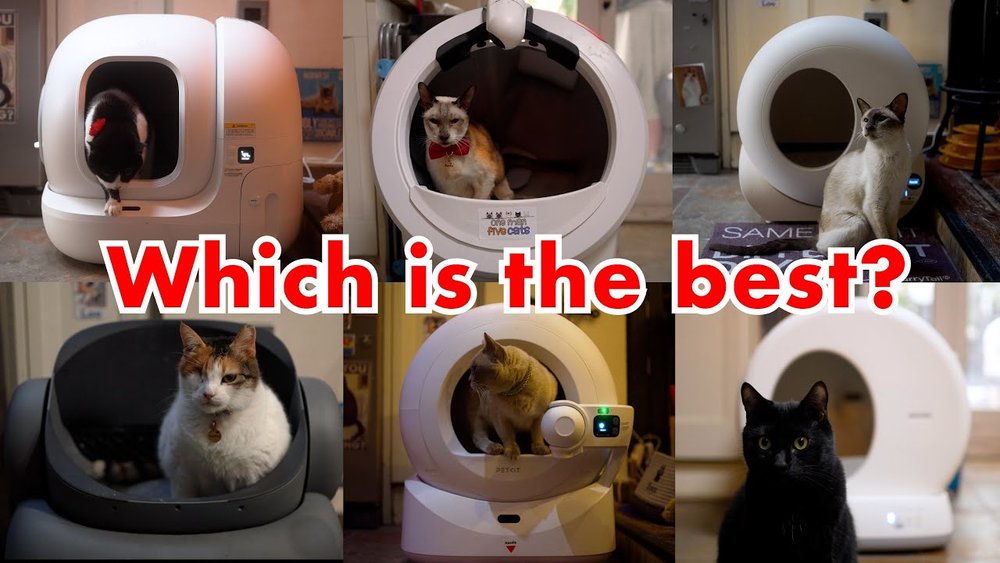
A self-cleaning litter box should be chosen as a piece of feline care equipment first and a smart-home gadget second. Automatic waste removal can reduce daily scooping, control odor, and make litter maintenance easier, but convenience has little value if the cat avoids the box, feels trapped, cannot enter comfortably, or if the machine makes it harder for the owner to notice changes in urination and defecation. Cats have strong preferences about toileting. Feline environmental guidelines emphasize that cats need safe, accessible, appropriately located resources, and inadequate environmental conditions can contribute to stress and elimination problems. That means the best automatic litter box is not necessarily the model with the most sensors, the largest app, or the most complicated cleaning cycle. The most important questions are more basic: Is the box large enough? Is the entry comfortable? Can the cat exit freely? Is the cleaning mechanism physically safe? Does the cat accept the litter? Can you still inspect waste? Is there a conventional backup box if the machine fails? The original version of this article linked a Furbo 360 vs Petcube Bites Lite comparison. That anchor is preserved as required, although its wording does not match the litter-box subject. The useful general principle from any pet-tech comparison is the same: features should be evaluated against the animal’s needs and the household’s real use, not against a gadget checklist.
This guide explains how to choose a self-cleaning litter box safely, how to introduce one, what size and layout matter, how to handle multi-cat homes, why waste observation remains important, what safety features to demand, and when a conventional litter box may actually be the better choice.
The Best Self-Cleaning Litter Box Is the One Your Cat Will Use Safely and Consistently
A self-cleaning litter box should be evaluated first as a toileting resource and only second as a smart-home device. The AAFP/ISFM — Feline Environmental Needs Guidelines emphasize predictable, accessible resources and the cat’s sense of safety and control. That makes size, entry height, location, noise, litter preference and the ability to exit easily more important than app features or cleaning-cycle speed. Before shopping, write down: cat’s age;; weight;; body length;; mobility;; current litter type;; current box style;; number of cats;; any history of litter-box avoidance.. A box that works for a young 4-kg cat may be unsuitable for a large senior cat with arthritis. Why Litter-Box Preferences Matter Cats need toileting areas that feel: safe;; accessible;; clean;; predictable.. A machine that suddenly rotates or makes noise near the cat may conflict with that need. Automatic Does Not Mean Maintenance-Free Even self-cleaning boxes need: waste drawer emptying;; litter replenishment;; deep cleaning;; sensor inspection;; moving-part inspection;; odor control;; software/firmware maintenance where applicable..
Safety, Internal Space and Entry Geometry Matter More Than Automation Speed
Never treat safety as a secondary feature. A self-cleaning box should have systems designed to prevent movement while a cat is inside or entering. Useful safeguards can include: weight sensing;; infrared or presence sensing;; motor resistance detection;; multiple redundant sensors;; emergency stop;; delayed cleaning after exit.. Avoid Designs That Can Trap or Compress a Cat Be especially cautious with mechanisms that: close an opening;; rotate a chamber with restricted exit;; move pinch points near the entrance;; depend on only one failure-prone sensor.. The cat should always have a clear escape route. Do Not Use Automatic Cycling for Very Small Kittens Unless Approved Some machines have minimum weight limits for their safety sensors. A kitten below the detection threshold may not reliably trigger the system. Follow the manufacturer’s minimum age and weight guidance. 2. Check Internal Usable Space Marketing dimensions can be misleading because the machine’s external shell may be large while the actual litter area is small. Measure: usable litter-bed length;; width;; internal height;; entrance size..
The Cat Needs Room to Turn A cat should be able to: enter;; turn around;; dig;; choose position;; cover waste;; exit comfortably.. Large Cats Need Large Boxes For Maine Coons and other large cats, a compact rotating chamber can feel restrictive even if the manufacturer lists the cat’s weight as compatible. Body length and turning space matter as much as weight.
Open vs. Enclosed Design Should Be Chosen Around the Cat, Not Human Ideas About Privacy
Open designs Potential advantages: more visual escape routes;; familiar feel;; easier owner inspection;; often easier for large cats.. Enclosed designs Potential advantages: litter containment;; visual concealment;; odor containment.. But some cats dislike covered or enclosed boxes. Privacy Is a Human Concept People often assume cats want privacy because humans do. Some cats prefer an open box where they can monitor the environment and escape easily. Let the cat’s behavior decide. 4. Entry Height A high threshold can be difficult for: senior cats;; cats with arthritis;; cats recovering from surgery;; small kittens;; cats with neurologic or mobility problems.. A stable step or ramp may help if the manufacturer supports it.
Litter, Noise and Motion Should Be Changed Gradually
Automatic boxes may require a specific litter type. Common restrictions can involve: clumping clay;; crystal litter;; pellets;; lightweight litter;; very fine litter.. Check compatibility before buying. Do Not Change Box and Litter at the Same Time If possible, use the cat’s familiar litter during introduction. Changing: location;; box;; litter;; sound. all at once creates too many variables. 6. Noise and Motion Some cats ignore motors. Others become frightened after one unexpected cleaning cycle. Look for: quiet operation;; delayed cycling;; manual mode;; sleep/quiet hours.. Introduce the Box With Automation Turned Off A conservative transition method is:
- Place the new box near the old box.
- Leave it powered off.
- Add familiar litter.
- Allow voluntary exploration.
- Manually remove waste at first.
- Only enable automation after regular use begins.
Never Force the Cat Inside Putting a frightened cat into the machine can create a lasting negative association.
Transition slowly and keep a backup resource.
Do not remove the conventional box immediately. Keep it until the cat has reliably used the new box for an extended period. A Backup Box Is Useful Even After Transition Automatic boxes can fail because of: power outage;; motor fault;; full waste drawer;; sensor error;; network/software issue.. A conventional backup prevents the cat from being left without an acceptable toilet. Multi-cat homes need distributed resources, not just a larger waste drawer. A machine may claim it can handle several cats, but that does not mean one box is behaviorally sufficient. Multiple cats may: guard access;; ambush each other;; avoid a shared enclosed box;; prefer different locations.. Spread Toileting Resources Feline guidelines generally recommend distributing important resources rather than forcing cats to share one location. In a multi-cat home, consider multiple litter stations in separate areas.
Health Monitoring Can Be Useful, but It Should Never Be Mistaken for Diagnosis
Weight, visit frequency and waste patterns can help owners notice changes, especially in multi-cat homes where it is otherwise difficult to know which cat is using the box. Smart-litter-box data can support observation, but changes in urination, defecation, appetite, weight or behavior still need veterinary interpretation. A feature comparison such as Furbo 360 vs Petcube Bites Lite comparison may help illustrate consumer comparison criteria, but product reviews should not substitute for checking the actual litter-box specifications, safety design and warranty of the model being considered. One disadvantage of automatic disposal is that waste can disappear before the owner notices changes. Owners should still monitor: urination frequency;; stool consistency;; blood;; straining;; very small urine clumps;; large changes in volume.. Why This Matters Changes in litter-box behavior can sometimes be associated with: urinary problems;; constipation;; diarrhea;; pain;; stress.. A veterinarian should evaluate persistent or concerning changes. Apps Can Help—but Do Not Diagnose Some boxes track: visits;; weight;; duration;; frequency.. These trends can be useful observations. They are not a veterinary diagnosis.
Maintenance, Odor Control and Deep Cleaning Determine Whether the Convenience Lasts
Evaluate: capacity;; seal;; bag type;; ease of removal;; odor leakage.. Proprietary Bags Add Ongoing Cost Calculate: waste liners;; filters;; replacement parts;; cleaner cartridges;; litter.. The purchase price is only part of ownership cost. 11. Deep Cleaning Automatic boxes still accumulate residue on: drum walls;; sieves;; rakes;; sensors;; drawer edges.. Look for a design that can be disassembled safely. Avoid Harsh Chemicals Cats have sensitive noses. Use manufacturer-approved cleaners and rinse residue thoroughly. 12. Odor Control Odor depends on: cleaning frequency;; waste-drawer seal;; litter;; ventilation;; deep cleaning.. Fragrance does not substitute for sanitation. 13. Floor Space Measure the actual location before buying. Allow room for: cat approach;; lid removal;; waste-drawer opening;; deep cleaning.. Do Not Put the Box Next to Food and Water Separate toileting resources from feeding areas where practical. Avoid Trapping the Cat in a Dead-End Location In multi-cat homes especially, place boxes where a cat can see and leave rather than being cornered.
Reliability, Power-Failure Behavior, Privacy and Parts Support Affect Long-Term Ownership
A litter box is essential infrastructure. Prioritize: safe mechanics;; durable motor;; available replacement parts;; manual operation;; clear error alerts.. Wi-Fi control is secondary. 15. Power Failure Behavior Ask: Does the box remain usable when power is off?; Does it stop in an open position?; Will it restart automatically?; Could it stop midway through a cycle?. 16. Data Privacy Smart pet devices may collect: app account data;; device identifiers;; usage history;; home-network information.. Check: privacy policy;; account security;; update support;; whether cloud service is required.. 17. Return Policy Is Important Cats may simply refuse a particular design. Before purchasing, check: trial period;; return shipping;; restocking fees;; cleanliness requirements for returns.. 18. Warranty and Parts Automatic boxes contain: motors;; sensors;; gears;; control boards.. Ask whether replacement components are available after warranty expiration. 19. When a Conventional Box Is Better A standard litter box may be preferable if: the cat is fearful of automation;; the cat is very large;; mobility is limited;; you need close waste monitoring;; power reliability is poor;; the automatic unit has unsafe geometry..
A practical buying and transition checklist.
- Measure the cat.
- Measure the usable litter space.
- Check entrance height.
- Review safety sensors.
- Confirm minimum cat weight.
- Confirm litter type.
- Test noise if possible.
- Check manual mode.
- Check deep-cleaning access.
- Calculate recurring costs.
- Read return policy.
- Keep a backup box.
A useful way to compare models is to imagine the first month rather than the unboxing. Ask how the cat will enter, what happens if the sensor fails, how the unit behaves during a power outage, whether the waste drawer can be cleaned without dismantling half the machine, and whether replacement liners, filters or parts will still be available. Those questions reveal more about ownership quality than novelty features. The transition period is equally important. Place the new box in a familiar, low-conflict location, leave the automation disabled at first, continue providing the old box and let the cat investigate without being placed inside. Once the cat is using it reliably, automation can be introduced gradually. If avoidance, elimination outside the box or obvious stress appears, the correct response is to slow down or return to a conventional setup rather than forcing the technology to work.
Placement also deserves more attention than most product comparisons give it. Cats usually prefer a toileting location that is quiet, easy to enter and leave, and not immediately beside food or water. An expensive automatic box placed in a noisy laundry closet, next to a furnace, or in a narrow dead-end can be less acceptable than a simple open tray in a better location. Multi-cat households should think in terms of several accessible toileting resources rather than assuming one high-capacity machine can replace every box. Cleaning products matter too. Strong fragrances, bleach residues or harsh chemicals can make a box smell “clean” to a person while making it unpleasant to a cat. Follow the manufacturer’s cleaning instructions, rinse removable parts thoroughly and avoid combining cleaning agents. If urine scale or odor persists, deal with the source instead of masking it with perfume or deodorizer that may further discourage use.
Conclusion
The best self-cleaning litter box is not the one with the most technology. It is the one the cat will use safely and consistently while still allowing the owner to maintain hygiene and notice important changes. Prioritize usable space, safe exit, low entry height where needed, litter compatibility, quiet operation, redundant presence detection, and easy deep cleaning. Keep a conventional backup during transition and in case the machine fails. Automation should reduce the burden of scooping without removing the owner from the cat’s care. A litter box is still a health and behavior resource—not just an appliance.