
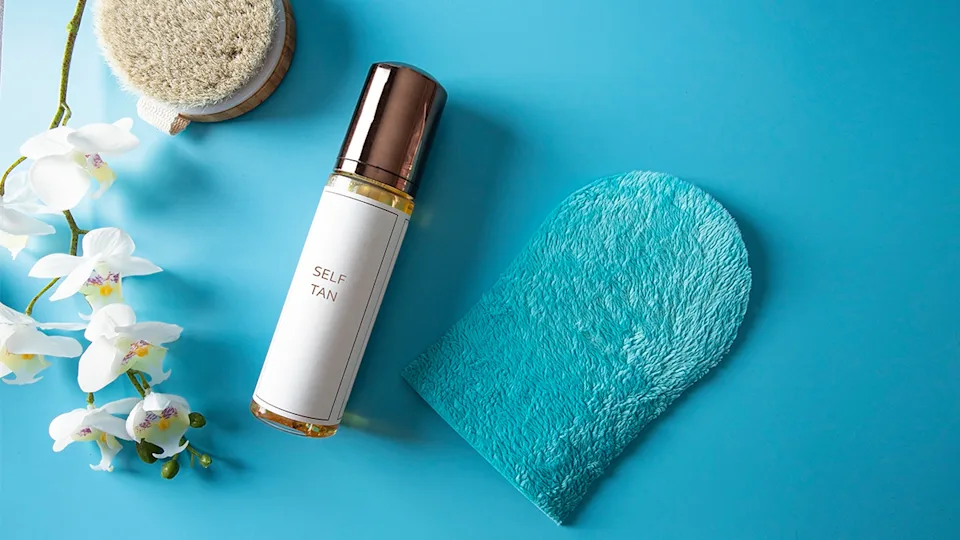
Self-tanning products can create a bronzed appearance without exposing the skin to ultraviolet radiation from the sun or a tanning bed. That distinction matters because UV exposure contributes to premature skin aging, sunburn, eye damage, and skin cancer risk. A cosmetic self-tanner changes the color of the outermost skin layer; it does not require the skin to produce a UV-induced tan. Most sunless tanning lotions, mousses, and sprays use dihydroxyacetone, commonly called DHA. The U.S. Food and Drug Administration allows DHA as a color additive for external application to the body, but the agency places important limits on how it should be used. DHA should not be inhaled, ingested, or applied to areas covered by mucous membranes, including the lips, nose, and areas in and around the eyes. This guide explains how self-tanners work, how to apply them evenly, how lotions and sprays differ, what FDA safety guidance means in practice, how to avoid streaks, and why a self-tan never replaces sunscreen.
How Sunless Tanners Create Color Without UV Exposure
The FDA: Sunless Tanners and Bronzers explains that most sunless tanning products use dihydroxyacetone (DHA), which reacts with amino acids in the outermost layer of the skin to create temporary color. That is fundamentally different from a UV tan, which is a response to ultraviolet exposure and skin injury. Sun self tan products and similar cosmetic tanners can provide visible color without intentionally exposing skin to tanning-bed or sunlight UV. DHA is a colorless ingredient that reacts with amino acids in dead cells on the surface of the skin. That reaction temporarily darkens the outer layer and creates the appearance of a tan. Because the color develops in surface cells, it gradually fades as those cells naturally shed. The effect usually lasts several days, depending on the formula, skin preparation, bathing habits, exfoliation, and how quickly the person’s skin turns over. The result is cosmetic. DHA does not stimulate melanin production in the same way ultraviolet radiation does.
Why Self-Tanning Is Different From Sun Tanning Traditional tanning is a biological response to UV exposure. The skin produces more pigment after being exposed to radiation that can also damage cellular DNA. Self-tanning products create color without intentionally exposing the skin to UV radiation. That makes them a useful option for people who want a bronzed appearance while avoiding deliberate tanning in the sun or a tanning bed. However, “sunless” does not mean every application method is risk-free. The FDA’s restrictions on DHA exposure are especially important for spray and mist products.
Sunless Color Is Not Sunscreen
The FDA: Tanning Products and FDA: Tanning and UV Safety both reinforce an important distinction: a cosmetic tan does not mean the skin is protected from ultraviolet radiation. Unless the product is separately labeled and used as an approved sunscreen, users still need appropriate sun protection. This is one of the most important points to understand. Most self-tanners do not provide meaningful sun protection. The FDA requires sunless tanning products that do not contain sunscreen ingredients to carry a warning that the product does not protect against sunburn. A darker-looking skin tone can create a false sense of protection, but UV radiation can still damage the skin. Use broad-spectrum sunscreen according to its label, wear protective clothing when appropriate, and follow ordinary sun-safety practices even when your self-tan looks dark.
Choose the Product Format and Shade Around Your Skin and Routine
Lotions Lotions are forgiving because they spread slowly and can combine tanning ingredients with moisturizers. They work well for dry or normal skin and for beginners who want more time to blend. Mousses Mousses are lightweight, spread quickly, and often dry faster than lotions. Many people apply them with a tanning mitt to reduce hand staining and improve distribution.
Sprays Sprays can be convenient for large or hard-to-reach areas, but they require more attention to inhalation and overspray. The FDA advises consumers to avoid inhaling DHA and to keep it away from the eyes, lips, nose, and mucous membranes. Drops and concentrates Tanning drops are typically mixed with a moisturizer or used according to specific product directions. Because concentrations vary, do not assume that more drops will always produce a better result.
Gradual tanners Gradual formulas use lower-intensity applications to build color over several days. They can be easier for beginners because small mistakes are less visible. Instant bronzers Some products contain temporary cosmetic pigments that provide immediate color before the DHA develops. These bronzing pigments can wash off, while the DHA-based tan remains for longer. Choosing a Shade A natural-looking result usually comes from choosing a shade that is not dramatically darker than your starting skin tone. Beginners may prefer: a light or medium formula;; a gradual tanner;; a product with a visible guide color; or; one thin application followed by another later if more depth is wanted.. Trying to create the darkest possible color in one application can increase the chance of patchiness, overly dark knees or elbows, and an unnatural undertone. Patch Test First Cosmetic products can irritate sensitive skin. Before applying a new self-tanner widely, test a small area according to the product directions. A patch test is especially sensible if you have: very sensitive skin;; a history of reactions to fragrances;; eczema or another skin condition;; recently used strong exfoliating products; or; never used the formula before.. If the product causes significant burning, swelling, blistering, or another concerning reaction, wash it off and seek medical advice when appropriate.
Preparation and Application Determine Whether the Result Looks Even
Self-tanner tends to become darker on thick, dry areas because there are more surface cells for DHA to react with. Gentle exfoliation helps make the surface more even. Focus especially on: elbows;; knees;; ankles;; heels; and; other rough or dry patches.. Avoid aggressive scrubbing immediately before application if it leaves the skin irritated. The goal is smooth skin, not inflamed skin. Step 2: Shave or Wax at the Right Time If you remove body hair, doing so before self-tanning is usually easier than doing it immediately afterward because shaving and waxing can exfoliate the outer skin and make a fresh tan fade unevenly. Give the skin time to settle after hair removal, especially if shaving or waxing causes redness. Step 3: Apply Moisturizer Strategically A small amount of moisturizer on dry areas can reduce excessive color absorption. Common areas include: elbows;; knees;; knuckles;; ankles;; heels; and; around the wrists.. Do not coat the whole body with a heavy moisturizer immediately before applying a formula that is designed for clean, dry skin unless the manufacturer recommends it. Step 4: Work in Sections Applying self-tanner systematically reduces missed patches. For example:
- lower legs;
- upper legs;
- torso;
- arms;
- hands and feet;
- back; and
- face if the product is specifically intended for facial use.
Blend at the edges as you move from one section to another. Step 5: Use Less Product on Hands, Feet, Knees, and Elbows These areas commonly turn darker than the rest of the body. Use the remaining product on the mitt or a very small amount rather than applying a full fresh pump. Blend carefully around: knuckles;; wrists;; ankles;; toes; and; the edges of the feet.. After application, lightly wiping palms, nails, cuticles, and very dry creases can help prevent concentrated staining. Using a Tanning Mitt A mitt can help spread lotions and mousses evenly while keeping product off the palms. It is not mandatory, but many users find it makes blending easier. Wash reusable mitts according to the manufacturer’s instructions and allow them to dry completely between uses. A dirty applicator can affect both hygiene and the finish.
Sprays and Booths Need Extra Attention to Inhalation and Mucous-Membrane Exposure
A sun tan spray , modern application can be convenient, but spray products require controlled application so DHA is not inhaled or allowed into the eyes, lips or other mucous membranes. This is especially important in spray-tan booths, where overspray can be harder to avoid than with a lotion or mousse applied by hand. Spray products require special care because aerosolized or misted DHA should not be inhaled. If using a home spray: follow the label exactly;; use it in a well-ventilated area;; avoid spraying toward the face;; do not inhale the mist;; keep it away from eyes, lips, and the inside of the nose; and; consider spraying onto an applicator mitt for areas where direct spraying is difficult to control.. Some consumers compare Sun self tan products with other lotion, mousse, and spray formats. Regardless of brand, the same basic principle applies: follow the product’s directions and FDA safety guidance for DHA exposure. Spray-Tan Booth Safety The FDA has specifically warned about all-over spray or mist applications where people may be exposed to DHA in ways for which it is not approved. Before using a commercial spray-tan booth, ask:
How are my eyes and the area around them protected?; How are my lips protected?; How are my nose and other mucous membranes protected?; How will I avoid inhaling the spray?. If the facility cannot explain how those areas are protected, consider another method. The Face Needs Different Handling Facial skin can be more sensitive and may already be exposed to active skincare ingredients such as retinoids, exfoliating acids, benzoyl peroxide, or prescription treatments. Use a product designed for facial application and keep DHA away from the eye area, lips, and inside the nose. If you use prescription skincare or have rosacea, eczema, acne treatment, or another condition, ask a dermatologist whether self-tanner is appropriate. How Long Should Self-Tanner Dry? Drying and development times vary widely. Some formulas are designed to be rinsed after a few hours; others develop overnight.
Follow the product label rather than assuming one universal time. Until the product is dry: avoid tight clothing;; avoid sweating;; avoid water;; avoid sitting against light fabrics if transfer is possible; and; do not add another layer prematurely..
How to Fix Common Problems and Make the Color Last Longer
Common causes include: uneven exfoliation;; too much product;; dry patches;; rushing the blend;; water touching the skin during development;; sweating;; missing sections; and; using too much product on joints.. Streaks usually fade as the outer skin sheds. Gentle exfoliation can help soften obvious lines, but aggressive scrubbing can make the patchiness worse. How to Make a Self-Tan Last Longer Once the tan has developed and the formula has been rinsed according to instructions, gentle skincare can slow uneven fading. Helpful habits include: moisturizing regularly;; avoiding unnecessary aggressive exfoliation;; patting the skin dry rather than rubbing hard with a towel;; limiting very long hot baths; and; reapplying gradually rather than waiting for a highly patchy fade.. Swimming, frequent shaving, strong exfoliants, and friction can speed fading. Can You Layer Self-Tanner? Yes, if the product directions allow it. Building color gradually is often more natural than applying a very heavy first coat. Wait for the first application to develop and evaluate the result before adding another layer. If there are already dark patches, correct those rather than covering everything with more product.
When to Patch Test, Avoid a Product or Seek Medical Advice
DHA itself may not be the only ingredient that matters. Fragrances, preservatives, botanical extracts, alcohols, and other ingredients can affect sensitive skin. Choose fragrance-free or simpler formulations if you know you react to scented cosmetics, and stop using a product that repeatedly causes irritation. Are Tanning Pills Safe? The FDA warns that so-called tanning pills are unsafe and that none are approved by the agency for producing a tan. Some have contained canthaxanthin, which can cause serious health effects when consumed in large amounts. Do not confuse topical self-tanning cosmetics with pills or supplements marketed to darken the skin from inside the body. Self-Tanner vs. Tanning Beds A cosmetic self-tan is fundamentally different from a tanning bed because it does not depend on UV radiation to create the color. The FDA warns that UV-emitting tanning devices can cause skin cancer, burns, premature skin aging, and eye damage.
For someone who wants a tan appearance, a topical self-tanner avoids the intentional UV exposure required by a tanning bed. Self-Tan Products With SPF Some cosmetics combine self-tanning ingredients with sunscreen. If a product makes an SPF claim, follow its sunscreen directions carefully and reapply as required. Do not assume yesterday’s self-tan application provides sun protection today unless the current sunscreen layer is being used as directed. About “Sun Tan Spray” Products Consumers may encounter product listings using language such as sun tan spray , modern self-tanning solution, bronzing mist, or airbrush tan. Marketing terminology is less important than the ingredient list and application method. If the formula contains DHA, the FDA restrictions on avoiding inhalation, ingestion, eyes, lips, and mucous membranes remain relevant. When to Avoid Self-Tanning
Consider postponing application if: the skin is sunburned;; you have open cuts or irritated areas;; you recently had a strong chemical peel;; you are experiencing an unexplained rash;; a previous self-tanner caused a serious reaction; or; your dermatologist has advised against the product.. Useful FDA Sources FDA: Tanning Products; FDA: Sunless Tanners and Bronzers; FDA: Tanning and UV Safety.
Conclusion
Self-tanners are a useful cosmetic alternative for people who want a bronzed look without deliberately exposing their skin to UV radiation. DHA-based lotions and mousses are generally straightforward when used on external skin according to the label, while spray products require additional care to avoid inhalation and contact with the eyes, lips, nose, and mucous membranes. The best results come from gentle exfoliation, careful blending, lighter application on dry joints, and patience while the color develops. Most importantly, remember that a self-tan is color—not sun protection. Continue using sunscreen and ordinary sun-safety measures no matter how bronzed the skin appears.