
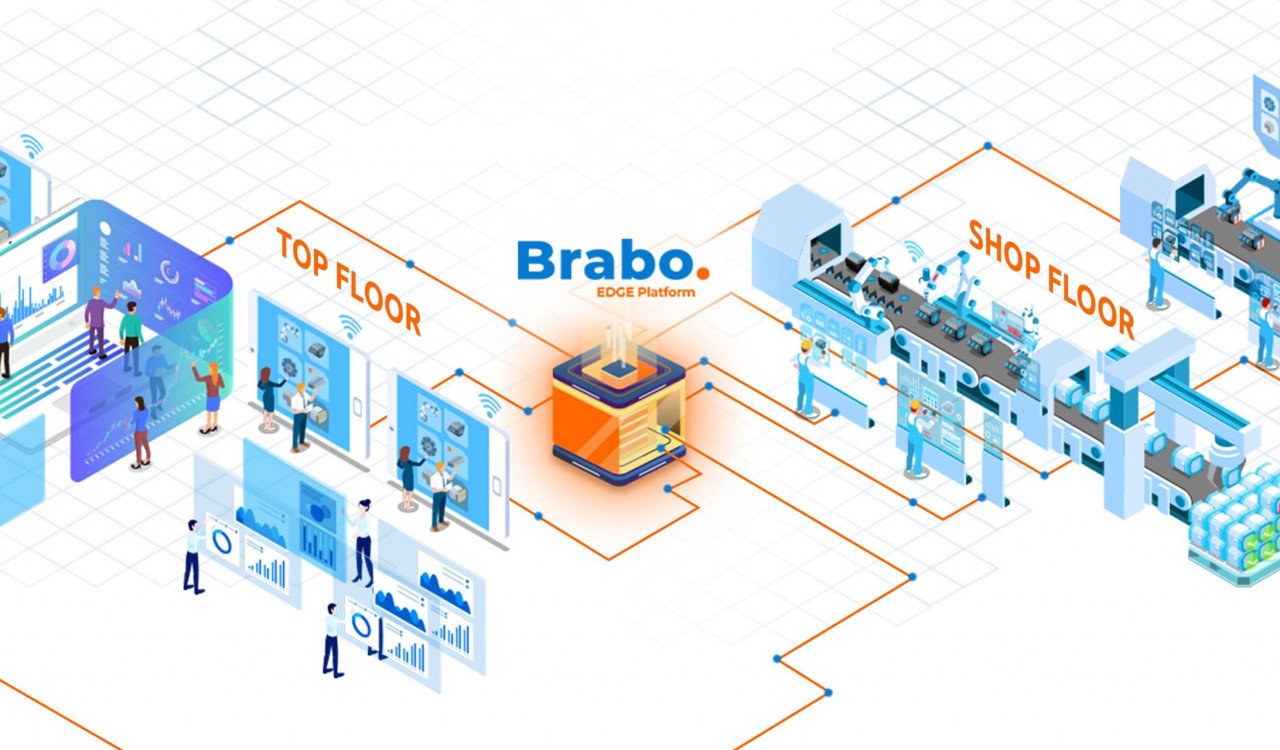
Smart manufacturing is no longer simply a label for factories that use robots. It describes a broader operating model in which machines, sensors, software, people, and business systems share useful information so manufacturers can make faster and better decisions.
That shift matters because modern plants face pressures that traditional production systems were not designed to handle well. Customers expect shorter lead times and more customization. Supply chains remain vulnerable to disruption. Energy, labor, maintenance, and quality costs are closely watched. At the same time, manufacturers are generating far more data than they can use effectively.
Smart manufacturing connects those pieces. When implemented well, it can improve visibility, reduce avoidable downtime, support more consistent quality, and help teams respond to changing demand. When implemented poorly, however, it can create expensive islands of technology, cybersecurity weaknesses, and dashboards that produce data without better decisions.
This guide explains what smart manufacturing means in practice, why it matters, which technologies are most useful, and how manufacturers can adopt it without turning digital transformation into a costly technology project with no clear business outcome.
What Is Smart Manufacturing?
Smart manufacturing is a highly connected approach to production in which data from physical operations is captured, shared, analyzed, and used to improve decisions. It overlaps strongly with Industry 4.0, the Industrial Internet of Things (IIoT), operational technology, automation, artificial intelligence, digital twins, and advanced analytics.
The National Institute of Standards and Technology describes smart manufacturing as relying on integrated, collaborative systems that can respond in real time to changing demands and conditions in factories, supply networks, and customer needs. The important idea is not that every machine becomes autonomous. It is that information becomes available at the right time and in a form that helps people and systems act on it.
How Smart Manufacturing Differs From Ordinary Automation
A traditional automated machine may repeat the same process efficiently but still operate in isolation. A smart manufacturing environment connects that machine to a wider information flow.
For example, a production line may automatically record cycle time, vibration, temperature, scrap, energy consumption, and stoppages. That information can then be combined with order data, maintenance history, quality results, and operator input. Instead of waiting for an end-of-shift report, supervisors can see abnormal performance while it is happening.
The difference can be summarized simply:
- Automation performs tasks with reduced manual intervention.
- Connectivity lets machines and systems exchange information.
- Analytics turns the information into useful insight.
- Smart manufacturing combines these capabilities to improve real operational decisions.
Why Smart Manufacturing Matters Now
More product variation
Many manufacturers have moved away from long runs of nearly identical products. Customers increasingly expect variants, shorter runs, custom configurations, and faster changes. A digitally connected plant can make scheduling, changeovers, traceability, and quality control easier to manage when production becomes more complex.
Pressure to reduce downtime
Unexpected downtime can disrupt delivery dates, create overtime, and force work to be rescheduled across the plant. Connected equipment monitoring can help maintenance teams identify abnormal conditions earlier and make better decisions about when equipment requires attention.
Need for better traceability
Manufacturers in regulated or quality-sensitive industries often need to know which materials, machines, parameters, and operators were associated with a specific batch or product. Digital records can make this information easier to retrieve than paper-based or disconnected systems.
Workforce constraints
Experienced technicians and operators often hold a large amount of process knowledge that may not be documented. Digital work instructions, condition monitoring, guided troubleshooting, and better data visualization can help capture part of that knowledge and support less-experienced employees.
The Core Technologies Behind Smart Manufacturing
Industrial Internet of Things
IIoT devices and sensors collect information from machines, production lines, utilities, and other physical assets. The value comes from collecting the right signals, not the greatest possible number of signals.
Before installing sensors, manufacturers should decide what decision the data will support. Monitoring vibration may make sense for a critical rotating asset. Adding a sensor merely because the technology is available does not.
Edge computing
Some manufacturing data needs to be processed close to the equipment rather than sent to a remote cloud platform. Edge computing can reduce latency, filter large data streams, and allow certain applications to continue working even when external connectivity is interrupted.
This is one reason industrial edge platforms have become important in connected factories. Companies such as Solulever have focused on industrial connectivity and edge-based approaches designed to bridge shop-floor data with higher-level applications.
Cloud platforms
Cloud systems can provide scalable storage, analytics, collaboration, and application services. They can be especially useful when a manufacturer operates multiple sites and wants consistent reporting across locations.
Cloud adoption should not be treated as an all-or-nothing choice. Many plants use hybrid architectures in which time-sensitive or critical functions stay local while selected data is sent to cloud services for broader analysis.
Artificial intelligence and machine learning
AI can support tasks such as anomaly detection, visual inspection, forecasting, maintenance prioritization, and optimization. Its usefulness depends heavily on data quality and the operational problem being solved.
A model trained on incomplete or inconsistent production data can produce unreliable results. Manufacturers should therefore treat data preparation, governance, validation, and human oversight as part of the AI project rather than as preliminary work that can be rushed.
Digital twins
A digital twin represents aspects of a physical system in a digital environment. Depending on the application, it may help engineers simulate behavior, compare expected and actual performance, evaluate changes, or support lifecycle decisions.
In a July 2026 workshop summary, NIST highlighted the potential of digital twins for design, production, and lifecycle management while also identifying continuing challenges involving interoperability, verification, validation, uncertainty, cybersecurity, and workforce readiness.
Where the Business Value Comes From
Production visibility
A connected plant can move from delayed reporting to near-real-time visibility. Supervisors may be able to see current output, bottlenecks, stoppage reasons, scrap rates, and order progress without walking from machine to machine collecting information manually.
Condition-based maintenance
Traditional preventive maintenance is often performed on a fixed schedule. Condition-based approaches use actual equipment information to help determine when maintenance is needed. This can reduce unnecessary work while helping teams identify emerging problems earlier.
Predictive maintenance is a more advanced form that uses historical and current data to estimate future failure risk. It should be introduced where the economics justify it, particularly for assets whose failure has significant production or safety consequences.
Quality improvement
Smart manufacturing makes it easier to connect process conditions with quality outcomes. If defects rise, engineers can look for relationships involving temperatures, speeds, tooling, raw material batches, operator shifts, or other process variables.
This does not eliminate traditional quality methods. It strengthens them by making evidence easier to access and analyze.
Energy and resource efficiency
Energy monitoring can reveal equipment that consumes excessive power while idle, compressed-air leaks, abnormal heating or cooling loads, and production patterns that create avoidable peaks. Similar monitoring can be applied to water, raw materials, and waste.
Interoperability Is One of the Biggest Challenges
Factories often contain equipment from different decades and different suppliers. One machine may use a modern industrial protocol while another relies on proprietary software or a legacy controller. New systems may expose APIs while older equipment was never designed to share data externally.
NIST research on IIoT-enabled smart manufacturing emphasizes the importance of standards and interoperable connections. Without interoperability, manufacturers can end up building expensive custom integrations every time they connect another machine or application.
A good architecture therefore aims to normalize and contextualize data so application developers do not need to understand every machine’s unique interface. Industrial connectivity platforms can help create that layer between operational technology and analytics or business systems.
Cybersecurity Must Be Designed In From the Start
Connectivity creates value, but it also changes risk. A machine that was once isolated may become reachable through networks, remote-access tools, cloud connectors, or vendor support channels.
NIST’s Manufacturing Extension Partnership has repeatedly warned that Industry 4.0 and IT/OT convergence introduce new cybersecurity responsibilities. Manufacturers should not connect equipment first and plan security later.
Important controls include:
- maintaining an accurate inventory of connected assets;
- segmenting operational technology from other networks where appropriate;
- controlling and monitoring remote access;
- managing accounts and privileges carefully;
- keeping supported systems patched according to risk;
- backing up configurations and data needed for recovery;
- monitoring for abnormal activity; and
- planning how production will recover after an incident.
Legacy machines require special attention because they may depend on unsupported operating systems or software that cannot accept modern security controls.
A Practical Smart Manufacturing Roadmap
Step 1: Start with a business problem
Do not begin with a technology shopping list. Define a measurable problem such as excessive downtime on a critical line, poor visibility into scrap, slow changeovers, high energy use, or weak traceability.
Step 2: Establish a baseline
Measure current performance before introducing the solution. If the problem is downtime, record frequency, duration, causes, and financial or production impact. Without a baseline, it is difficult to prove whether the project created value.
Step 3: Map the existing environment
Document machines, controllers, networks, software, data sources, maintenance systems, MES, ERP connections, and cybersecurity constraints. This prevents teams from designing a solution based on an inaccurate view of the plant.
Step 4: Run a focused pilot
A pilot should be large enough to prove the concept but small enough to control risk. Choose an area with a meaningful problem, supportive operators, accessible data, and clear success measures.
Step 5: Validate the result
Compare the pilot with the original baseline. Did downtime decrease? Did quality improve? Did supervisors make decisions faster? Did the system merely produce an attractive dashboard, or did it change operational behavior?
Step 6: Standardize before scaling
Once a pilot works, document connection methods, data definitions, cybersecurity requirements, naming conventions, maintenance responsibilities, and support processes. Standardization makes expansion to other assets and plants far less painful.
Avoiding Common Digital Transformation Mistakes
Connecting everything immediately. More connections create more cost and more attack surface. Prioritize useful data.
Ignoring operators. Systems designed without the people who run the process often produce alerts and dashboards that do not match how work actually happens.
Buying a platform before defining use cases. Technology should serve operational objectives, not create them.
Assuming data is automatically trustworthy. Sensor calibration, timestamps, missing values, machine states, and context all affect whether data can support decisions.
Underestimating change management. New tools change responsibilities. Teams need training and clear ownership, not just software access.
Treating cybersecurity as an IT-only issue. Operational technology has different availability, safety, and lifecycle constraints. IT and OT teams need to work together.
What Role Do Industrial Connectivity Platforms Play?
A major barrier to smart manufacturing is the gap between equipment on the shop floor and applications that need production data. A connectivity layer can collect, standardize, and route information so analytics, dashboards, maintenance tools, and developers can use it more consistently.
Solulever is one example of a provider operating in this industrial connectivity space. Whatever platform a manufacturer evaluates, the key questions should be practical: Does it support the plant’s actual equipment? Can data be accessed without locking the company into one vendor? How is security handled? Can the architecture scale to additional lines and sites? Who owns and maintains the integrations?
How to Measure Smart Manufacturing Success
A digital initiative should be tied to operational metrics. Depending on the project, useful measures may include:
- overall equipment effectiveness;
- unplanned downtime;
- mean time to repair;
- scrap and rework;
- first-pass yield;
- changeover time;
- energy per unit produced;
- schedule adherence;
- maintenance cost;
- lead time; and
- time required to investigate a quality problem.
Not every project needs every metric. Choose a small number that reflect the business reason the project exists.
Useful Primary Sources
- NIST: Industry 4.0 and Cybersecurity
- NIST: Standard Connections for IIoT-Empowered Smart Manufacturing
- NIST: Digital Twins Workshops Summary Report
Final Thoughts
Smart manufacturing matters because modern factories need more than isolated automation. They need reliable information flowing between equipment, people, and systems so problems can be detected earlier and decisions can be made with better evidence.
The strongest implementations begin with a specific operational problem, connect only the data needed to solve it, protect the new connections, and measure the result. Over time, successful pilots can develop into a broader architecture for condition monitoring, quality, planning, maintenance, traceability, energy management, and continuous improvement.
Manufacturers do not need to digitize an entire plant at once. A disciplined series of high-value projects, built on interoperable standards and secure architecture, is usually a safer path to a genuinely smart factory than a large transformation program driven mainly by technology trends.