
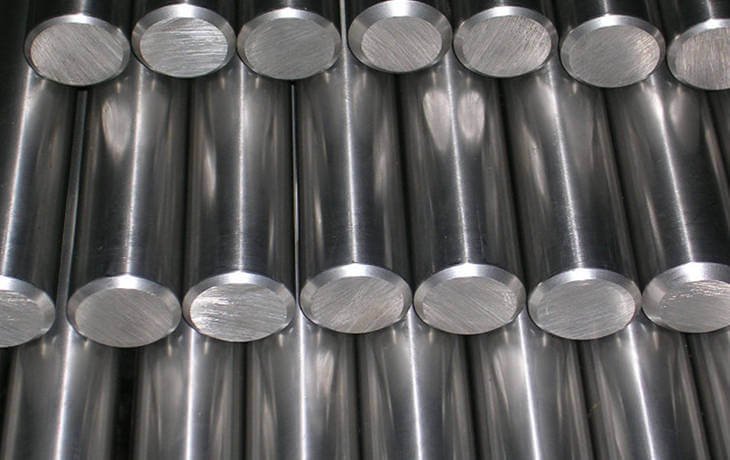
Inconel 718 round bar is a high-strength nickel-chromium alloy product used where ordinary steels can lose strength, oxidize rapidly, or become unreliable under a combination of heat, pressure, corrosion, and cyclic loading. The alloy is especially important in aerospace, gas-turbine, energy, oil-and-gas, chemical-processing, and high-performance mechanical applications. One reason Inconel 718 is so widely specified is that it combines several properties that are difficult to obtain in one material: high tensile and yield strength, useful corrosion resistance, good fatigue performance, strong creep resistance at elevated temperature, and comparatively good weldability for a precipitation-hardened nickel alloy. However, many older descriptions of Inconel 718 contain incorrect chemistry and mechanical-property figures. For example, 718 does not contain 10% molybdenum; its nominal molybdenum content is much lower, while niobium plus tantalum is a defining addition. Mechanical properties also depend strongly on product form, heat treatment, diameter, specification, and test temperature. Buyers should therefore work from the applicable ASTM, AMS, ASME, or customer specification and the actual material test certificate rather than a generic internet table. This guide explains what Inconel 718 round bar is, why its metallurgy matters, the applications where round stock is commonly used, how heat treatment affects performance, and what engineers and purchasers should check when selecting Inconel 718 Suppliers.
What INCONEL 718 Is and Why Round Bar Matters
INCONEL® alloy 718, UNS N07718, is a nickel-chromium precipitation-hardenable alloy developed for high strength together with corrosion resistance and elevated-temperature capability. According to Special Metals, the alloy contains nickel as the major constituent together with chromium, iron, niobium plus tantalum, molybdenum, titanium, and aluminum. The niobium-containing strengthening system is particularly important because it allows the alloy to be precipitation hardened through controlled heat treatment. The alloy is commonly supplied as: round bar; forging stock; plate; sheet; strip; wire; tube; pipe; and; forged components.
Each product form can have different specification and property requirements. Why Round Bar Is an Important Product Form. Round bar provides a convenient starting geometry for machined components with rotational or cylindrical features. It can be cut, turned, bored, threaded, milled, drilled, ground, or forged into finished parts. Typical parts made from round stock include: shafts; bolts and studs; pins; valve stems; fasteners; couplings; bushings; mandrels; rotating components; tooling; oilfield components; aerospace hardware; and; machined pressure-containing parts.
Round bar is especially attractive when a part needs strength through the full cross-section and must be machined from solid stock. What Makes Inconel 718 Different From Inconel 600 or 617?. “Inconel” is not one alloy. It is a trademark used for a family of nickel-based alloys with different chemistry and performance. For example: Inconel 600 is primarily a nickel-chromium alloy known for corrosion and oxidation resistance.; Inconel 617 is a nickel-chromium-cobalt-molybdenum solid-solution-strengthened alloy designed for very high-temperature strength and oxidation resistance.; Inconel 625 uses niobium and molybdenum for strong corrosion resistance and solid-solution strengthening.; Inconel 718 is precipitation hardenable and is especially valued for high strength, fatigue resistance, and weldability. Substituting one grade for another merely because both are called Inconel can be a serious engineering error. The manufacturer bulletin for INCONEL alloy 718 is the appropriate technical baseline for nominal chemistry, heat-treatment response, mechanical properties, oxidation behavior, and fabrication guidance. Purchasing decisions should still reference the governing material specification and the actual mill test certificate because a trade name alone does not establish the condition, dimensions, test requirements, or acceptance criteria for a particular round bar. Typical Chemistry of Alloy 718. Exact limits depend on the governing specification, but typical published composition ranges include: nickel plus cobalt as the principal balance requirement; chromium approximately in the high-teens range; iron as a substantial base constituent; niobium plus tantalum around 5%; molybdenum around 3%; smaller controlled additions of titanium and aluminum; and; limits on carbon, manganese, silicon, sulfur, phosphorus, boron, and other residual elements.
This is very different from older web claims that describe the alloy as containing 10% molybdenum or a fixed 58% minimum nickel value without reference to a specific standard.
Composition, Heat Treatment, and Strengthening
Alloy 718 develops much of its high strength through precipitation hardening. After the appropriate solution treatment and aging cycle, fine strengthening precipitates form within the nickel-based matrix. These particles hinder dislocation movement, allowing the alloy to retain high strength at temperatures where many common steels have softened substantially. Heat treatment is therefore not an optional detail. Two pieces of chemically identical 718 can perform very differently if they are in different metallurgical conditions. Common Heat-Treatment Conditions. Specifications may call for different solution and aging treatments depending on the application. A common aerospace-style aging sequence involves: solution treatment; cooling as specified; aging at a higher temperature; controlled furnace cooling to a lower aging temperature; and; holding before final cooling. The exact temperatures and times must come from the applicable specification or approved process sheet. Do not heat treat critical 718 components from a simplified blog recipe.
Temperature Capability and Corrosion Resistance
Alloy 718 is widely used for structural service from cryogenic conditions through elevated temperatures and is particularly known for useful strength up to roughly 650–700°C in many established applications. That does not mean every 718 component can be used safely at any temperature below a single limit. Design must consider: creep; stress rupture; fatigue; oxidation; environment; load duration; section size; heat treatment; and; the governing design code. At still higher sustained temperatures, alloys such as 617, 625, 740H, or other nickel alloys may be more appropriate depending on the service. Corrosion Resistance. Inconel 718 has useful corrosion resistance in many environments because of its nickel-chromium matrix, but it is not universally immune to corrosion. Performance depends on: temperature; chloride concentration; acidity; oxidizing or reducing conditions; stress; surface condition; crevice geometry; and; exposure time. For severe chemical service, corrosion testing and specialist material selection may be needed.
Aerospace, Gas Turbines, and Space Hardware
Aerospace is one of the best-known uses for Inconel 718. Round bar may be machined into components such as: bolts; shafts; pins; retainers; spacers; fasteners; actuator components; engine hardware; and; high-strength fittings. Why use 718? Aircraft engines expose parts to repeated thermal cycles, vibration, high stress, and demanding fatigue conditions. The alloy’s combination of strength and fabricability makes it valuable where a part must remain dimensionally reliable under these conditions. 2. Gas Turbines. Industrial gas turbines use nickel alloys in regions where conventional structural steels cannot provide adequate elevated-temperature performance. 718 round stock can be machined into: fasteners; shafts; bolting; rings; couplings; support hardware; and; other high-strength turbine components.
The precise alloy selected depends on the local temperature. The hottest combustion-zone parts may require other superalloys with higher temperature capability.
Oil, Gas, Valves, Fasteners, and Chemical Equipment
Oilfield equipment can combine pressure, corrosion, mechanical loading, and difficult maintenance access. Inconel 718 is used in selected applications such as: downhole tools; wellhead components; high-strength fasteners; valve components; mandrels; shafts; packers; instrument housings; and; other pressure and structural components. For sour-service environments containing hydrogen sulfide, material condition and hardness control can be critical. Applicable NACE/ISO requirements and customer specifications should be checked. 4. High-Strength Fasteners. Round bar is a natural feedstock for bolts, studs, and other threaded components. Inconel 718 fasteners may be selected where ordinary stainless or alloy-steel fasteners would struggle with: elevated temperature; high preload; corrosion; fatigue; thermal cycling; or; the need to retain strength after long service. Fastener specifications control thread form, mechanical properties, heat treatment, inspection, and sometimes grain-flow or forging requirements. 5. Valves and Flow-Control Equipment. Valve stems and other internal parts can experience pressure, corrosion, erosion, and repeated mechanical loading. 718 round bar can be machined into: stems; pins; actuator rods; seat-related components; retainers; and; high-strength valve hardware. Material selection should consider the actual process fluid. Another nickel alloy may offer better corrosion resistance in certain chemical environments. 6. Chemical Processing. Chemical plants use nickel alloys when temperature or corrosive chemistry exceeds the practical capability of common stainless steels. 718 may be used for high-strength hardware and mechanical components, though it is not necessarily the first-choice alloy for every corrosive fluid. Applications can include: shafts; bolting; pump components; valve hardware; instrument parts; reactor-support components; and; high-temperature mechanical assemblies.
Power Generation, Cryogenic Service, and Industrial Tooling
Nickel-based alloys are widely used in energy systems because they can retain useful mechanical properties under heat, pressure, and corrosive environments. Where a design or code specifically permits 718, round stock may be used for: fasteners; springs or spring-related hardware; shafts; instrumentation components; support hardware; and; machined parts. Nuclear service is highly specification-controlled. Generic commercial bar should never be assumed to meet nuclear quality requirements. 8. Cryogenic Applications. Alloy 718 retains useful toughness and strength at very low temperatures, which makes it relevant to some aerospace, research, and cryogenic systems. Potential components include: fasteners; valve hardware; shafts; supports; and; machined components for low-temperature equipment. Again, the material condition and applicable code must support the service temperature. 9. Rocket and Space Systems. Space hardware can require high strength, low-temperature toughness, heat resistance, and reliable cyclic performance in the same system. Inconel 718 has a long history in: rocket-engine components; high-strength fasteners; turbomachinery; valves; injector-related hardware; structural connectors; and; other propulsion components. Additive manufacturing has also expanded the use of 718 in complex aerospace geometries, although printed 718 has its own process qualification and heat-treatment requirements. 10. High-Performance Tooling and Industrial Components. Some tooling and industrial assemblies require strength at temperature and resistance to repeated thermal cycling. Round bar can be useful for: dies; mandrels; hot-work tooling components; fixtures; high-temperature pins; and; specialized manufacturing hardware. Cost usually means 718 is reserved for situations where less expensive alloys are not adequate.
Machining, Work Hardening, and Tooling Strategy
718 is machinable, but it is not an easy free-machining alloy. Challenges include: rapid work hardening; high cutting forces; heat generation; tool wear; difficulty breaking chips; surface-integrity sensitivity; and; the need to avoid rubbing. Successful machining normally uses rigid setups, sharp tooling, appropriate carbide grades or other tool materials, controlled cutting parameters, and effective coolant delivery. Why Work Hardening Matters. If a tool rubs rather than cuts, the surface layer can harden, making the next pass more difficult and accelerating tool wear. Machinists generally try to maintain a positive cut beneath any work-hardened layer. Exact speeds and feeds depend on: heat-treated condition; bar diameter; operation; tool material; coolant; machine rigidity; and; required surface finish.
Welding, Forging, and Hot Working
718 is notable among precipitation-hardenable superalloys for comparatively good weldability. However, welding still requires controlled: joint preparation; cleanliness; filler metal; heat input; interpass conditions; post-weld heat treatment; and; inspection. Aerospace and pressure applications use qualified welding procedures and strict defect acceptance criteria. Forging and Hot Working. Round bar or larger billet can be forged into near-net shapes, but forging temperature and reduction practice strongly affect grain structure and properties. Improper hot working can produce: undesirable grain size; cracking; segregation-related issues; poor mechanical properties; or; nonuniform microstructure. Critical forgings should be produced by qualified sources under controlled specifications.
Specifications, Test Certificates, and Nondestructive Testing
Depending on application, buyers may encounter specifications such as: ASTM B637; ASME SB-637; AMS 5662; AMS 5663; AMS 5664; customer aerospace specifications; and; oil-and-gas or defense specifications. These are not interchangeable. They can prescribe different heat treatments, property levels, dimensions, testing, and quality requirements. What to Check on a Material Test Certificate. A proper certificate may include: heat number; UNS designation; governing specification; chemical analysis; heat-treatment condition; tensile strength; yield strength; elongation; reduction of area; hardness where required; product dimensions; and; additional test results specified by the order. Traceability should follow the bar through cutting and machining if the finished part is safety critical. Ultrasonic and Other Nondestructive Testing. Large-diameter aerospace or critical-service bars may require ultrasonic inspection to detect internal discontinuities. Other testing can include:
liquid penetrant inspection; macroetch; grain-flow evaluation; microstructure examination; hardness; surface inspection; and; dimensional verification. Specify these requirements before purchasing rather than assuming a stockist’s standard inspection includes them.
How to Specify and Purchase INCONEL 718 Round Bar
Before ordering, define: required specification; diameter and tolerance; length; heat-treatment condition; surface condition; mechanical-property requirement; inspection level; certificate type; country-of-origin or approved-mill requirements; quantity; machining allowance; and; traceability requirements. Ordering only “Inconel round bar” without the grade.; Specifying 718 but not the governing standard.; Assuming annealed and aged conditions are equivalent.; Using generic property values for design.; Ignoring bar diameter effects on properties.; Accepting an untraceable certificate.; Confusing Inconel 718 with 625 or 617.; Buying excess diameter and creating unnecessary machining cost.; Failing to specify NDT for critical service.
Conclusion
Inconel 718 round bar is a high-value engineering material used when strength, fatigue performance, corrosion resistance, and elevated-temperature capability need to coexist. Its most important applications include aerospace engines, gas turbines, oilfield hardware, high-strength fasteners, valves, energy systems, cryogenic equipment, and other demanding machined components. The key to using it successfully is specification control. “718” by itself does not define every property that matters. Heat treatment, bar size, product specification, manufacturing route, testing, and traceability all affect the finished part. For critical equipment, select the round bar from the approved specification backward—not from a supplier’s generic description forward. That approach helps ensure the material delivered is truly suitable for the component, manufacturing process, and service environment.