
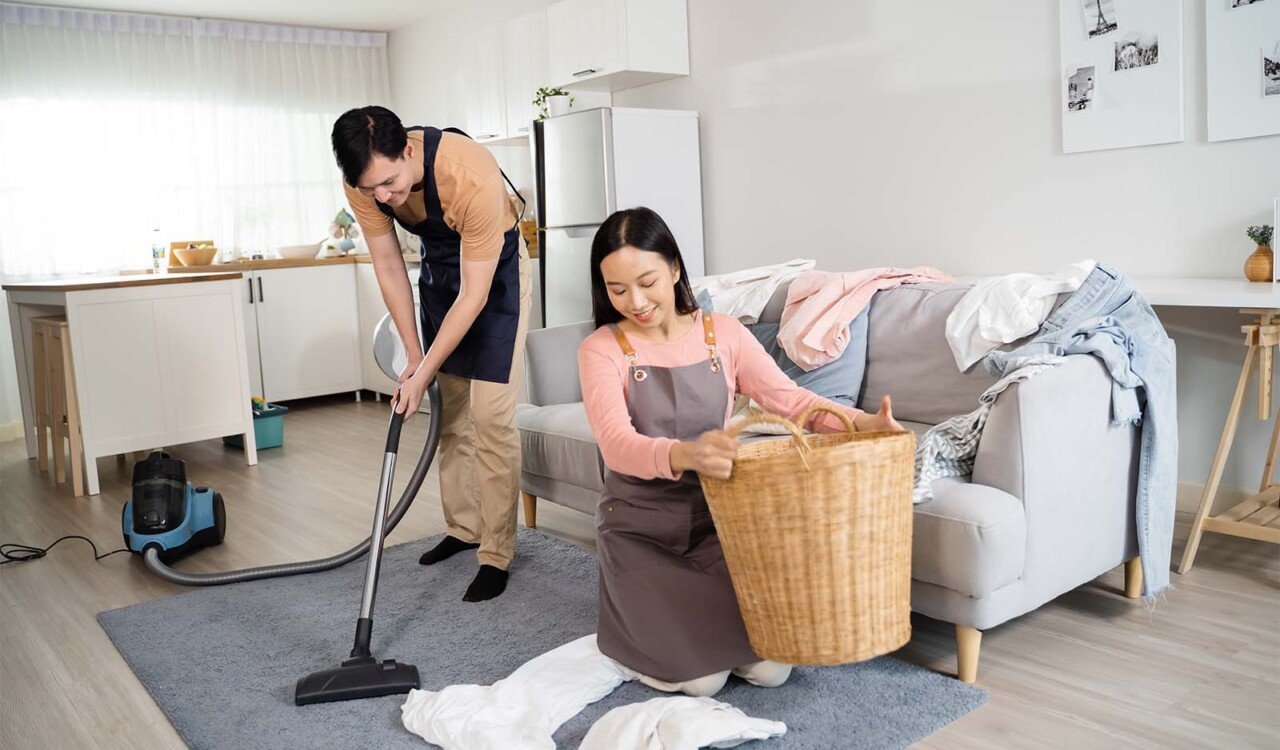
A hygienic home does not need to look sterile, smell strongly of disinfectant, or be cleaned from top to bottom every day. Good home hygiene is mostly about controlling dirt, moisture, food residue, allergens, and the surfaces that are most likely to spread germs. The most effective routine is therefore selective: clean high-touch areas regularly, remove visible soil before using disinfectants, keep kitchens and bathrooms dry enough to discourage mold, and use stronger disinfection only when the situation actually calls for it. CDC guidance on CDC: Cleaning and Disinfecting makes an important distinction between cleaning and disinfecting, noting that ordinary cleaning with soap or detergent removes most germs from household surfaces in many situations.
That distinction can save both time and unnecessary chemical use. Cleaning physically removes dirt, organic material, and many microorganisms; sanitizing reduces germs to safer levels in specific contexts; disinfecting is intended to kill remaining germs on a surface. In a healthy household, routine cleaning is normally the foundation, while disinfection becomes more important when someone is sick, when a high-risk person lives in the home, or when a surface has been contaminated in a way that ordinary cleaning alone does not adequately address. A sustainable cleaning routine should also be realistic enough to continue for months, because a simple system performed consistently is more effective than an exhausting deep-cleaning plan that is abandoned after a week.
Prioritize the Places Where Dirt, Moisture, and Hands Concentrate
The kitchen deserves frequent attention because food residue, raw ingredients, moisture, and repeated hand contact all come together there. Countertops, cutting boards, sink areas, refrigerator handles, appliance controls, cabinet pulls, and dining surfaces should be cleaned according to how heavily they are used, while spills should be handled promptly rather than allowed to dry or spread. Cutting boards and utensils used with raw meat, poultry, seafood, or eggs need careful washing and separation from ready-to-eat foods. The sink is another high-use zone that can accumulate food residue and moisture, so keeping it clean and allowing it to dry is generally more useful than repeatedly spraying every surrounding surface with disinfectant.
Bathrooms require a different strategy because moisture is often the main challenge. Toilets, taps, flush handles, light switches, shower controls, and frequently touched cabinet handles benefit from regular cleaning, but ventilation and drying are just as important. Persistent dampness around grout, silicone, ceilings, or poorly ventilated corners creates conditions in which mold can grow, and no amount of surface fragrance solves a moisture problem. After showers, ventilation fans, open doors or windows where practical, and drying visibly wet areas can reduce the conditions that allow mold and mildew to return. Towels and bath mats should also be allowed to dry thoroughly between uses rather than remaining bunched in a humid room.
Bedrooms and living areas usually require less chemical cleaning and more dust, textile, and floor management. Bedding collects skin cells, sweat, and allergens, while carpets and upholstered furniture can trap dust and debris. Regular vacuuming, laundering bed linens on an appropriate schedule, and wiping visibly dusty surfaces usually provide more benefit than disinfecting furniture that is not frequently touched. In homes with pets, hair, dander, litter tracking, and pet-accessible surfaces may need more frequent attention. A household using a self-cleaning litter system still needs to clean the surrounding floor and monitor odor or tracked material because automation does not eliminate the hygiene needs around the device.
Build a Routine Around Frequency, Not Perfection
A useful cleaning schedule separates daily tasks from weekly and occasional work. Daily cleaning should focus on what becomes unhygienic or difficult if ignored: food spills, kitchen worktops after preparation, dishes, obvious bathroom soil, and clutter or debris that interferes with normal use. Weekly cleaning can cover floors, bathroom fixtures, dusting, bedding, and more thorough kitchen cleaning. Less frequent work can include the inside of the refrigerator, oven, extraction filters, window tracks, behind furniture, and other areas where soil accumulates slowly. The goal is not to follow a universal timetable but to match frequency to household size, pets, children, allergies, cooking habits, and how quickly a particular area becomes dirty.
| Frequency | Typical priorities | Why it matters |
|---|---|---|
| Daily or as needed | Food-contact surfaces, dishes, spills, high-use bathroom areas, obvious floor debris | Prevents residue and moisture from accumulating |
| Weekly | Vacuuming, mopping, bathroom fixtures, dusting, bedding, frequently touched handles and switches | Controls routine soil, allergens, and high-contact contamination |
| Monthly or periodically | Appliance interiors, vents, filters, under furniture, grout review, storage areas | Addresses slower buildup and maintenance issues |
High-touch surfaces deserve attention because many hands contact them repeatedly, but frequency still depends on context. Door handles, light switches, remote controls, refrigerator handles, faucet controls, and shared electronics can be cleaned more often in a busy household than in a home occupied by one person. The CDC’s CDC: When and How to Clean and Disinfect Your Home guidance recommends regular cleaning of high-touch surfaces and cleaning other surfaces when they are visibly dirty or as needed. That approach is more practical than treating every surface in every room as equally urgent.
Use the Right Tools and Treat Indoor Air as Part of Hygiene
Good tools reduce the amount of effort required to clean well. Microfiber cloths are useful because they can collect fine dust and soil with less need for excessive product, while a vacuum with suitable filtration can help control dust, hair, and particles on floors and upholstery. Mops, brushes, squeegees, and small detail tools should be chosen for the surfaces in the home rather than purchased simply because a large cleaning kit looks complete. Resources such as Cleanestor and Cleanestor Buying Guides can be used to compare household cleaning equipment, but the best tool is the one that matches the surface, can be maintained easily, and will actually be used consistently.
Cleaning tools themselves also need maintenance. Reusing a dirty cloth across several rooms can spread soil instead of removing it, and a vacuum with an overloaded filter or full bin loses performance. Mop heads should be washed and dried, brushes should be rinsed, and microfiber cloths should be laundered according to their care instructions. Keeping separate cloths for kitchen, bathroom, and general dusting can also reduce cross-contamination. The principle is simple: a cleaning tool should leave the next surface cleaner than it found it.
Indoor air quality belongs in a home-hygiene plan because many household problems are not limited to visible surfaces. Dust, smoke, combustion products, fragrances, moisture, and mold can affect the quality of indoor air, and ventilation often matters as much as surface cleaning. The U.S. EPA: Indoor Air Quality guidance emphasizes keeping areas clean and dry, controlling moisture, ventilating when using products that release pollutants, and addressing sources of indoor contamination. An air purifier can be useful in some homes, particularly when it is appropriately sized and maintained, but it should not be treated as a substitute for source control, ventilation, vacuuming, or fixing water leaks.
Moisture control is especially important because mold returns when the underlying water problem remains. Leaks, condensation, poorly ventilated bathrooms, damp basements, and water-damaged materials need attention at the source. A surface may look clean after mold is wiped away, but if the area remains wet the problem is likely to recur. Keeping indoor humidity in a reasonable range, using exhaust ventilation, and drying wet materials promptly generally contribute more to long-term hygiene than repeatedly applying stronger chemicals to the same damp area.
Disinfect Safely and Only When It Adds Value
Disinfectants are useful tools, but they work best when used for a specific reason. Cleaning should usually come first because dirt and organic material can interfere with the effectiveness of a disinfectant. When someone in the home is ill, high-touch surfaces in shared spaces may need more frequent cleaning and disinfection, especially where respiratory or gastrointestinal infections are a concern. Household members should follow product labels for contact time, dilution, ventilation, and surface compatibility rather than assuming that more product or a stronger concentration is better. Gloves may be appropriate for some products, and children and pets should be kept away from treated areas when the label requires it.
Bleach deserves particular caution. The CDC: Cleaning and Disinfecting with Bleach guidance warns never to mix household bleach or disinfectants with other cleaners because dangerous vapors can be released. If bleach is used, the concentration and dilution should follow current label or public-health instructions, and the room should be adequately ventilated. Mixing bleach with ammonia, acids, toilet cleaners, or other products is not a stronger cleaning method; it is a chemical hazard. For ordinary daily cleaning, soap or detergent is often sufficient, which is another reason not to treat bleach as a default solution for every room.
“Natural” cleaners also need realistic expectations. Vinegar, baking soda, and mild soaps can be useful for certain cleaning tasks, odors, or mineral deposits, but a household ingredient should not automatically be assumed to disinfect against every pathogen. Product choice should match the purpose: use a suitable cleaner for soil removal and an appropriately registered disinfectant when disinfection is genuinely needed. This prevents both under-cleaning and unnecessary chemical exposure while making the routine easier to understand.
Laundry, Illness, Children, and Pets Change the Details
Laundry hygiene depends on what is being washed and why. Everyday clothing normally needs ordinary laundering with detergent and complete drying, while heavily soiled items, kitchen cloths, bathroom towels, bedding from an ill person, or items contaminated with bodily fluids may need a more careful process. Avoid shaking contaminated laundry unnecessarily because that can spread particles into the surrounding area. Washing machines, detergent drawers, seals, and laundry baskets should also be kept clean enough that freshly washed items are not immediately re-exposed to residue or mold.
Homes with children and pets benefit from a risk-based approach rather than indiscriminate disinfection. Floors and low surfaces may need more frequent cleaning because children play close to them and pets move between indoor and outdoor areas. At the same time, products should be chosen and stored with safety in mind, and cleaning solutions should never be left where children or animals can access them. Pet bowls, feeding areas, toys, litter zones, and bedding should be cleaned according to use, while strong fragrances or unnecessary chemical residues should not be treated as signs of cleanliness.
When someone is sick, routines should become more targeted. Shared bathroom surfaces, frequently touched handles, bedside tables, devices, and kitchen touchpoints may need more attention, while personal items can be separated when practical. Good hand hygiene, ventilation, appropriate laundry handling, and cleaning before disinfecting are all part of the same system. Once the illness has passed, the household can return to its normal routine instead of maintaining a permanent high-disinfection schedule.
Conclusion
The most effective home-cleaning system is one that keeps the home dry, removes soil before it builds up, gives extra attention to food-contact and high-touch areas, and uses disinfectants only when they provide a clear benefit. Kitchens and bathrooms need frequent attention for different reasons, bedrooms and living spaces benefit from dust and textile control, and indoor air quality improves when moisture and pollutant sources are addressed rather than masked. A realistic daily, weekly, and periodic schedule makes these tasks manageable without turning housekeeping into an endless project. Clean consistently, ventilate where needed, control moisture early, maintain the tools used for cleaning, and reserve stronger disinfection for situations where it is actually justified. That approach supports hygiene while avoiding the common mistake of equating more chemicals and more frequent deep cleaning with a healthier home.