
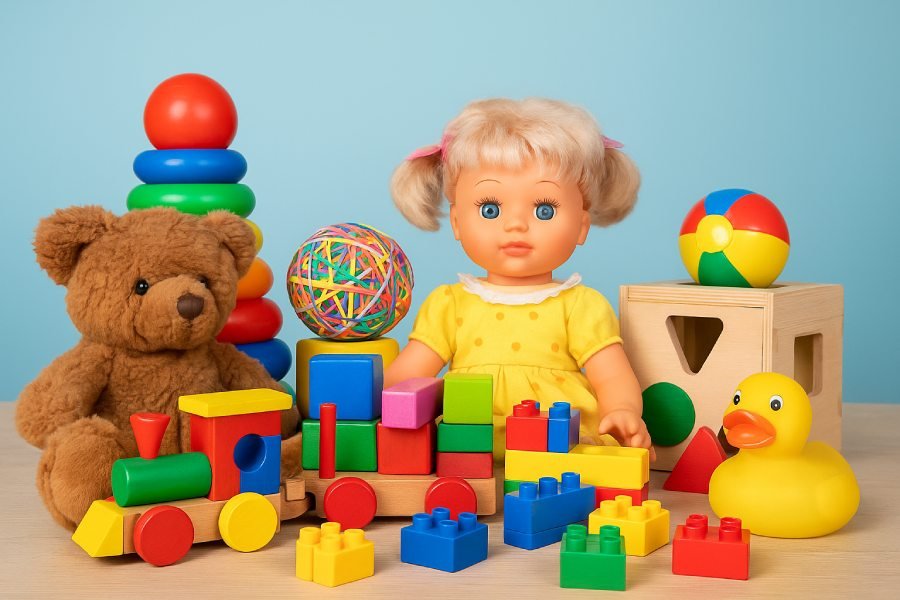
Toy manufacturing has evolved from relatively simple mechanical products into a global industry that includes electronics, rechargeable batteries, connected devices, apps, magnets, sound systems, complex plastics, coatings, and products sold across multiple regulatory markets. That evolution has made toy testing more important because a small design choice—such as a detachable part, battery-door screw, chemical additive, cord length, magnet, or projectile—can create a hazard that is not obvious from appearance alone. Toy testing is therefore not only a final laboratory exercise performed just before shipment. The most effective manufacturers use safety requirements during design, supplier qualification, prototype review, pre-production testing, factory quality control, and post-market monitoring. Testing is one part of a broader compliance system that links the intended age group, product design, materials, manufacturing consistency, labeling, and the laws of each country where the toy will be sold.
Why Toys Need a Different Safety Mindset
Children do not interact with products like careful adult users. A child may bite, throw, twist, pull, climb on, sleep with, dismantle, or misuse a toy in a reasonably foreseeable way. Young children also explore objects with their mouths and may not recognize choking, strangulation, electrical, chemical, or magnetic hazards. Toy standards are designed around these patterns of behavior rather than assuming the product will be used exactly as an adult instruction manual describes. Age grading is therefore a safety decision, not only a marketing category. The intended age affects the applicable small-parts tests, foreseeable abuse, labeling, developmental suitability, and whether particular features are acceptable. A product marketed to older children cannot always escape younger-child requirements if its design, packaging, advertising, or play pattern clearly appeals to a younger age group.
Mechanical and Physical Testing. Mechanical tests assess whether normal use and foreseeable abuse can create sharp points, sharp edges, dangerous openings, exposed mechanisms, unstable structures, detached small parts, or other physical hazards. Test programs may include torque, tension, drop, impact, compression, flexure, and use-and-abuse procedures depending on the toy type and standard. The important principle is that a toy that looks safe before testing can become unsafe after stress. A wheel cap may detach after repeated impact, a plastic housing may crack and expose an edge, or a fastener may loosen enough to release a battery. Designers should therefore consider the condition of the toy after foreseeable use, not only the pristine sample leaving the factory.
Small Parts and Choking Hazards. Small components are a major concern for toys intended for young children because they can obstruct the airway. Testing determines whether parts are small enough to present a choking hazard and whether components that are initially secure can detach during foreseeable use and abuse. Buttons, wheels, eyes on plush toys, caps, beads, suction cups, decorative elements, and fragments from broken housings may all require evaluation. Manufacturers should review attachment methods during design rather than waiting for a failed laboratory test. Increasing a screw length, changing a snap fit, redesigning a weld, or eliminating an unnecessary decorative part may be cheaper before tooling than after production has begun.
Sharp Points, Edges, Pinch Points, and Entrapment
Metal parts, broken plastics, wires, rods, springs, and sheet components can create laceration or puncture hazards. Hinges and folding mechanisms can create pinch or crush points, while holes and gaps can trap fingers, limbs, or a child’s head depending on the product. Activity toys such as swings, slides, ride-ons, and climbing structures require special attention because the forces and body interactions are different from a small tabletop toy. Packaging and assembly instructions can affect these hazards as well. A toy that is safe when assembled correctly may become unstable if the instructions allow a caregiver to install a structural component backwards or omit a locking fastener. Safety review should therefore include the complete consumer experience.
Flammability and Heat. Toy safety requirements can address flammability of particular materials and the risk that a product burns too rapidly or creates an unacceptable hazard when exposed to ignition. Electrical toys introduce additional thermal considerations because motors, wires, batteries, chargers, and electronic components can overheat even when the outer materials are not highly flammable. Manufacturers should distinguish between the flammability provisions of a toy standard and separate legal requirements that may apply to fabrics, costumes, sleep products, electrical devices, or hazardous substances. Compliance with one toy test does not automatically establish compliance with every rule relevant to the finished product.
Chemical Testing and Material Control. Toys can expose children to substances through mouthing, skin contact, ingestion of coatings, or dust from materials. Chemical testing may address lead and other elements, phthalates, certain dyes, preservatives, solvents, or other restricted chemicals depending on the market and product. The test plan should be based on the actual material composition and regulatory requirements rather than running the same generic panel on every toy. Supplier documentation is useful but does not always replace testing. A certificate for raw red plastic does not automatically cover blue plastic from another resin supplier, a new paint system, printed decoration, adhesive, or recycled-content batch. Material changes should trigger a documented compliance review so that old test reports are not applied to a new formulation without justification.
Battery Compartments, Magnets, and Electronic Toys
Button and coin batteries are particularly hazardous if swallowed, so battery compartments and fasteners require careful design. Screws and covers should resist foreseeable child access where the applicable standard requires it, and the product should be assessed after abuse testing because a compartment that is secure when new may open after impact. Charging systems, wiring, polarity, short-circuit protection, temperature rise, and accessible electrical energy may also need evaluation. High-powered small magnets can create severe internal injuries if more than one is swallowed, or if a magnet and another metal object attract through tissue. Toy designers should minimize the likelihood that hazardous magnets can detach and should understand the specific legal restrictions in each market. A product should not depend only on a warning label when the hazard can be designed out.
Projectiles, Sound, Cords, and Other Product-Specific Hazards. Projectile toys may require assessment of kinetic energy, tip geometry, protective features, and the way projectiles can be substituted or modified. Sound-producing toys can be evaluated for acoustic output because loud sound close to a child’s ear can create hearing risk. Cords, straps, loops, and elastics require review for strangulation and entanglement, particularly on toys intended for younger children. This is why a good laboratory first asks what the toy is and how it will be used before issuing a quotation. Not every clause applies to every product, and product-specific hazards determine which parts of the relevant standard must be tested.
India: BIS Toy Certification Remains Compulsory. In India, toys are among the products subject to compulsory Bureau of Indian Standards certification under the Toys (Quality Control) framework. BIS currently lists non-electric toys against relevant parts of IS 9873 and electric toys against IS 15644 under its compulsory certification scheme. The official BIS: Toy Certification FAQs provide background on the certification system, while BIS’s current compulsory-certification pages should be checked for amendments and transition orders. As of 2026, BIS has continued updating the toy QCO framework, including a 2026 transition-facilitation order. Manufacturers should therefore avoid relying only on a certificate or guidance PDF saved several years ago. Confirm the current Indian Standard editions, scope, licensing conditions, factory requirements, marking rules, and any transition dates before production or import decisions.
United States: ASTM F963 and CPSC Requirements
In the United States, the federal toy safety rule incorporates ASTM F963 through 16 CFR Part 1250. CPSC guidance states that ASTM F963-23 became effective for toys manufactured on or after April 20, 2024. The standard addresses a wide range of hazards including mechanical and physical safety, materials, acoustics, batteries, fasteners, magnets, projectile toys, and other product-specific provisions. For toys designed or intended primarily for children 12 and under, federal law generally requires third-party testing by a CPSC-accepted laboratory for applicable children’s product safety rules and certification in a Children’s Product Certificate. The U.S. CPSC: Toy Safety Business Guidance should be used when determining which sections require third-party testing and how certification applies to the specific product.
European Union: New Toy Safety Regulation. The European Union adopted a new Toy Safety Regulation in 2025. According to the European Commission: New Toy Safety Regulation, it entered into force on January 1, 2026 and will apply from August 1, 2030 after the transition period. The regulation strengthens chemical restrictions and introduces a digital product passport containing safety and compliance information. Manufacturers planning products with long development cycles should not wait until 2030 to understand the transition. Tooling, materials, supplier contracts, technical documentation, QR or data-carrier placement, and digital systems may need time to adapt. Products placed on the EU market during the transition still need to comply with the legally applicable requirements at that time.
One Test Report Does Not Create Global Compliance. A toy that passes a U.S. test plan is not automatically compliant in India or the European Union. Standards may address similar hazards but use different methods, chemical limits, age classifications, labeling, documentation, certification systems, and importer responsibilities. The manufacturer should create a market-specific compliance matrix that maps every destination country to the applicable requirements. This approach prevents a common mistake in export manufacturing: testing a toy once, then assuming the same report will support every customer and jurisdiction. Some test data may be reusable, but the legal decision needs to be made against each market’s rules.
Testing Should Begin Before Tooling
The cheapest safety problem is the one removed during design. Before expensive molds are cut, engineers can review small detachable components, sharp-edge risks, battery access, magnet retention, cord lengths, projectile energy, material choices, and foreseeable misuse. Prototype testing then checks whether the design behaves as expected and identifies weaknesses before mass-production tooling is locked. Pre-production samples should represent the actual materials and manufacturing process as closely as possible. A hand-built prototype made with different glue, paint, screws, or plastic resin may pass tests that the production toy fails. The transition from prototype to factory production should therefore include a controlled compliance review.
Supplier Qualification and Change Control. Toy safety depends heavily on the supply chain. Resin suppliers, paint vendors, battery manufacturers, magnet suppliers, textile mills, printers, and assembly factories can all introduce changes that affect compliance. Purchase specifications should define restricted substances, mechanical requirements, approved materials, documentation, and the obligation to notify the manufacturer before changing formulation or source. A supplier’s verbal statement that a material is “the same” is not enough when a compliance-critical ingredient changes. The manufacturer should decide whether the existing test evidence still applies, whether targeted retesting is needed, and whether certification records must be updated.
Production Quality Control Keeps a Tested Design Compliant. Laboratory testing demonstrates the safety of tested samples under defined conditions. It does not guarantee that every production unit will be identical. Factory controls should therefore monitor dimensions, fastener torque, glue application, weld quality, small-part attachment, battery covers, labels, material batches, and other characteristics that could change safety performance. Golden samples, first-article inspection, incoming material checks, in-process measurements, final inspection, and periodic retesting can help detect drift. Quality metrics should focus on safety-critical defects rather than only cosmetic rejection rates.
Connected Toys Add Privacy and Cybersecurity Risks
Smart toys can contain microphones, cameras, Bluetooth, Wi-Fi, cloud accounts, location functions, or companion apps. Traditional mechanical and chemical toy testing does not address all of the risks created by those features. Manufacturers may also need privacy, data-security, radio, software-update, and cybersecurity reviews depending on the market and functionality. A connected toy should be designed with data minimization, secure authentication, update mechanisms, and clear parental controls where appropriate. Safety and cybersecurity teams should work together because a compromised connected feature can create physical or privacy consequences that a traditional drop test will never reveal.
How to Choose a Toy Testing Laboratory. Ask which standards and regulatory scopes the laboratory is accredited or accepted to test, whether it is recognized by the relevant regulator, how it selects applicable clauses, and how it handles subcontracted tests. For U.S. children’s product certification, verify CPSC acceptance for the specific scope involved. For other markets, confirm that the laboratory and report format meet the customer’s and regulator’s requirements. A useful laboratory should also be able to explain why a test is applicable, not merely sell the largest possible test package. The manufacturer remains responsible for compliance, so understanding the test plan is part of product governance.
Post-Market Monitoring and Recall Readiness. Compliance work continues after launch. Customer complaints, returned toys, injury reports, marketplace reviews, and factory nonconformities can reveal problems that premarket testing did not predict. Manufacturers should have a process to investigate safety signals, identify affected batches, preserve traceability, and decide whether corrective action or regulatory reporting is required. Good traceability links finished products to production dates, factories, material batches, and distribution channels. If a recall becomes necessary, precise records can reduce the number of unaffected products pulled from the market and help regulators understand the scope of the issue.
A Practical Toy Compliance Workflow
- Define the intended age group and countries of sale.
- Create a compliance matrix for each target market.
- Review hazards before tooling and select controlled materials.
- Test representative prototypes and pre-production samples.
- Complete required certification and technical documentation.
- Establish safety-critical factory quality controls.
- Require suppliers to notify you before material or process changes.
- Retest or reassess when the design, material, supplier, or regulation changes.
- Monitor complaints and maintain recall-ready traceability after launch.
Conclusion
The growing complexity of toy manufacturing has made testing a continuous product-development responsibility rather than a final box to tick before shipping. Mechanical hazards, small parts, sharp edges, chemicals, batteries, magnets, sound, electronics, and connected features all require different forms of assessment, and the applicable requirements change with age grading and market. India’s compulsory BIS framework, the U.S. ASTM F963/CPSC system, and the European Union’s new Toy Safety Regulation illustrate why one global test report is rarely enough. Manufacturers that build compliance into design, supplier control, production quality, and post-market monitoring are better positioned to protect children and avoid costly redesigns, shipment holds, or recalls.