
Telehealth has moved from an experimental service into a routine part of healthcare. Patients now use video visits, secure messaging, remote monitoring and digital tools for many forms of care that once required a trip to a clinic. The technology can make healthcare easier to reach, especially for people with mobility limitations, long travel distances or frequent follow-up needs. Virtual care is not a replacement for every in-person service. A video visit cannot perform a physical examination that requires palpation, imaging or a procedure. Remote monitoring can generate useful data but can also produce false alarms or gaps when devices are used incorrectly. Privacy, broadband access, reimbursement and state licensing remain important practical constraints. The most accurate way to understand telehealth in 2026 is therefore to treat it as a set of care-delivery tools rather than a single technology. The right question is not whether telehealth is universally better than face-to-face medicine. It is which patients, clinical problems and workflows benefit from remote care and when an in-person visit is still necessary.
What Is Telehealth?
Telehealth is a broad term covering the delivery of healthcare, health information and health-related services through telecommunications and digital technology. It can include: Live video visits.; Telephone consultations.; Secure patient messaging.; Remote patient monitoring.; Store-and-forward transmission of images or records.; Digital behavioral-health services.; Remote specialist consultation.; Some forms of patient education and care coordination.. Federal and state programs may define the term somewhat differently for regulatory and reimbursement purposes. What Is Telemedicine? Telemedicine is often used more narrowly to describe clinical care delivered at a distance. A dermatology video consultation, remote psychiatric appointment or physician review of a wound photograph can be described as telemedicine. Telehealth can include those clinical activities while also covering broader functions such as education, care management and remote monitoring. In ordinary conversation, the terms are often used interchangeably. For legal, billing or policy decisions, however, providers should use the definitions that apply in the relevant jurisdiction and payer policy.
The Main Types of Virtual Care
Telehealth is easier to understand when divided by how information moves between patient and clinician. Synchronous Telehealth: Synchronous care occurs in real time. Examples include: A video appointment with a primary-care clinician.; A telephone mental-health visit.; A specialist joining a rural clinic consultation through video.. The advantage is immediate interaction. The clinician can ask follow-up questions, observe the patient and adjust the conversation in real time. Asynchronous or Store-and-Forward Care: Asynchronous care does not require patient and clinician to be connected at the same moment. A patient or healthcare professional may upload: Photographs.; Questionnaires.; Laboratory information.; Medical records.; Recorded symptoms.. A clinician reviews the information later and responds. This model can be particularly useful when a specialist needs high-quality information but not a live conversation. Remote Patient Monitoring: Remote patient monitoring, often abbreviated RPM, uses connected devices to collect health information outside a traditional clinical setting. Depending on the program, devices may track: Blood pressure.; Weight.; Blood glucose.; Heart rate.; Oxygen saturation.; Other physiologic measurements.. The data can help clinicians follow chronic conditions or recovery between visits. RPM is not simply “collecting more data.” A useful program needs clear thresholds, responsibility for reviewing alerts and a plan for what happens when a measurement is abnormal. Telehealth Is Older Than the Internet: The idea of delivering healthcare across distance predates modern video platforms. Doctors have used telephones for clinical communication for more than a century, and medical information such as electrocardiographic signals was transmitted over communication lines long before broadband internet became common. What changed was the combination of affordable cameras, mobile devices, electronic health records, broadband connectivity and digital payments. These technologies made remote care much easier to scale. COVID-19 Accelerated Adoption: The COVID-19 pandemic dramatically expanded telehealth use because healthcare systems needed ways to maintain care while reducing unnecessary physical contact. Governments and payers temporarily relaxed many restrictions, healthcare organizations rapidly deployed video systems and patients became more familiar with remote visits. Telehealth use later declined from emergency-era peaks, but the pandemic permanently changed expectations. Virtual care is now part of the normal service mix in many health systems.
When Telehealth Works Well
Virtual care can be especially useful when the clinical task depends primarily on conversation, observation, review of existing data or ongoing monitoring. Examples may include: Medication follow-up.; Behavioral health.; Chronic disease management.; Review of laboratory results.; Post-discharge follow-up.; Some dermatology consultations.; Nutrition counseling.; Routine follow-up after a stable diagnosis.. Appropriateness depends on the patient, diagnosis and clinician’s ability to obtain enough information remotely. When an In-Person Visit Is Still Important: Telehealth should not create a barrier to physical evaluation when one is needed. An in-person visit may be more appropriate when care requires: A hands-on physical examination.; Imaging.; Laboratory specimen collection.; A procedure.; Urgent stabilization.; Detailed neurologic or musculoskeletal examination.; Evaluation of symptoms that cannot be assessed safely by video or telephone.. Good telehealth systems make escalation easy rather than trying to keep every patient in the virtual channel. Telehealth and Primary Care: Primary care is well suited to a hybrid model. A patient may use a video visit for a medication review, send home blood-pressure readings electronically and attend the clinic periodically for physical examinations, vaccines and testing. This combination can reduce unnecessary travel while preserving the functions that require physical presence. Telehealth and Mental Health: Behavioral health became one of the most durable areas of telehealth adoption. Virtual visits can reduce travel, increase scheduling flexibility and allow patients to receive care from home. For some people, the privacy of home makes it easier to participate. For others, home may not be private or safe enough for a confidential session. Clinicians need plans for emergencies, patient location and crisis response, especially when providing care across distance. Telehealth and Chronic Disease Management: Chronic conditions often require frequent small adjustments rather than one annual intervention. Virtual follow-up can help clinicians review: Home blood-pressure logs.; Glucose data.; Medication adherence.; Symptoms.; Diet and activity goals.. Remote monitoring is most valuable when information leads to timely clinical action. Simply generating dashboards without a response workflow can add burden without improving care. Telehealth and Nursing: Nurses play a major role in virtual care. Nursing functions can include: Triage.; Patient education.; Remote monitoring review.; Medication reconciliation.; Care coordination.; Post-discharge follow-up.; Chronic-condition coaching..
Virtual nursing does not eliminate bedside nursing. It can redistribute tasks so some education, documentation or observation occurs remotely while bedside staff focus on care that requires physical presence. Telehealth and Specialists: Specialist access is one of telehealth’s strongest potential benefits. A rural hospital or clinic may connect a patient with a distant specialist instead of requiring hours of travel. Specialties that have used telehealth include: Psychiatry.; Dermatology.; Neurology.; Cardiology.; Endocrinology.; Infectious disease.; Rehabilitation.. The practical design varies. Some visits occur directly from the patient’s home. Others use a local clinic where staff can take vital signs or assist with examination.
Benefits for Patients:
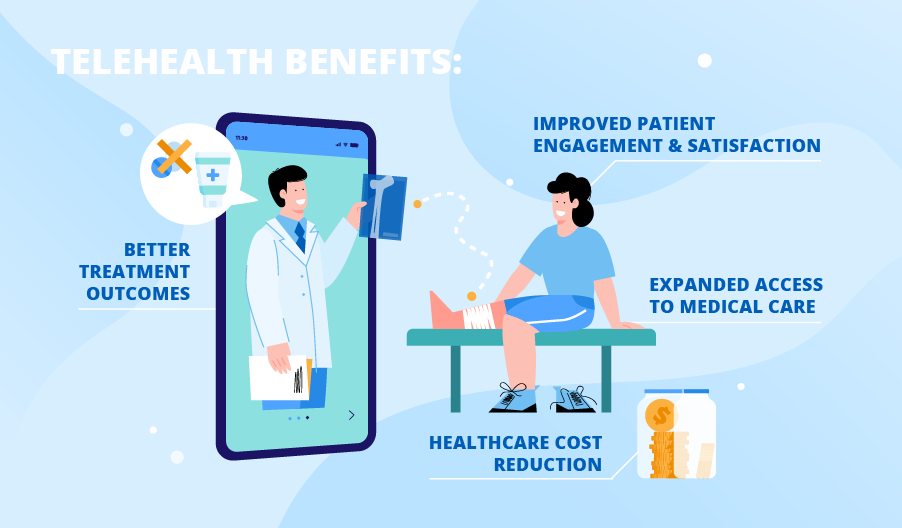
Potential benefits include: Less travel.; Reduced transportation expense.; Less time away from work or caregiving.; Easier follow-up.; Access to specialists who are not local.; Continuity during mobility limitations or bad weather.. These benefits are especially meaningful for people who live far from healthcare facilities. Benefits for Healthcare Systems: Health systems may use telehealth to: Extend specialist capacity.; Support rural facilities.; Coordinate care after discharge.; Reduce some missed appointments.; Monitor selected patients at home.; Offer flexible workforce models.. Telehealth does not automatically reduce costs. Technology, staffing, licensing, billing and monitoring infrastructure all require resources. Patient Satisfaction: Many studies report high satisfaction with virtual care, but satisfaction depends on the type of visit and patient expectations. People may appreciate convenience while still preferring in-person care for new diagnoses, complex symptoms or emotionally sensitive conversations. Organizations should measure more than satisfaction. Clinical outcomes, safety, follow-up completion and equity matter too. Clinical Quality: Telehealth quality cannot be judged with one universal conclusion. For some well-defined services, outcomes can be comparable to in-person care. For other situations, evidence may be limited or physical examination may be essential. Quality depends on: Patient selection.; Clinical protocol.; Technology reliability.; Escalation procedures.; Clinician training.; Integration with the health record..
The Digital Divide
Telehealth can improve access and worsen inequality at the same time. A patient may lack: Reliable broadband.; A suitable smartphone or computer.; Private space.; Digital literacy.; Language support.; Accessibility features.. Health systems should therefore preserve alternatives such as telephone or in-person care where permitted and appropriate. Accessibility: Virtual-care systems should work for people with disabilities. Useful features can include: Captions.; Interpreter integration.; Screen-reader compatibility.; Keyboard navigation.; Clear instructions.. A technically available service is not truly accessible if the interface prevents a patient from using it. Privacy and Security: Telehealth involves sensitive health information moving through networks, devices and software platforms. Healthcare organizations need appropriate safeguards around: Authentication.; Encryption.; Access control.; Device security.; Data retention.; Vendor agreements.. Patients also need practical privacy. A secure video platform cannot prevent a roommate from overhearing a visit. Licensing Across State Lines: In the United States, professional licensing is primarily state based. A clinician may need authorization to treat a patient located in another state, depending on profession, state law, compacts and exceptions. This means the patient’s location during the visit can be legally important even when the clinician never leaves their office. Providers should verify current licensing requirements rather than assuming telehealth automatically permits nationwide practice. Prescribing Through Telehealth: Remote prescribing is governed by federal and state rules that can differ depending on the medication, patient relationship and clinical setting. Controlled substances receive particular regulatory attention. Because these policies can change, clinicians should follow current federal agency guidance and state law rather than older pandemic-era summaries.
Medicare Telehealth Rules in 2026
U.S. federal telehealth policy continues to evolve. According to current HHS telehealth guidance, recent federal legislation extended many Medicare telehealth flexibilities through December 31, 2027. For non-behavioral and non-mental-health services during this period: Medicare patients can receive eligible telehealth services in their homes.; Geographic restrictions on the originating site remain waived.; Eligible Medicare providers can provide telehealth services under the extended rules.; Federally Qualified Health Centers and Rural Health Clinics can continue serving as distant-site providers for qualifying services.. Exact covered services and billing requirements can change, so providers should verify current CMS and HHS guidance before billing. Behavioral Health Has Some Permanent Telehealth Policies: Federal policy treats behavioral and mental-health telehealth differently in several areas, with some flexibilities made permanent. This is another reason not to assume one reimbursement rule applies to every service. Organizations should separate: Permanent policy.; Temporary statutory extensions.; Payer-specific rules.; State requirements.. Medicaid and Private Insurance: Medicaid telehealth policies vary by state, and private health plans can have their own coverage rules. Providers and patients should confirm: Whether the service is covered.; Which clinicians can bill.; Whether audio-only care qualifies.; Patient cost sharing.; Documentation requirements.. Coverage is a policy question, not a clinical definition of telehealth. Audio-Only Care: Telephone care remains important for patients who cannot use video. Audio-only visits can support certain follow-up, behavioral-health and management services depending on payer rules. The clinical limitation is obvious: the clinician cannot see the patient. But excluding telephone care completely can disproportionately affect people with limited broadband or digital access. Remote Monitoring and Alert Fatigue: Connected devices can produce many measurements. More data is useful only if teams know which readings deserve attention. A poorly designed program can create: False alerts.; Duplicate work.; Unclear responsibility.; Patient anxiety.; Clinician burnout.. Programs should define escalation thresholds and determine who reviews data before enrolling large numbers of patients. AI and Telehealth: Artificial intelligence is increasingly appearing in virtual-care workflows through: Documentation assistance.; Message drafting.; Triage support.; Image analysis.; Risk prediction.. AI can reduce administrative work, but clinical outputs require appropriate oversight. A fluent automated response is not the same as a validated medical decision.
Health systems need clear governance around training data, bias, privacy and accountability. How to Prepare for a Telehealth Visit: Patients can improve a virtual visit by preparing: A medication list.; Home readings if requested.; Questions and symptoms.; A quiet private space.; A charged device and stable connection.; Relevant photographs or records when instructed.. If the clinician needs to see a rash, swelling or wound, good lighting can make a major difference. What Providers Need for High-Quality Virtual Care: Clear patient-selection criteria.; Reliable technology.; Identity verification.; Patient-location confirmation when legally necessary.; Privacy and security safeguards.; Access to the health record.; An escalation pathway to in-person care.; Emergency procedures.; Documentation and billing workflows.; Quality monitoring..
Hybrid Care Is Likely to Be the Durable Model
The most useful future is unlikely to be “virtual care replaces clinics.” Hybrid care uses each setting for what it does best. A patient might: Complete intake electronically.; Use video for medication follow-up.; Send home blood-pressure data.; Attend the clinic for examination and laboratory testing.; Receive results through a secure portal.. The patient experiences one care pathway even though several modes are used. What is the difference between telehealth and telemedicine? Telemedicine usually refers specifically to clinical care delivered remotely, while telehealth can include a broader range of clinical, monitoring, educational and care-coordination activities. Is telehealth as good as an in-person visit? It depends on the problem. Some services can be delivered very effectively virtually, while other conditions require a physical examination, testing, imaging or procedures. Can Medicare patients receive telehealth at home in 2026? Yes for many eligible services. Current federal guidance says major Medicare telehealth flexibilities for non-behavioral and non-mental-health care have been extended through December 31, 2027. What is remote patient monitoring? Remote patient monitoring uses connected devices to collect health measurements outside the clinic and transmit the data for clinical management. Does telehealth eliminate the need for hospitals and clinics? No. Virtual care is best treated as an additional delivery channel within a healthcare system rather than a replacement for physical facilities. Telehealth.HHS.gov Medicare payment policies; Telehealth.HHS.gov current policy updates; Centers for Medicare & Medicaid Services telehealth information; HHS guidance on preparing patients for virtual care.
Conclusion
Telehealth is no longer an emerging novelty. It is an established way to deliver selected healthcare services through video, telephone, secure messaging and remote monitoring. Its greatest value appears when it removes unnecessary travel, extends specialist access or allows clinicians to follow patients between visits without sacrificing safety. Its limits appear when physical examination, procedures, reliable connectivity, privacy or legal requirements make remote care inappropriate. In 2026, the most realistic model is hybrid healthcare. Virtual and in-person care should not compete for ideological superiority. They should be combined according to the clinical task, patient circumstances and evidence. When health systems make escalation easy and preserve equitable access, telehealth becomes what it should be: one more way to deliver the right care at the right time.