
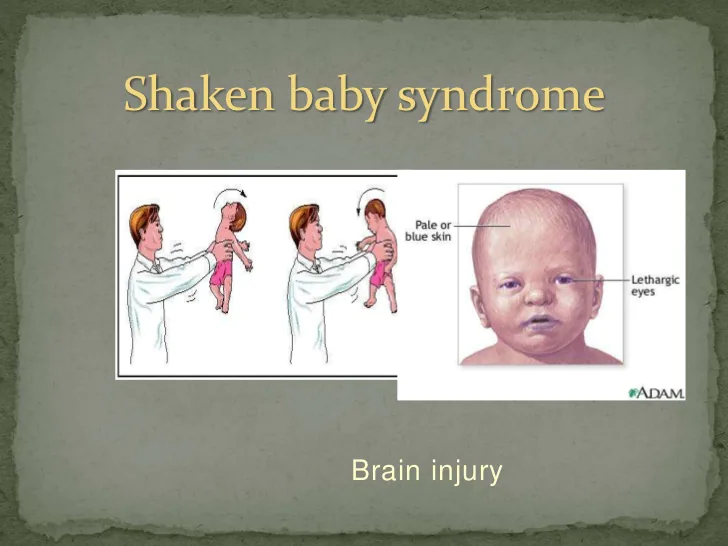
Abusive head trauma (AHT) is a serious injury to an infant or young child caused by inflicted head trauma. The public often uses the term shaken baby syndrome, but the American Academy of Pediatrics recommends the broader medical term abusive head trauma because injuries can result from violent shaking, blunt impact, or a combination of mechanisms. Focusing on only one mechanism can oversimplify a complex medical diagnosis. AHT can cause bleeding around the brain, brain injury, eye injuries, spinal injuries, seizures, breathing problems, permanent disability, or death. Some children are critically ill immediately. Others initially show nonspecific symptoms such as vomiting, unusual fussiness, sleepiness, or poor feeding, which is one reason the diagnosis can be difficult. The AAP’s 2025 technical report emphasizes that abusive head trauma should be evaluated through a thorough, objective medical assessment. It is not appropriately diagnosed from one symptom, one scan finding, or one simplified “triad.” Clinicians consider the history, physical examination, imaging, laboratory findings, eye examination when indicated, possible alternative medical explanations, and the overall pattern of injuries. This article explains what AHT is, why “shaken baby syndrome” is an incomplete medical term, warning signs, how doctors evaluate possible cases, possible long-term effects, and—most importantly—how caregivers can prevent these injuries when infant crying becomes overwhelming.
What Abusive Head Trauma Is—and Why the Terminology Matters
The American Academy of Pediatrics – Abusive Head Trauma in Infants and Children Technical Report (2025) describes abusive head trauma as a complex clinical diagnosis that may involve different mechanisms and injury patterns rather than a single finding or a single presumed action. That is one reason modern pediatric practice generally uses the broader term abusive head trauma instead of treating “shaken baby syndrome” as a complete medical diagnosis. Abusive head trauma is an inflicted injury involving the skull, brain, or related structures of an infant or child. The AAP uses the term because the injury can involve more than shaking alone. Possible mechanisms include: Forceful shaking.; Blunt impact to the head.; A combination of shaking and impact.. The key word is abusive: the injury is inflicted rather than accidental. Neglect, emotional abuse, and sexual abuse are serious forms of child maltreatment, but they should not be listed as direct physical “causes” of abusive head trauma unless a head injury was actually inflicted. The older version of this article incorrectly blurred those categories. Why “Shaken Baby Syndrome” Is Not the Preferred Medical Diagnosis. The American Academy of Pediatrics – Abusive Head Trauma Policy Statement, reaffirmed with updates in 2025 supports terminology that focuses on the injury and the full clinical evaluation rather than assuming one mechanism from one sign. The term shaken baby syndrome became widely known through public education campaigns. It remains useful in prevention because parents immediately understand the warning: never violently shake a baby.
For medical diagnosis, however, the AAP recommends abusive head trauma. There are several reasons: Not every abusive head injury involves shaking alone.; Some injuries involve impact.; A child may have several injury mechanisms.; The medical diagnosis should describe the injury pattern rather than assume one exact mechanism before the evidence is evaluated.. “Shaken baby syndrome” can therefore be understood as a familiar public term and as a subset of the broader category of abusive head trauma. Why Infants Are Especially Vulnerable Babies have proportionally large heads, relatively weak neck muscles, and developing brains. They cannot stabilize their heads the way older children and adults can. Violent acceleration, deceleration, and impact can therefore cause severe injury. Normal caregiving activities—such as gently rocking a baby, bouncing an infant on a knee, or ordinary play—are not the same as the violent force involved in abusive head trauma. What Can Abusive Head Trauma Do to the Brain? AHT can produce several kinds of injury, sometimes at the same time. These can include: Bleeding around the brain.; Direct brain injury.; Brain swelling.; Reduced oxygen delivery to the brain.; Skull or other fractures in some cases.; Spinal injury.; Retinal or other eye injury.. The severity varies. A child can have major brain injury without dramatic external bruising on the head.
Warning Signs, Emergencies and Medical Evaluation
The HealthyChildren.org – Head Injury in Children provides general emergency guidance for head injuries in children. Possible AHT symptoms can overlap with many other illnesses, so a concerning history, neurologic change, breathing difficulty, seizure, altered consciousness, repeated vomiting, poor feeding, or unusual lethargy requires prompt medical evaluation rather than an attempt to diagnose the cause at home. According to the AAP, signs can range from subtle to life-threatening. Possible symptoms include: Unusual irritability or fussiness.; Lethargy or difficulty staying awake.; Vomiting.; Poor feeding.; Decreased alertness.; Abnormal breathing or trouble breathing.; Seizures.; Loss of consciousness.; Coma.. These symptoms are not specific to abuse. Vomiting and sleepiness, for example, can occur with many childhood illnesses. The concern is that serious head injury may be one possible explanation, especially when the history, examination, or other findings do not fit a routine illness. When Is It an Emergency? Call emergency services immediately if an infant or child: Is not breathing normally.; Is unconscious or cannot be awakened.; Has a seizure.; Becomes suddenly very weak or unresponsive.; Has a suspected serious head injury.. If you know or strongly suspect that a child has been violently shaken, struck, or otherwise subjected to serious head trauma, seek emergency medical care even if the child initially seems relatively normal. Do not delay care because you are worried about explaining what happened. Accurate information helps clinicians treat the child safely. Why Some Cases Are Missed at First The AAP’s 2025 technical report notes that abusive head trauma can present with subtle, nonspecific symptoms. A baby may initially be brought for: Vomiting.; Fussiness.; Poor feeding.; Sleepiness.; A change in behavior.. Those symptoms can resemble common childhood illnesses. This is why clinicians are encouraged to perform a complete examination and consider whether the history explains the child’s condition.
Sentinel Injuries Can Matter The AAP technical report discusses sentinel injuries—earlier injuries in infants that may be minor in appearance but concerning because of the child’s developmental stage or the explanation provided. For example, unexplained bruising in a baby who is not yet mobile deserves careful attention. Recognizing concerning earlier injuries can sometimes prevent more severe harm. How Doctors Evaluate Possible Abusive Head Trauma No responsible clinician should diagnose AHT from a single checklist item. A medical evaluation may include: A detailed history of what happened and when symptoms began.; A complete physical examination.; Neurologic assessment.; Brain imaging when indicated.; Laboratory testing.; Evaluation for bleeding disorders or other medical conditions when appropriate.; Assessment for fractures or other injuries.; Eye examination by an experienced specialist when indicated.; Consultation with child abuse pediatrics, radiology, neurosurgery, ophthalmology, or other specialists.. The exact workup depends on the child’s age, symptoms, examination, and clinical situation. AHT Is Not Diagnosed From Retinal Bleeding Alone Older public discussions sometimes imply that retinal hemorrhage by itself “proves” abusive head trauma. That is inaccurate. Eye findings can be important evidence, but physicians interpret them in the context of the entire medical evaluation. Different patterns of retinal injury can carry different significance, and ophthalmology expertise may be needed to document and interpret findings appropriately. Subdural Hemorrhage Is Also Not a Standalone Diagnosis of Abuse Bleeding around the brain is an important finding, but doctors still need to determine the cause.
The differential diagnosis may include accidental trauma and medical conditions as well as inflicted injury. The AAP emphasizes careful evaluation rather than assuming that one imaging finding automatically establishes what happened.
Why Diagnosis Depends on the Whole Clinical Picture
Clinicians consider whether the explanation matches: The child’s developmental abilities.; The type and severity of injuries.; The timing of symptoms.; The physical examination.; Other available evidence.. A history that changes substantially or does not plausibly explain serious injuries may increase concern, but the medical team must still investigate objectively. Can Accidental Falls Cause Head Injuries? Yes. Children can suffer real head injuries from accidental falls. Most ordinary minor falls do not produce the same pattern and severity seen in serious abusive head trauma, but each case must be evaluated on its facts. If a child has concerning symptoms after any head injury—accidental or suspected abuse—medical care should be based on the child’s condition, not assumptions about the label. Medical Conditions Can Sometimes Mimic Parts of the Picture The AAP recognizes that physicians must consider alternative diagnoses where appropriate. Depending on the presentation, doctors may evaluate for conditions such as: Bleeding or clotting disorders.; Metabolic disease.; Infection.; Birth-related or medical history relevant to the findings.; Accidental trauma.. The existence of alternative possibilities does not make AHT an invalid diagnosis. It is precisely why a full medical evaluation is necessary.
Possible Outcomes and Follow-Up After Injury
Children who survive severe abusive head trauma may experience lasting effects. Potential outcomes include: Brain damage.; Seizure disorders.; Vision loss.; Hearing loss.; Cerebral palsy.; Learning disabilities.; Speech or language difficulties.; Intellectual disability.; Motor impairment.; Behavioral or developmental difficulties..
Some effects may not be obvious immediately and can become clearer as a child reaches developmental stages that require more complex skills. MyArticles’ guide to childhood development and milestones explains why ongoing developmental monitoring is important when a child has experienced a major neurologic injury.
Prevention: Responding Safely to Persistent Crying and Caregiver Stress
The HealthyChildren.org – Shaken Baby Syndrome and Abusive Head Trauma Prevention emphasizes a simple but important safety message: when a caregiver feels overwhelmed by crying, it is safer to place the baby in a safe sleep space, step away briefly, calm down, and seek help than to continue holding the child while angry or losing control. Infant crying can be extremely stressful, especially when caregivers are sleep-deprived and nothing seems to soothe the baby. AAP parent guidance emphasizes an important fact: healthy babies sometimes cry for long periods even when they are loved, fed, dry, and safe. Crying does not mean the baby is rejecting the caregiver or that the caregiver is failing. The dangerous moment occurs when frustration turns into an impulsive physical reaction. What to Do When a Baby Will Not Stop Crying First check ordinary needs: Hunger.; Diapering.; Temperature.; Tiredness.; Need for comforting.; Signs of illness..
If the baby is safe but you feel yourself becoming angry or losing control, AAP guidance recommends taking a break. Place the baby safely on their back in an appropriate crib or playpen.; Step away for several minutes.; Take slow breaths and allow yourself to calm down.; Call a trusted friend or family member for support.; Return when you are calm enough to care safely for the baby..
A crying baby in a safe crib is safer than a baby being held by a caregiver who feels close to losing control. When Crying Needs Medical Attention Persistent or unusual crying can sometimes reflect illness or injury. Contact a pediatric healthcare professional when: The baby looks or acts unusually ill.; Crying is very different from normal.; The infant cannot be consoled for a prolonged period.; Feeding is poor.; Vomiting occurs.; There is fever in a young infant.; You suspect pain or injury.. Emergency symptoms such as unresponsiveness, seizure, or trouble breathing require urgent emergency care. Never Shake, Hit, Throw, Slam, or Jerk a Baby The AAP’s prevention message is intentionally direct. It is never safe to: Violently shake a baby.; Strike the child’s head.; Throw or slam a baby.; Jerk a baby violently in frustration.. These actions do not stop crying safely and can cause catastrophic injury in seconds. Choose Caregivers Carefully Parents should make sure that anyone caring for an infant understands how to handle crying and frustration. Before leaving a baby with someone, consider: How the caregiver responds when stressed.; Whether they understand that babies may cry without an obvious reason.; Whether they know it is acceptable to place the baby safely in a crib and step away briefly.; Whether they can call for help.; Whether they understand that shaking or striking is never acceptable.. This conversation is important with relatives, partners, babysitters, older siblings, and professional childcare providers—not only first-time parents.
Support for Exhausted Caregivers Is Prevention Sleep deprivation, isolation, and chronic stress can make normal crying feel unbearable. Families can reduce risk by planning support before reaching a crisis. That may include: Taking turns with nighttime care when possible.; Asking trusted people for brief relief.; Discussing postpartum depression, anxiety, or extreme irritability with a healthcare professional.; Using community parenting resources.; Seeking help before anger becomes dangerous.. Needing help with a crying baby is common. Asking for support protects both the child and caregiver. What If You Are Afraid Someone May Hurt the Baby? Take the concern seriously. If there is immediate danger, contact emergency services and move the child to safety if you can do so without putting yourself or the child at additional risk. If there is no immediate emergency but you are worried about a caregiver’s behavior, contact the child’s pediatrician, an appropriate child-protection service, or another qualified local professional for guidance. Do not leave an infant with someone you believe may respond violently to crying. What Happens After a Child Survives AHT? Care depends on the injuries. A child may need: Emergency and intensive medical treatment.; Neurology follow-up.; Vision or hearing care.; Physical therapy.; Occupational therapy.; Speech-language therapy.; Developmental services.; Educational support.; Behavioral-health support for the child and family.. Long-term follow-up can be important even when the child appears to recover well initially.
Common Myths About Shaken Baby Syndrome and AHT Myth: Abusive head trauma is just another name for shaking No. AHT is the broader medical term covering inflicted head injury from shaking, impact, or combined mechanisms. Myth: AHT can be diagnosed from one retinal finding No. The diagnosis requires an objective assessment of the entire clinical picture. Myth: A baby must have obvious external injuries No. Serious internal head injury may occur without dramatic external signs. Myth: Vomiting means a baby has been abused No. Vomiting is nonspecific and has many possible causes. It becomes concerning in context with other symptoms or findings. Myth: Normal playful bouncing causes shaken baby syndrome Normal gentle caregiving and play are not the violent forces associated with abusive head trauma. Myth: A caregiver should keep holding a crying baby no matter how angry they feel No. If the baby is safe and the caregiver is losing control, placing the child safely in a crib and stepping away briefly is an important prevention strategy.
Conclusion
Abusive head trauma is a serious, potentially fatal form of child abuse. The term “shaken baby syndrome” remains useful for prevention, but it is too narrow to describe every inflicted head injury medically. Current AAP guidance therefore recommends the broader diagnosis of abusive head trauma. The most important medical point is that AHT is a complex diagnosis. It should be reached through a thorough and objective evaluation, not through one symptom or imaging finding alone. Doctors must consider the full injury pattern, history, examination, imaging, appropriate alternative diagnoses, and specialist input. The most important prevention point is simpler: infant crying can be exhausting, but violent shaking or impact is never a safe response. A caregiver who feels close to losing control should place the baby safely in a crib, step away, and get support. That brief break can prevent a lifelong injury or death. This article provides general educational information and is not a substitute for emergency care, pediatric evaluation, or child-protection guidance in a specific case.