
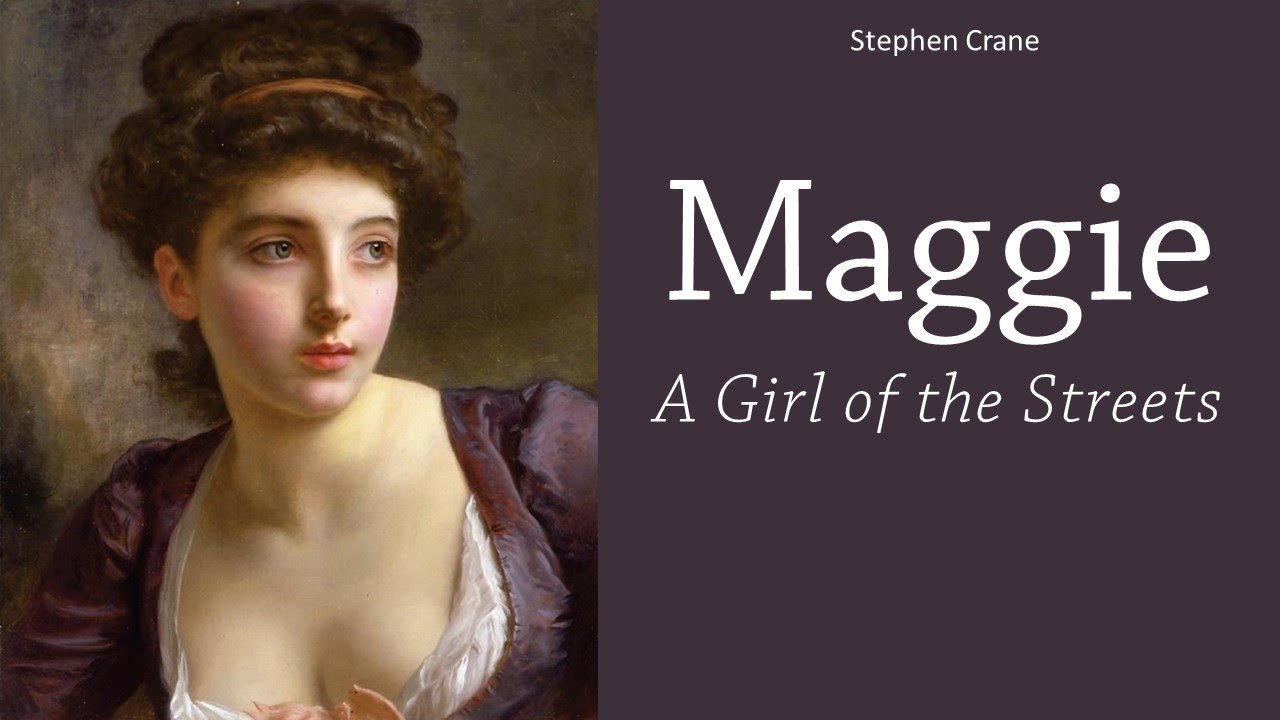
Stephen Crane’s Maggie: A Girl of the Streets is a short 1893 novella about poverty, family violence, gender, social judgment and the limited choices available to a young woman growing up in New York’s Bowery. Crane was only in his early twenties when he published the work, yet the book became an important example of American literary naturalism and urban realism. The story follows Maggie Johnson from a childhood surrounded by alcohol and violence into a brief hope that a relationship with Pete, a bartender, might provide escape. Instead, Maggie is rejected, abandoned and condemned by many of the same people whose own behavior is deeply hypocritical. The novella is bleak, but its purpose is not simply to show that poor people live miserable lives. Crane repeatedly asks readers to notice how environment, economic insecurity, family dysfunction and social double standards narrow the choices available to individuals. Maggie is judged as though she alone created her fate, while the conditions surrounding her receive far less moral scrutiny. The central focus is Maggie A Girl of the Streets analysis.
When Was Maggie A Girl of the Streets Published?
Maggie: A Girl of the Streets was first published in 1893. Crane initially issued the novella under the pseudonym Johnston Smith. The work is now in the public domain in the United States, and the complete text is available through Project Gutenberg. Its publication predates Crane’s much more famous Civil War novel The Red Badge of Courage, which appeared in book form in 1895. Where Is the Novella Set? The story is set largely in impoverished tenement neighborhoods of New York City, especially the Bowery. Crane’s city is crowded, noisy and violent. Homes do not offer reliable refuge from the street because the Johnson household reproduces many of the same conflicts inside its walls. The urban environment matters because the novella treats poverty as something larger than personal income. It shapes: Housing. Family stress. Employment. Exposure to violence. Social opportunity. Relationships. Setting therefore functions almost like another character.
Short Summary of Maggie A Girl of the Streets
The novella begins with Maggie’s brother Jimmie fighting other boys in the street. Violence is already part of everyday childhood. At home, Maggie and Jimmie live with parents whose relationship is dominated by alcohol, anger and physical conflict. Their younger brother Tommie later dies. As the children grow older, Jimmie becomes a truck driver and repeats many of the aggressive behaviors he witnessed around him. Maggie becomes a young woman and works in a factory. She begins a relationship with Pete, a bartender whom she views as sophisticated and powerful compared with the men she knows from home. Pete takes Maggie to entertainment venues and introduces her to a world that appears more glamorous than her own. When Maggie leaves home with Pete, her family treats her as morally disgraced. Her mother, despite her own violent and chaotic conduct, denounces Maggie dramatically. Pete eventually becomes interested in Nellie, a more worldly woman, and abandons Maggie. Maggie becomes increasingly isolated. The novella strongly implies that she enters prostitution and later dies. Crane keeps the circumstances of her death deliberately indirect. At the end, Maggie’s mother performs a highly emotional display of forgiveness after her daughter is already dead, reinforcing the novella’s critique of moral hypocrisy. Main Characters:
| Character | Role |
|---|---|
| Maggie Johnson | Young woman whose attempt to escape poverty and family violence ends in abandonment and social condemnation |
| Jimmie Johnson | Maggie’s brother, shaped by the same violent environment and later deeply hypocritical about her behavior |
| Mary Johnson | Maggie and Jimmie’s mother, frequently drunk and violent yet eager to condemn Maggie morally |
| Pete | Bartender whose apparent sophistication attracts Maggie; later abandons her |
| Nellie | Confident, worldly woman who attracts Pete and exposes his own susceptibility to appearances |
| Tommie | Younger Johnson child who dies early in the story |
Maggie as a Character
Maggie is often described as innocent, but that word should be used carefully. She is not unaware of hardship. She grows up surrounded by violence and understands that her home is unstable. Her vulnerability comes partly from having limited experience of healthier alternatives. Pete looks impressive because Maggie’s standard of comparison is the world she already knows. Crane therefore makes her hopes understandable even when readers can see warning signs she does not. Jimmie and the Reproduction of Violence: Jimmie is important because he demonstrates how social patterns reproduce themselves. As a child, he fights in the street. As an adult, he becomes aggressive and cynical. He has his own sexual relationships, yet he condemns Maggie for hers. This double standard is central to the book’s gender critique. Jimmie has been shaped by his environment, but Crane does not present that fact as a complete excuse. Naturalistic fiction often explores the tension between social causation and individual responsibility. Mary Johnson and Moral Hypocrisy: Maggie’s mother is one of the novella’s most disturbing characters. She is violent, frequently intoxicated and emotionally unstable. Yet when Maggie’s sexual reputation becomes questionable, Mary adopts the language of moral outrage. Her response allows Crane to expose a society that can ignore chronic violence inside a home while becoming dramatically scandalized by a young woman’s sexuality. The final scene intensifies this irony because Mary’s public forgiveness arrives only after Maggie can no longer benefit from compassion. Pete and the Illusion of Escape: Pete appears to Maggie as a route into a better world. He dresses and behaves with confidence, works outside the Johnson household’s chaos and can take Maggie to theaters and other public entertainment. But much of his sophistication is performance. When Nellie appears, Pete becomes as easily impressed by her confidence as Maggie was impressed by his. This reversal reveals how social aspiration can operate through surfaces. Everyone is watching someone who seems to belong to a higher or more exciting world.
What Is Literary Naturalism? Naturalism is a literary approach closely related to realism but more strongly interested in the forces that shape human behavior. Naturalistic writers often focus on: Environment. Heredity. Economic conditions. Social pressure. Instinct. Limited individual control. The characters are not necessarily presented as having no free will. Instead, their freedom operates inside powerful conditions they did not choose. Why Maggie Is a Naturalist Work: Maggie’s choices cannot be understood independently of her environment. She grows up with: Domestic violence. Alcohol abuse. Economic insecurity. Little educational or social support. Gendered moral expectations. Limited employment opportunities. When Pete offers what appears to be escape, the attraction is therefore not irrational. Crane’s tragedy comes from the fact that the path outward is itself unsafe.
Poverty as More Than Background:
The novella does not treat poverty as decorative scenery. Economic deprivation affects the characters’ physical surroundings and social relationships. Crane describes crowded tenements, noisy streets, factory labor and inexpensive entertainment as parts of a system of life. Poverty reduces privacy and increases dependence. It does not mechanically cause every bad action, but it makes alternative futures harder to reach. Violence: Violence appears before Maggie’s central plot has even begun. Children fight. Adults fight. Family conflict becomes physical. Aggression is normalized. This matters because Crane shows behavior being learned socially. Jimmie’s adult violence does not emerge from nowhere. It grows from a world in which force has always been one of the available languages of conflict. Alcohol: Alcohol is another recurring feature of the environment. Crane does not write a simple temperance tract in which drinking alone explains poverty. Instead, alcohol amplifies instability already present in the family and neighborhood. It contributes to violence, poor judgment and emotional volatility. Pete’s work as a bartender also places him inside the culture from which Maggie imagines he offers escape.
Gender Double Standards
The treatment of Maggie is sharply gendered. Men around her engage in sexual and violent behavior without experiencing the same social destruction. Maggie’s reputation, by contrast, becomes decisive. Once she is treated as sexually fallen, family and community rejection reduce her options even further. The novella therefore critiques not only individual hypocrisy but a broader moral system that distributes shame unevenly. Sexuality and Respectability: Respectability in the novella often functions as public performance rather than private virtue. Characters who behave badly still want to be seen as morally superior. Mary’s reaction to Maggie is the clearest example, but Jimmie behaves similarly. Crane repeatedly exposes the difference between the moral identity people perform publicly and the conduct readers have already witnessed. Social Judgment: Maggie’s downfall is accelerated by judgment. Once she loses social acceptance, she also loses practical support. This is an important point. Stigma is not merely emotional. It can affect housing, work, family assistance and personal safety. Crane shows condemnation creating some of the conditions that make recovery less possible. Is Maggie Responsible for Her Choices? A good reading avoids two extremes. One extreme blames Maggie entirely, as though her background is irrelevant. The other treats her as a machine with no agency at all. Naturalism is more interesting than either position. Maggie makes choices, but she makes them with limited information and limited alternatives inside a social system that punishes her more severely than the men around her. Irony: Crane uses irony constantly. Examples include: Violent family members acting shocked by Maggie’s supposed immorality. Pete presenting himself as sophisticated and then becoming easily manipulated by Nellie. Characters seeking respectability while behaving cruelly. Mary’s final performance of forgiveness after refusing meaningful compassion earlier. The irony prevents readers from accepting the community’s moral judgments at face value.
Crane’s Narrative Style
The narrator often uses exaggerated language to describe ordinary or degraded settings. This can create a strange mixture of seriousness and satire. The style makes the characters’ self-dramatization visible while also preserving sympathy for their circumstances. Crane does not simply mock poor people. Much of the satire targets the social conventions through which characters judge one another. Urban Entertainment: The theater and entertainment scenes matter because they offer Maggie images of another life. Popular entertainment provides fantasies of romance, success and dramatic rescue. Those fantasies contrast with the material reality of her neighborhood. Crane suggests that cultural stories can shape expectations even when the social world provides few means to fulfill them. The Significance of Nellie: Nellie is important because she appears more experienced than Maggie. She understands social performance and is less emotionally invested in Pete. Pete’s attraction to Nellie reveals that the power relationship between Pete and Maggie is not based on his exceptional maturity. He can also be impressed by someone who seems more worldly. The pattern repeats at a different level. Maggie’s Death: Crane does not provide a detailed, sentimental death scene. The narrative distance around Maggie’s final moments is unsettling. This restraint can be read as reflecting the way marginalized people disappear socially before they die physically. By the time news of Maggie’s death returns to her family, the community is more prepared to perform mourning than it was to offer practical support while she lived.
The Ending:
The ending is built around hypocrisy. Maggie’s mother is encouraged to forgive her dead daughter. Forgiveness sounds compassionate, but the timing makes it grotesque. The family’s moral drama centers the feelings of the people who rejected Maggie rather than the suffering Maggie experienced. Crane leaves readers with the social performance of virtue rather than actual repair. Does the Novella Blame Society? Yes, but not in a simplistic way. The novella repeatedly shows structural pressures, yet individual characters also make harmful choices. The social critique works because the two levels interact. A violent environment helps produce violent people, and those people then reproduce the environment for the next generation. This cyclical quality is one of the strongest naturalistic features of the work. Why the Book Still Matters: The specific New York of the 1890s has changed, but the questions remain recognizable: How much does childhood environment shape adult behavior? Why are women and men judged differently for similar behavior? How does stigma reduce the possibility of recovery? How do poverty and unsafe housing affect family life? Why do communities condemn visible transgression while ignoring less visible harm? These questions keep the novella relevant beyond its historical setting. Primary text and publication resources retained in this article include Project Gutenberg edition of Maggie A Girl of the Streets; Project Gutenberg full text.
Conclusion
Maggie: A Girl of the Streets is powerful because Stephen Crane refuses to isolate tragedy from environment. Maggie does not live in a world of equal choices and then simply select the wrong one. She grows up in violence and poverty, finds limited work, mistakes Pete’s confidence for security and then becomes the target of a moral system more eager to condemn her than help her. Crane does not eliminate personal responsibility, but he changes the scale of the question. Instead of asking only why Maggie fails, the novella asks what kind of family and society helped make failure so likely. Its most enduring criticism is directed at a culture that notices a young woman’s fall more readily than the conditions that left her with so little room to stand.