
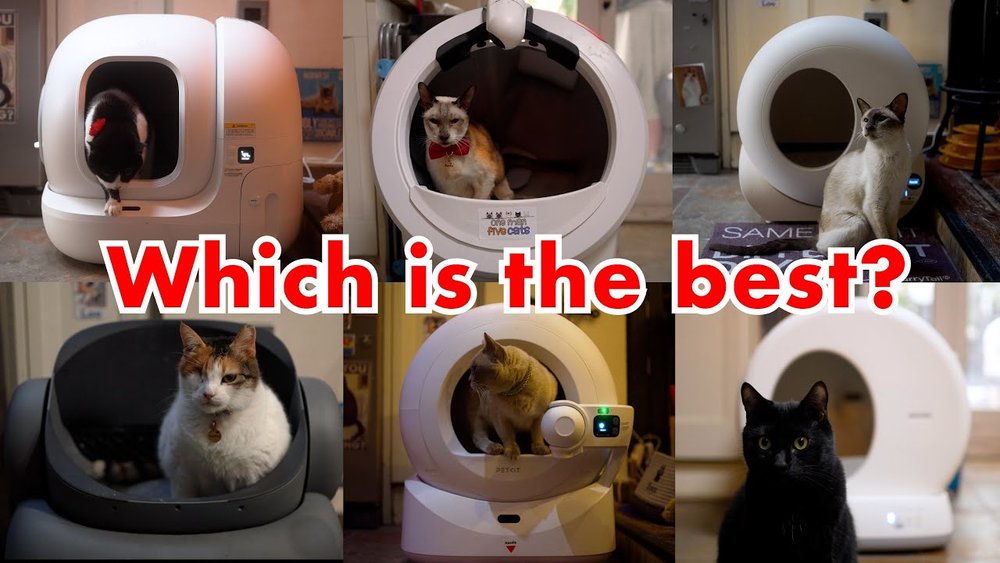
The rise of the smart home has extended its reach into pet care, with automated litter boxes promising liberation from the daily scoop. However, beyond the basic promise of convenience lies a more significant choice between two competing design philosophies. Selecting a self-cleaning litter box is less about comparing gadget features and more about deciding which system—enclosed and discreet or open and efficient—best aligns with your living space, your cats’ habits, and your desired level of oversight.
The core trade-off is fundamental. Enclosed designs, like the FEELNEEDY, prioritize aesthetics and odor containment, aiming to blend the unit into a living room or bedroom seamlessly. This “set-and-forget” approach offers visual privacy for both cat and owner. In contrast, open-tray designs such as the OROLEY favor immediate functionality and high throughput. Their form factor is familiar to cats, typically leading to faster acceptance, and allows owners to verify cleanliness at a glance—a practical advantage in busy, multi-pet households.
This architectural decision impacts every other feature. Enclosed units often have slightly smaller litter chambers but larger waste drawers, supporting a lower-maintenance routine for a single cat. Open designs counter with substantially larger litter chambers (the OROLEY offers 96L vs. 65L) to handle more frequent use, crucial for multiple cats. Similarly, safety systems diverge: one may use a simpler weight-sensing mechanism for reliability, while the other employs a multi-sensor array (infrared, gravity, Hall effect) for redundant occupancy detection, catering to homes with high traffic and curious pets.
For a detailed breakdown of how these philosophies translate into specific performance metrics for two popular models, a thorough Furbo 360 vs Petcube Bites Lite comparison can provide valuable context on how design choices affect real-world use. Ultimately, the “best” choice is not universal. A single cat owner in an apartment may value the discreet, low-profile operation of an enclosed box. A multi-cat household will likely prioritize the robust capacity, faster cleaning cycle, and easy monitoring of an open-tray design. As this category evolves, the most successful products will be those that recognize the litter box not just as an appliance, but as a piece of home infrastructure that must satisfy both feline instincts and human lifestyle needs.
Key Comparison Points at a Glance
| Feature | FEELNEEDY (Enclosed Design) | OROLEY (Open Design) | Key Consideration |
|---|---|---|---|
| Primary Design | Covered, privacy-focused box. | Open, tray-like design. | Cat acceptance speed vs. room aesthetics. |
| Ideal For | Single-cat homes; living areas. | Multi-cat/large-cat homes; utility spaces. | Household size & planned location. |
| Litter Capacity | 65L chamber. | 96L chamber. | Determines frequency of litter top-ups. |
| Waste Capacity | 11L drawer. | 9L drawer. | Affects how often you empty the waste. |
| Cycle Speed | Starts ~2 minutes after exit. | Starts ~1 minute after exit. | Speed of waste removal after use. |
| Odor Control | Physical lid containment. | Triple-layer odor defense system. | Contained vs. actively managed odor. |
I hope this editorial perspective helps frame your decision. If you have a specific household scenario in mind, I can offer more tailored thoughts on which design philosophy might be the better fit.