
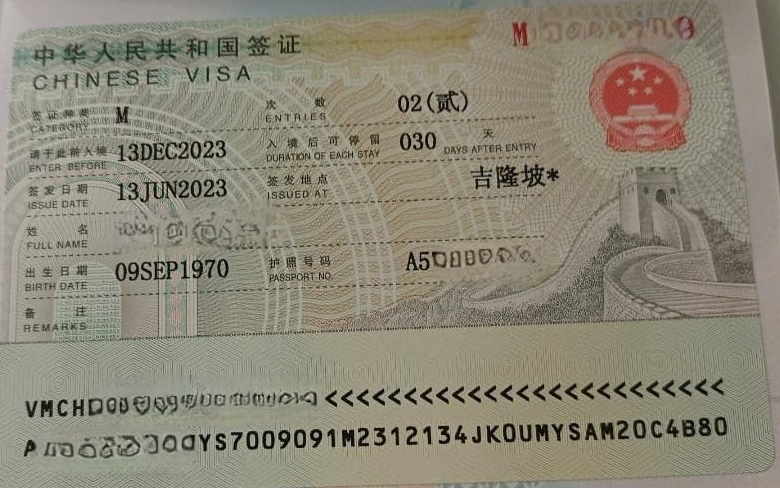
China’s M visa is intended for people travelling to China for commercial and trade activities, such as business meetings, supplier visits, trade fairs, negotiations, and other qualifying business purposes. The application is not a universal one-page checklist because Chinese visa requirements can vary by nationality, place of application, travel history, invitation type, and the local Chinese embassy, consulate, or Chinese Visa Application Service Center handling the case. That is especially important in 2026, because official visa-center pages are being updated frequently and different centers can ask for different supporting documents. Applicants should therefore use this guide to understand the process, then confirm the current requirements on the official website for the center where they will actually submit. A document requested in Pakistan, the United Kingdom, Malaysia, Australia, or another jurisdiction should not be assumed to apply everywhere.
What the Chinese M Visa Is For
The M visa is generally used for commercial and trade activities. Typical examples include attending meetings with Chinese customers or suppliers, negotiating contracts, visiting factories, participating in trade exhibitions, discussing sourcing arrangements, or conducting other short-term business activities that fall within the visa category. It is not the same as a work visa for taking up employment in China, and it should not be used when the real purpose of the trip belongs to another visa category. Applicants should describe the purpose of travel consistently across the application form, invitation letter, itinerary, employer letter, and supporting documents. A vague application that says “business” without identifying who is being visited, why the trip is necessary, and how long it will last can attract questions or requests for additional evidence.
Start With the Visa Center That Has Jurisdiction Over You. The correct application process depends on where you are legally applying. Many countries use a Chinese Visa Application Service Center, while some applications may be handled through an embassy or consulate. Before gathering documents, identify the center responsible for your residence or legal status and read its current M-visa instructions. Third-country nationals often need to prove legal residence, employment, study status, or other lawful stay in the country where they are applying. Applicants sometimes use commercial websites such as https://www.visaforchinaservices.my when researching the process, but visa rules should be confirmed against the official Chinese mission or official Visa Application Service Center for the submission location. Do not rely on a checklist copied from a travel agent if the official center publishes different instructions.
Passport and Basic Application Documents
Across current official M-visa guidance, a valid passport is a core requirement. Many centers require at least six months of remaining validity and one or more blank visa pages, along with a copy of the passport information page. Some centers request previous passports, especially where travel history, previous Chinese nationality, dual nationality, or earlier Chinese visas need to be reviewed. The visa application form is generally completed online through the official system. Applicants upload a recent photograph that meets the prescribed technical requirements and then follow the local center’s instructions for printing, signing, online review, appointment, or walk-in submission. Because photo dimensions and submission procedures can differ by center, use the exact instructions displayed during the application rather than reusing an old visa photo without checking.
The Business Invitation Is Central to the Application. An M-visa application normally needs evidence supporting the commercial purpose of the trip. This often includes an invitation from a real company or organization in China. The invitation should clearly identify the applicant, the inviting entity, the purpose of the visit, intended dates, places to be visited, relationship between the parties, and who will bear travel or accommodation costs where required. The document should contain the information and authentication expected by the application center. Some jurisdictions distinguish between an ordinary invitation letter and formal invitation documents such as an Invitation Letter (TE), Verification Letter of Invitation, or recognized trade-fair invitation. The exact combination depends on local rules and the applicant’s circumstances. The official Chinese Visa Application Service Center — M Visa Commercial Trade Guidance illustrates the category, but applicants should use the page for their own location because submission details are not identical worldwide.
Employer, Business, and Financial Evidence
Depending on the center, applicants may be asked for an employer letter, company registration evidence, bank statements, tax or business documents, proof of previous trade with the Chinese company, flight plans, hotel bookings, or other material that demonstrates the trip is credible. Some centers ask more detailed financial evidence when the applicant does not have one of the formal invitation documents. For example, current Islamabad visa-center guidance published in August 2026 states that certain M-visa applicants relying on an ordinary invitation may need six months of personal bank statements and sufficient funds to cover the actual stay, along with recommended round-trip itinerary and hotel information. That is a location-specific requirement and should not be copied into a global checklist as if every applicant must meet the same threshold.
Police Clearance and Other Location-Specific Requirements. Another reason to check the current local page is that some centers impose requirements that applicants may not expect. Current Islamabad guidance, for example, requires a valid police character or clearance certificate for applicants aged 10 or above and gives specific instructions regarding QR codes and apostille treatment. Other visa centers do not present the same requirement in their M-visa checklist. Applicants should therefore treat their local center’s document list as the controlling administrative guide. If a requirement appears unusual, contact the center or Chinese mission directly rather than assuming that an older blog post or another country’s checklist is more accurate.
Single, Double, and Multiple Entry
The number of entries, validity period, and permitted duration of stay are determined by the visa issued, not simply by what the applicant requests. A single-entry visa permits one entry during its validity. A double-entry visa permits two. A multiple-entry visa can permit repeated entries while valid, but eligibility may depend on nationality, previous Chinese visas, business need, passport validity, and the decision of the issuing authority. Do not book a travel pattern that depends on a multiple-entry visa before it has actually been issued. If the itinerary involves leaving mainland China and returning, make sure the visa has enough entries for the planned movements. Hong Kong and Macao have separate immigration arrangements, so travel between those regions and mainland China can affect how many mainland entries are needed.
Validity and Duration of Stay Are Different. Visa validity tells you the period during which you may enter China. Duration of stay tells you how long you may remain after each entry. Applicants sometimes confuse the two and assume that a visa valid for several months allows continuous residence for the entire period. The visa label or electronic record should be checked carefully for the “enter before” date, number of entries, and permitted duration after each entry. Overstaying can create serious immigration consequences. Business travelers whose plans change should seek advice from the relevant Chinese immigration authority before the permitted stay expires rather than assuming the original visa can be extended automatically.
Biometrics, Appointments, and Submission Procedure
Whether fingerprints, an appointment, or in-person submission are required can change by country and period because China has introduced and adjusted fingerprint-exemption policies for some applicants and visa categories. The correct answer in 2026 is therefore not a universal yes or no. Follow the current instructions from the application center handling your case. Some centers conduct online preliminary review before allowing document submission. Others tell applicants to print the completed form and attend during business hours, with or without an appointment. Do not travel to the center based on an old procedure: confirm the current submission flow after completing the online application.
How to Prepare a Strong Invitation Letter. A useful invitation letter is specific and internally consistent. It should identify the Chinese company with its legal name and contact details, explain how it knows the applicant or applicant’s business, describe the commercial purpose, list planned dates and locations, and identify the person signing on behalf of the inviting organization. If the inviting company is paying for expenses, that should be stated consistently with the rest of the application. The applicant’s passport number, full name, date of birth, and other details should match the passport exactly. Differences in spelling, dates, company names, or travel periods between the invitation and application form can delay processing. If plans change before submission, update the documents rather than submitting contradictory versions.
Trade Fairs and Exhibition Travel
Business visitors attending major events such as the Canton Fair or China International Import Expo may be able to use event-specific invitation documents recognized by the visa authorities. The invitation should come from the legitimate event organizer or qualifying Chinese entity, not from an unrelated seller offering “guaranteed visa letters.” Fraudulent or unverifiable invitation documents can lead to refusal and create problems for future applications. Keep registration confirmation, fair invitation, hotel plan, employer evidence, and business purpose aligned. A clear application showing what event you are attending and how it relates to your work is easier to assess than a generic request for a business visa without supporting context.
Processing Time and When to Apply. Processing times differ by location and can be affected by public holidays, document problems, additional checks, peak travel seasons, or requests for interviews and supplementary evidence. Apply early enough to correct a document problem but not so early that the application falls outside the period accepted by the local center. The center’s current service options and published processing times should be checked immediately before submission. Applicants should also avoid buying non-refundable travel solely because a visa application has been filed. A submitted application does not guarantee approval, the requested entry type, or the exact validity period. Where the center recommends flight or hotel reservations, follow its wording carefully rather than assuming fully paid tickets are required.
After the Visa Is Issued
Check the visa details before travelling. Confirm your name, passport number, visa category, number of entries, validity, and duration of stay. If something appears incorrect, contact the issuing center before departure. Carry supporting business documents when travelling because border authorities may ask about the purpose of the visit even when a valid visa has been issued. Business travelers should also remember that an M visa does not replace local rules for employment, paid work, journalism, study, or other regulated activities. If the nature of the trip changes from meetings and trade activity to employment or another purpose, obtain advice on the correct immigration status rather than stretching the M category beyond its intended use.
Application Checklist
Use the official visa-center or Chinese mission page for your actual place of application.
Confirm passport validity and blank-page requirements.
Complete the current online application form accurately.
Upload and, where required, bring a compliant photograph.
Prepare the business invitation in the required form.
Provide proof of legal residence if applying outside your country of citizenship.
Check whether bank statements, police clearance, employer documents, or trade-fair materials are required locally.
Make sure dates, company names, passport details, and trip purpose agree across all documents.
Verify appointment, fingerprint, and submission rules immediately before attending.
Before You Submit: Consistency Checks. Before final submission, read the entire application as if you were the visa officer comparing each document side by side. The applicant’s employer name, Chinese inviter, dates of travel, cities, hotel plan, business purpose, and who is paying should tell one consistent story. If the invitation says the applicant will spend five days in Shenzhen but the application form lists two weeks in Beijing, correct the discrepancy instead of hoping it will be ignored. Likewise, if the applicant has previous Chinese visas, a second nationality, a changed legal name, or a current residence permit in another country, make sure the documents requested for that circumstance are included.
Keep digital and paper copies of the final application, invitation, passport page, supporting evidence, and any submission receipt. If the center requests an additional document after review, respond through the official channel and keep the updated version with the rest of the file. This makes later travel or future visa applications easier because you can see exactly what information was previously declared.
Conclusion
Applying for a Chinese M business visa is easiest when you separate the universal principles from the local submission rules. You need a genuine commercial purpose, a valid passport, a correctly completed application, and credible supporting evidence such as an invitation from the Chinese business or event involved. Beyond that, document requirements can differ substantially by visa center and nationality, and 2026 guidance is being updated frequently. Use the official instructions for the center where you will actually apply, prepare consistent business evidence, and avoid relying on a checklist from another country simply because it appears comprehensive.