
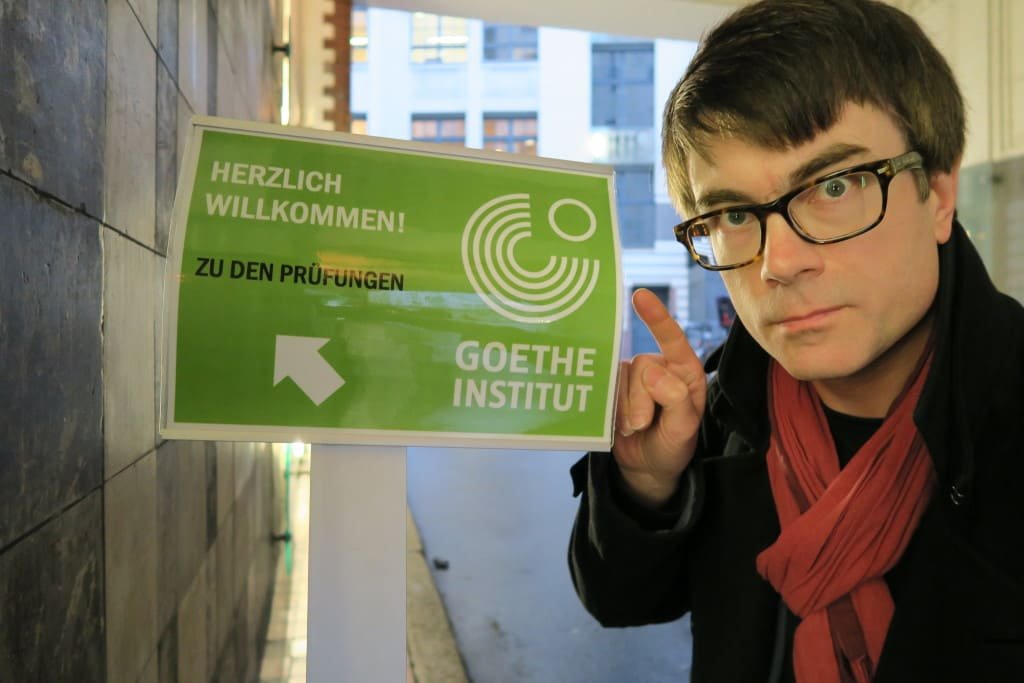
Preparing for a C1 German exam on your own is possible, but it is much harder than simply learning more vocabulary or reviewing advanced grammar. At C1, examiners expect you to understand complex texts and audio, organize arguments, write with an appropriate register, speak fluently on abstract topics, and manage unfamiliar tasks under time pressure. The challenge is also exam-specific. “C1 German” is not one single test. The Goethe-Zertifikat C1, telc Deutsch C1, telc Deutsch C1 Hochschule, and other accepted certificates use different task structures, timing, scoring, and speaking formats. A learner who studies advanced German without practicing the exact exam format can have excellent language skills and still lose points through poor timing or misunderstanding the task. A structured course can help candidates learn German C1 online, but self-study can also work when it includes a realistic diagnostic test, official practice material, regular correction of writing and speaking, and a plan that targets weaknesses rather than simply repeating comfortable activities. This guide explains why C1 self-study becomes difficult, how the Goethe and telc exams differ, how to build a preparation plan, which skills need external feedback, and how to decide whether you need a teacher or can prepare independently.
What C1 German Requires Beyond “Good Grammar”
C1 is an advanced level in which learners are expected to understand demanding texts and speech, express ideas fluently, adapt register to the situation and produce clear, well-structured language on complex topics. It is not “perfect German,” but it does require much more control than simply knowing advanced grammar rules or memorizing vocabulary. The difficulty of self-study comes from having to diagnose weaknesses across several skills while also learning the exact demands of a chosen exam. C1 is an advanced level in the Common European Framework of Reference for Languages (CEFR). A learner at this level is expected to do much more than handle everyday conversation. Typical C1 abilities include:
understanding long and demanding texts;; following complex spoken German;; expressing ideas fluently with limited searching for words;; using German effectively in academic, professional, and social contexts;; producing well-structured written arguments;; using a wide range of vocabulary and grammatical structures;; adapting register to the situation.. C1 Is Not “Perfect German” You do not need to sound indistinguishable from a native speaker. C1 candidates can still make errors.
What matters is that mistakes do not regularly interfere with: clarity;; cohesion;; precision;; appropriate register;; successful communication.. Why B2-to-C1 Progress Feels Slow At lower levels, progress is often visible. You learn: new verb forms;; basic vocabulary;; sentence patterns;; everyday phrases.. At C1, improvement becomes more subtle. You need to improve: collocations;; idiomatic phrasing;; word choice;; logical connectors;; register;; argumentation;; speed of comprehension;; spontaneous speaking.. This makes self-assessment harder.
Goethe C1, telc C1 and telc C1 Hochschule Are Different Exams
The Goethe-Institut – Goethe-Zertifikat C1, telc – Deutsch C1 and telc – Deutsch C1 Hochschule have different task formats, scoring systems and target contexts. A learner can improve general German for months and still underperform if practice does not match the actual exam being taken, so the first practical step is to choose the certificate and work from its current official model materials. Do not prepare for “a German C1 exam” in general. Choose the actual certificate you will take and use its current official materials. Common options include: Goethe-Zertifikat C1;; telc Deutsch C1;; telc Deutsch C1 Hochschule;; ÖSD C1;; TestDaF, depending on the university and purpose.. Universities and employers can have different acceptance rules, so confirm what your destination institution recognizes before paying for an exam. Current Goethe-Zertifikat C1 Structure Goethe-Institut’s current exam information states that the Goethe-Zertifikat C1 consists of four modules: Reading;; Listening;; Writing;; Speaking.. The modules can be taken individually or together. The current durations listed by Goethe include: Reading: about 65 minutes;; Listening: about 40 minutes;; Writing: about 75 minutes;; Speaking: around 20 minutes, with preparation time depending on the exam arrangement.. Always use the official model set for the current format because exam structures can be revised. Current telc Deutsch C1 Structure telc Deutsch C1 uses a different format. telc currently lists:
Reading;; Language Elements;; Listening;; Writing;; Speaking.. The written section includes a 90-minute reading/language-elements block, around 40 minutes of listening, and 70 minutes of writing. The oral examination is approximately 16 minutes and is commonly conducted with two participants after preparation time. telc C1 Hochschule Is Different Again telc Deutsch C1 Hochschule is designed around university and academic communication. It includes tasks such as: reading academic-style material;; listening;; language elements;; free writing;; presentation;; discussion.. A student preparing for university should not assume that practice for general telc C1 is identical to C1 Hochschule.
Why Self-Study Often Breaks Down at the B2-to-C1 Transition
Self-study often becomes a collection of unrelated activities: watching German YouTube;; doing grammar exercises;; learning vocabulary apps;; reading news;; writing occasionally.. All of those can help, but they do not automatically create exam readiness. A good plan connects every activity to a tested skill. Start With a Full Diagnostic Test Before creating a study schedule, complete an official or high-quality model exam under timed conditions. Record: Reading score;; Listening score;; Writing problems;; Speaking problems;; timing failures;; unknown task types.. This prevents you from spending six weeks on grammar when your real weakness is listening speed.
Writing and Speaking Need Feedback That Solo Study Cannot Fully Replace
At C1, writing problems are often not obvious grammatical errors. A text can be grammatically understandable but still sound weak because of: poor organization;; repetition;; unnatural collocations;; inappropriate register;; weak argument development;; vague examples;; overuse of simple connectors;; English-influenced sentence structure.. These are difficult to diagnose without outside feedback. What a Good C1 Writing Review Should Check Ask the reviewer to evaluate: task completion;; organization;; cohesion;; register;; vocabulary range;; grammar range;; accuracy;; clarity of argument.. Simply receiving a corrected version is less useful than understanding the pattern behind repeated mistakes. Build an Error Log Keep a document with categories such as: word order;; case;; prepositions;; verb-preposition combinations;; article endings;; relative clauses;; Konjunktiv;; collocations;; register;; spelling.. Review recurring errors before every new writing task. C1 Grammar Is About Control You do not need to insert the most complicated grammar into every sentence. What examiners need to see is flexible control. Useful structures include:
subordinate clauses;; relative clauses;; passive structures;; nominalization;; Konjunktiv I and II where appropriate;; advanced connectors;; participial constructions;; complex prepositional phrases.. Accuracy matters more than showing off. Vocabulary Lists Are Not Enough At C1, learning isolated words can create unnatural German. Learn vocabulary as: collocations;; chunks;; verb + preposition combinations;; noun + verb combinations;; formal alternatives;; topic-specific phrases.. Instead of learning only Maßnahme, learn phrases such as: eine Maßnahme ergreifen;; Maßnahmen umsetzen;; wirksame Maßnahmen;; präventive Maßnahmen.. Use Vocabulary in Output A word becomes useful when you can use it spontaneously. After learning a new expression:
- write one sentence;
- say one sentence aloud;
- use it in a short argument;
- review it a few days later.
Listening, Reading and Vocabulary Need to Become More Efficient, Not Just Larger
Advanced listening can include: interviews;; radio reports;; lectures;; discussions;; fast spontaneous speech;; different speakers and accents.. The problem is often not individual words. It is keeping up with the structure of the argument. Train Listening in Layers Use a three-pass method. First pass Listen without pausing. Identify topic, speaker positions, and structure. Second pass Listen for details and note where comprehension breaks down. Third pass Use transcript or subtitles to identify missed phrases and sound patterns. Do Not Train Only With Slow Learner German At C1, include native-level material such as: Deutschlandfunk;; ARD/ZDF interviews;; German podcasts;; university lectures;; documentaries;; debate programs.. Then combine native material with exam-specific recordings. Speaking Is the Hardest Skill to Practice Alone Self-study can improve pronunciation and fluency through recording, but it cannot fully reproduce an interactive exam. C1 speaking often requires you to: present a position;; respond to another speaker;; clarify;; agree or disagree;; defend an argument;; change direction when challenged.. How to Practice Speaking Alone You can still do a lot independently.
- Choose an abstract topic.
- Give yourself preparation time equal to the exam.
- Record a two- to four-minute response.
- Listen back.
- Mark long pauses, repeated words, and grammar errors.
- Repeat the task once with improved structure.
Add a Speaking Partner At least once or twice per week, practice with: a tutor;; a language exchange partner;; another C1 candidate;; a qualified teacher.. The partner should challenge your ideas rather than simply listen politely. Pronunciation at C1 You do not need to eliminate your accent. Focus on intelligibility: vowel length;; consonant endings;; word stress;; sentence stress;; intonation;; rhythm.. Reading at C1 Do not translate every unknown word. Train yourself to identify: main claim;; supporting evidence;; author attitude;; contrast;; examples;; references between sentences;; logical structure.. Time Management A self-learner often practices until a task is correct, but exams measure whether you can complete it within a fixed time. Every preparation plan should include timed work. For example: timed reading sections;; timed writing planning;; timed full writing task;; timed speaking preparation;; full mock exams.. Why Model Tests Matter Official practice papers teach: instructions;; task order;; timing;; answer-sheet behavior;; what kind of output is expected.. Goethe and telc both provide official practice materials for their current exams. Do Not Memorize Complete Essays Memorized templates can sound unnatural and may fail when the topic changes. Instead memorize flexible structures: introducing a question;; presenting two sides;; adding evidence;; conceding a point;; drawing a conclusion.. Practice Register C1 requires awareness of how language changes by situation. Compare: formal email;; academic argument;; spoken discussion;; presentation;; informal conversation.. The vocabulary and sentence style should not be identical. Use Reading to Improve Writing When reading German journalism or essays, collect:
opening phrases;; transition structures;; ways to introduce evidence;; ways to express uncertainty;; ways to contrast arguments.. Then use them in your own writing. How Long Does C1 Preparation Take? There is no reliable universal number. It depends on: current level;; hours per week;; language environment;; exam familiarity;; quality of feedback.. A strong B2 learner may need a focused period of C1 preparation, while someone with major B2 gaps may need substantially longer.
Build a Structured Preparation Cycle Around Diagnosis, Output and Timed Practice
A course is not automatically necessary, but external structure can be useful when a learner repeatedly avoids speaking, receives no writing correction or cannot identify why practice scores have plateaued. Someone who wants scheduled feedback may choose to learn German C1 online, while a disciplined independent learner can build a similar cycle using official model tests, regular writing review, speaking partners and a detailed error log. Weeks 1–2: Diagnose Take a full mock exam.; Identify weakest sections.; Create error log.; Learn current exam format.. Weeks 3–6: Skill Building 2 reading sessions weekly;; 2 listening sessions weekly;; 1–2 corrected writing tasks weekly;; 2 speaking sessions weekly;; daily contextual vocabulary.. Weeks 7–9: Exam Tasks timed sections;; official model tests;; speaking simulations;; writing under time limits.. Weeks 10–12: Full Simulation complete full mock exams;; review error log;; focus only on remaining weaknesses;; avoid learning huge amounts of new material in the final days..
When Self-Study Is Enough—and When External Feedback Is Worth It
Consider professional feedback if: your writing scores do not improve;; you cannot identify why answers are wrong;; you rarely speak German;; you need the certificate by a fixed deadline;; you repeatedly fail one module;; you are unsure whether your register is natural.. When Self-Study Works Well Independent preparation can work when you: already have a strong B2 foundation;; study consistently;; use official exam material;; can obtain external feedback periodically;; practice productive skills;; can realistically evaluate weaknesses.. Common C1 Self-Study Mistakes Studying grammar but not speaking Knowledge does not automatically become spontaneous output. Using only apps Apps rarely reproduce long-form C1 tasks. Never timing practice Exam performance includes speed. Writing without correction Repeated mistakes become habits. Learning rare vocabulary Useful collocations are more valuable than obscure words.
Ignoring the exact exam format Goethe C1 and telc C1 are not the same test.
The most effective self-study plan also separates language development from exam simulation. During skill-building weeks, learners need time to expand vocabulary networks, review recurring grammar errors, read difficult texts without a timer and speak long enough to notice gaps in fluency. During exam-training weeks, the priority changes: timing, task completion, scoring criteria, note-taking and recovery from difficult prompts become more important. Mixing both modes every day can make practice feel busy without giving either type of work enough depth.
Progress should be judged with repeated evidence rather than mood. A learner may feel “stuck” while actually improving in accuracy, listening tolerance or writing organization. Keeping dated writing samples, speaking recordings and model-test scores makes improvement visible and also shows which weaknesses are persistent enough to justify targeted tutoring or a structured course.
Conclusion
Self-studying for a C1 German exam is difficult because the level tests control, flexibility, and performance under pressure rather than just knowledge of advanced grammar. The biggest weaknesses of independent preparation are usually lack of structure, limited feedback, insufficient speaking practice, and poor familiarity with the exact exam format. The solution is to make self-study more exam-like. Choose the exact certificate first, take a diagnostic model test, train all four skills, collect vocabulary in context, practice under time limits, and get regular external correction for writing and speaking. If you can do those things consistently, a full-time course is not essential. But if you are repeatedly unsure whether your writing or speaking is genuinely at C1, expert feedback can save months of inefficient practice.