
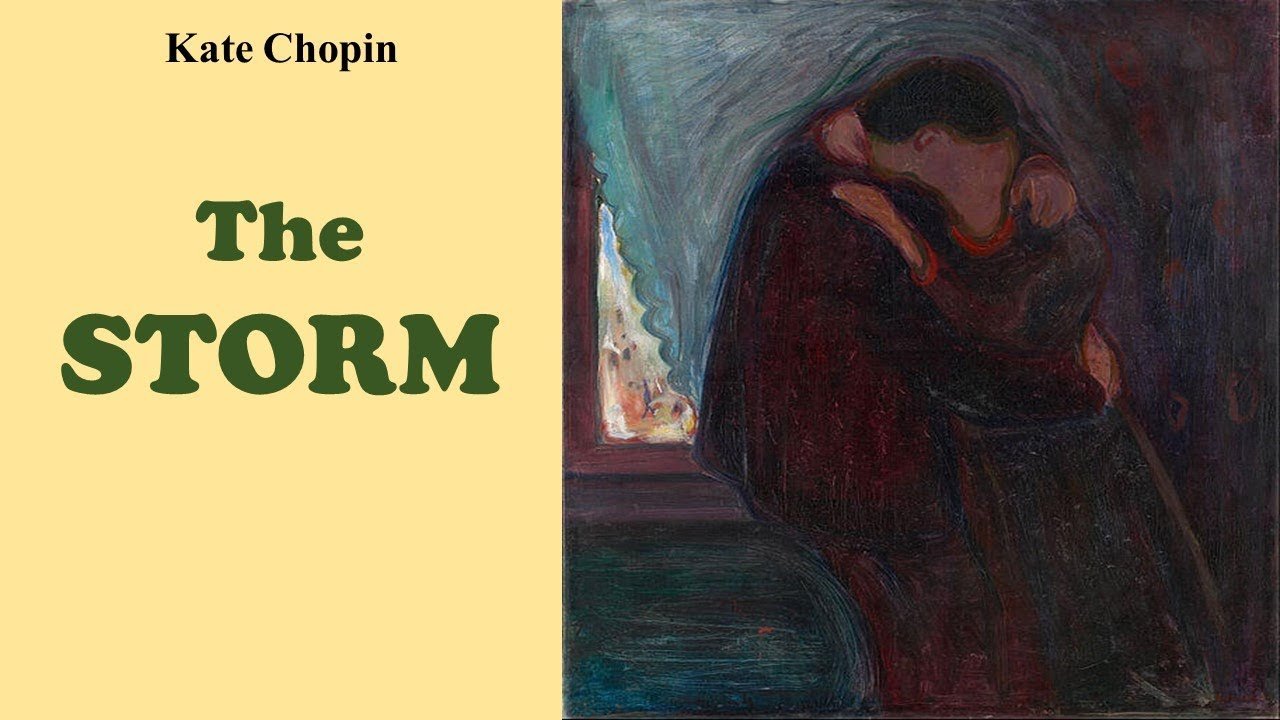
Kate Chopin’s “The Storm” is a short story about desire, marriage and the gap between respectable social appearances and private human experience. Written on July 19, 1898, but not published until 1969, the story follows Calixta, a married woman who unexpectedly encounters a former lover, Alcée Laballière, while her husband and son are stranded away from home by a violent Louisiana storm. The storm outside becomes more than weather. As rain and wind intensify, so does the emotional and sexual tension between Calixta and Alcée. When the storm ends, the lovers separate, Calixta welcomes her family home warmly, and the story closes without the punishment that nineteenth-century readers might have expected from a tale of adultery. That refusal to provide a conventional moral judgment is why the story remains so widely discussed. Chopin does not simply tell readers that infidelity is good or bad. She presents desire, marriage, freedom, gender and secrecy in a way that makes simple moral categories difficult to maintain.
Kate Chopin The Storm Analysis and When Was “The Storm” Written and Published?
The preserved Kate Chopin story composition and publication dates is important because “The Storm” was written in 1898 but was not published during Chopin’s lifetime; it appeared posthumously in 1969. That publication history matters when interpreting the story’s unusually direct treatment of female desire, adultery, domestic life, and the absence of conventional moral punishment. According to the Kate Chopin International Society, Chopin composed “The Storm” on July 19, 1898. It was first published in 1969 in The Complete Works of Kate Chopin. This distinction is important because older summaries often say Chopin published the story in the 1890s and then faced public criticism. That is incorrect. Readers during her lifetime did not encounter “The Storm” in print. The story is connected to Chopin’s earlier work “At the ’Cadian Ball,” which includes several of the same characters. Reading the earlier story adds context to the relationship between Calixta and Alcée, but “The Storm” can still be understood on its own.
Plot and Main Characters
Short Summary of “The Storm”. Bobinôt and his young son Bibi are at a local store when a severe storm begins. Because the rain makes travel unsafe, they remain there until it passes. At home, Calixta is busy sewing and initially does not notice how threatening the weather has become. As the storm approaches, Alcée Laballière arrives and asks for shelter. Calixta and Alcée have a romantic history. Being alone together revives their attraction, and during the height of the storm they become physically intimate. Afterward, Alcée leaves. Bobinôt and Bibi return home, worried that mud on their clothes may irritate Calixta. Instead, she is affectionate and pleased to see them. The family eats supper happily. Alcée later writes to his wife, Clarisse, who is away with their children, telling her she may stay away longer if she wishes. Clarisse is pleased by the freedom. The story ends by suggesting that everyone is, at least temporarily, content. Main Characters.
| Character | Role in the Story |
|---|---|
| Calixta | Married to Bobinôt and mother of Bibi; becomes intimate with former lover Alcée during the storm |
| Alcée Laballière | Calixta’s former romantic interest; now married to Clarisse |
| Bobinôt | Calixta’s husband; loving and somewhat cautious about upsetting her |
| Bibi | Young son of Calixta and Bobinôt |
| Clarisse | Alcée’s wife; away from him during the events of the story and pleased to have additional independence |
Calixta. Calixta is the emotional center of the story. Chopin does not portray her as a cold spouse plotting an affair. At the beginning she is occupied with ordinary domestic work. When the storm arrives, the unexpected presence of Alcée creates a situation in which a previously suppressed part of her emotional life becomes visible. After Alcée leaves, Calixta does not reject her family. She welcomes Bobinôt and Bibi warmly. This is one of the story’s most challenging features. Chopin refuses the assumption that sexual desire outside marriage must mean Calixta feels no affection for her husband or child. Alcée Laballière. Alcée is not merely a stranger who appears during bad weather. His earlier relationship with Calixta gives the encounter emotional history.
He is also married, which creates a parallel between the two households. After the encounter, he does not demand that Calixta leave Bobinôt or suggest destroying either marriage. Instead, he writes to Clarisse and encourages her to remain away longer if she wishes. The story therefore separates sexual passion from the conventional plot in which adultery automatically produces a new permanent couple. Bobinôt. Bobinôt is sometimes overlooked because he spends much of the story away from Calixta. Yet his behavior matters. He cares for Bibi, buys Calixta a can of shrimp and worries about arriving home covered in mud. He is not written as a cruel husband whose mistreatment obviously “explains” infidelity. That makes the story more morally ambiguous. Calixta’s encounter with Alcée cannot be reduced to escaping an abusive marriage. Clarisse. Clarisse appears only briefly, but the ending gives her significant thematic importance. Alcée’s letter allowing her to extend her time away gives Clarisse relief and freedom from marital routine. Her pleasure suggests that she, too, values some independence from domestic expectations. The parallel is subtle: both married women experience a temporary expansion of freedom, although in very different forms.
The Storm as Symbol, Nature, and Desire
The Storm as the Central Symbol. The storm is the story’s most obvious symbol, but it works in several ways. It functions literally by: Keeping Bobinôt and Bibi away from home; Bringing Alcée into Calixta’s house for shelter; Creating privacy; Structuring the story’s beginning, climax and ending. Symbolically, the storm parallels the surge of desire between Calixta and Alcée. It builds quickly, becomes overwhelming and then passes. The important point is that the weather does not destroy the landscape permanently. The story similarly presents the encounter as intense but temporary. Nature and Human Desire. Chopin repeatedly connects human sexuality with natural processes rather than describing desire primarily through religious guilt or social law. This changes the moral framing. If desire resembles a storm, it can appear powerful, spontaneous and difficult to reduce to deliberate planning. That does not mean the characters have no responsibility. The metaphor instead asks readers to recognize that human beings contain impulses that social institutions do not fully control.
Marriage, Adultery, and Female Desire
Theme of Marriage. “The Storm” is often described as an attack on marriage, but the ending is more complicated. Neither marriage collapses. Calixta’s family enjoys a warm meal together. Clarisse appreciates time away from Alcée. Both marriages appear capable of containing more complexity than a rigid moral framework might allow. The story may therefore be asking whether marriage has to absorb every aspect of human desire in order to remain meaningful. Does the Story Celebrate Adultery?. Readers disagree. Some interpretations see Chopin as radically refusing the traditional punishment of an adulterous woman. Others emphasize the secrecy and ethical problems involved in betrayal. The text itself does not provide a narrator who stops the action to condemn or defend the characters.
That narrative restraint is crucial. Chopin creates a situation in which the affair produces immediate pleasure without visible catastrophe, leaving readers to confront the tension between conventional morality and the story’s consequences. The Absence of Punishment. Nineteenth-century fiction often linked female sexual transgression with suffering, social ruin or death. “The Storm” does not follow that pattern. Calixta is not exposed. Bobinôt does not discover the encounter. Alcée does not become jealous or possessive. Clarisse is not devastated. The absence of punishment is not a minor plot choice. It is one reason the story feels unusually modern. Female Desire. Chopin represents Calixta as a woman with sexual desire of her own.
She is not merely an object desired by a male character. This is especially significant in the context of late nineteenth-century gender expectations, when respectable womanhood was often idealized through purity, motherhood and self-control. The story insists that domestic identity does not erase bodily desire. Freedom and Constraint. Freedom appears differently for Calixta and Clarisse. Calixta experiences a brief private encounter outside marital rules. Clarisse experiences freedom through physical separation from her husband and the relief of being able to remain away. Neither woman permanently abandons marriage. Chopin therefore explores freedom as temporary space inside social structures rather than simply freedom from those structures. Domestic Life. The story places extraordinary desire inside an ordinary household. Calixta sews. Bobinôt shops. Bibi waits out the weather. Supper is prepared and eaten. These ordinary details make the encounter with Alcée more striking because it occurs within the routines of domestic life rather than in an exotic setting. The story suggests that passion and domesticity are not separate worlds. They coexist inside the same people.
Secrecy, Irony, and the Ending
The Role of Secrecy. The ending depends on secrecy. Bobinôt does not know what happened. Clarisse does not know. The children do not know. This raises an ethical problem that a purely celebratory reading can overlook. The apparent happiness at the end is partly possible because information is withheld. Chopin does not resolve whether that secrecy protects relationships or undermines them. Irony in the Homecoming Scene. Bobinôt carefully prepares for Calixta’s reaction to the mud on his and Bibi’s clothes. The reader knows that his anxiety is focused on a trivial domestic problem while he remains unaware of the much larger event that occurred in his absence. This creates dramatic irony.
Calixta’s unusually cheerful welcome adds another layer: Bobinôt interprets her mood within the ordinary family relationship, while the reader knows what has influenced it. Why the Final Sentence Matters. The story’s final sentence is famous because it presents the passing storm and general happiness with almost provocative simplicity. Rather than explaining what lesson readers should learn, Chopin closes the narrative. This leaves several competing interpretations open: Passion can temporarily coexist with stable marriage; Social morality is more restrictive than human emotional life; Secrecy can preserve appearances but creates ethical ambiguity; The consequences of an action are not always the consequences conventional stories predict.
Louisiana Setting, Class, and Gender
Setting in Louisiana. Chopin frequently wrote about Louisiana communities, including Creole and Cajun cultural settings. The local environment is not incidental. Weather, language, class and regional social patterns shape the story. Readers should avoid treating every character as representative of all nineteenth-century Americans. Chopin writes from a specific cultural landscape. Class. Class distinctions appear indirectly through the characters’ speech, homes and social positions. Alcée belongs to a more privileged social environment than Calixta’s household, and the characters’ earlier history in “At the ’Cadian Ball” gives those differences additional context. Class is not the only explanation for the relationship, but it complicates the story’s treatment of desire and social boundaries. Gender Expectations. Gender expectations are central to the story because the social consequences of adultery historically differed sharply for men and women. A male character’s sexual freedom could be tolerated in ways a married woman’s sexual freedom was not. By placing Calixta’s pleasure at the narrative center and withholding punishment, Chopin challenges that asymmetry.
Realism, Naturalism, and Literary Context
Realism and Naturalism. Chopin’s fiction is often discussed in relation to realism and naturalism. “The Storm” uses realistic domestic details but also emphasizes forces—weather, sexuality, circumstance—that appear larger than rational social control. The characters are not puppets with no agency, yet they are represented as embodied people responding to physical and emotional conditions. Is Calixta Happy in Her Marriage?. The story does not present enough evidence for a simple yes or no. She shows affection toward Bobinôt and Bibi after the storm. Nothing in the story suggests she intends to leave them. At the same time, her encounter with Alcée reveals a dimension of desire outside her domestic role. Chopin’s point may be precisely that emotional life cannot always be reduced to one label such as “happy marriage” or “unhappy marriage.” Why Alcée’s Letter to Clarisse Matters. The letter expands the story beyond one affair. Alcée’s willingness to give Clarisse more time away could be interpreted as guilt, generosity, increased contentment or some mixture of motives. Clarisse’s reaction is more important: she welcomes the chance to remain independent a little longer. The ending therefore suggests that conventional marriage may contain desires for distance as well as closeness.
How the Story Fits Chopin’s Broader Work
The Kate Chopin International Society guide to “The Storm” provides text-specific background and helps place the story within Chopin’s Louisiana fiction. The story is also a sequel to “At the ’Cadian Ball,” which adds context to Calixta and Alcée’s earlier relationship without making that earlier story essential for understanding the later one. How “The Storm” Connects to Chopin’s Broader Work. Chopin repeatedly wrote about women whose inner lives do not fit comfortably inside social expectations. Readers familiar with The Awakening will recognize related concerns: Female autonomy; Marriage; Sexuality; Social judgment; The conflict between individual desire and prescribed roles. “The Storm” is much shorter and has a very different ending, but it explores similar tensions.
What the Story Does Not Say. A careful analysis should avoid making claims that go beyond the text. The story does not prove: That Chopin believed all adultery was harmless; That Calixta hates Bobinôt; That Alcée will permanently change his marriage; That nobody will ever experience consequences; That sexual desire is the only route to female freedom. Literary ambiguity is not a flaw that analysis must eliminate. Frequently Asked Questions. When was Kate Chopin’s “The Storm” written?. Kate Chopin composed the story on July 19, 1898. When was “The Storm” first published?. It was first published in 1969 in The Complete Works of Kate Chopin, decades after Chopin’s death. What does the storm symbolize?. It parallels the intensity and temporary nature of Calixta and Alcée’s passion while also creating the practical conditions that bring them together. What is the main theme?. The story explores the tension among sexual desire, marriage, gender expectations, freedom and social morality rather than offering one simple moral lesson. Why is the ending important?. The expected punishment never arrives. Both households appear content, forcing readers to reconsider conventional assumptions about transgression and consequence.
Conclusion
“The Storm” remains provocative because Kate Chopin refuses to make its moral meaning easy. A literal storm creates a private interval in which Calixta and Alcée act on a desire that ordinary social life requires them to suppress. When the weather clears, domestic life resumes. Nobody confesses, nobody is publicly punished and both marriages continue. That ending does not require readers to approve of deception. It asks them to recognize that human desire, marriage and morality are more complicated than the conventional narrative in which transgression must immediately produce ruin. By connecting passion with weather, domestic routine with secrecy and female desire with an absence of narrative punishment, Chopin created a story that still unsettles readers more than a century after it was written.