
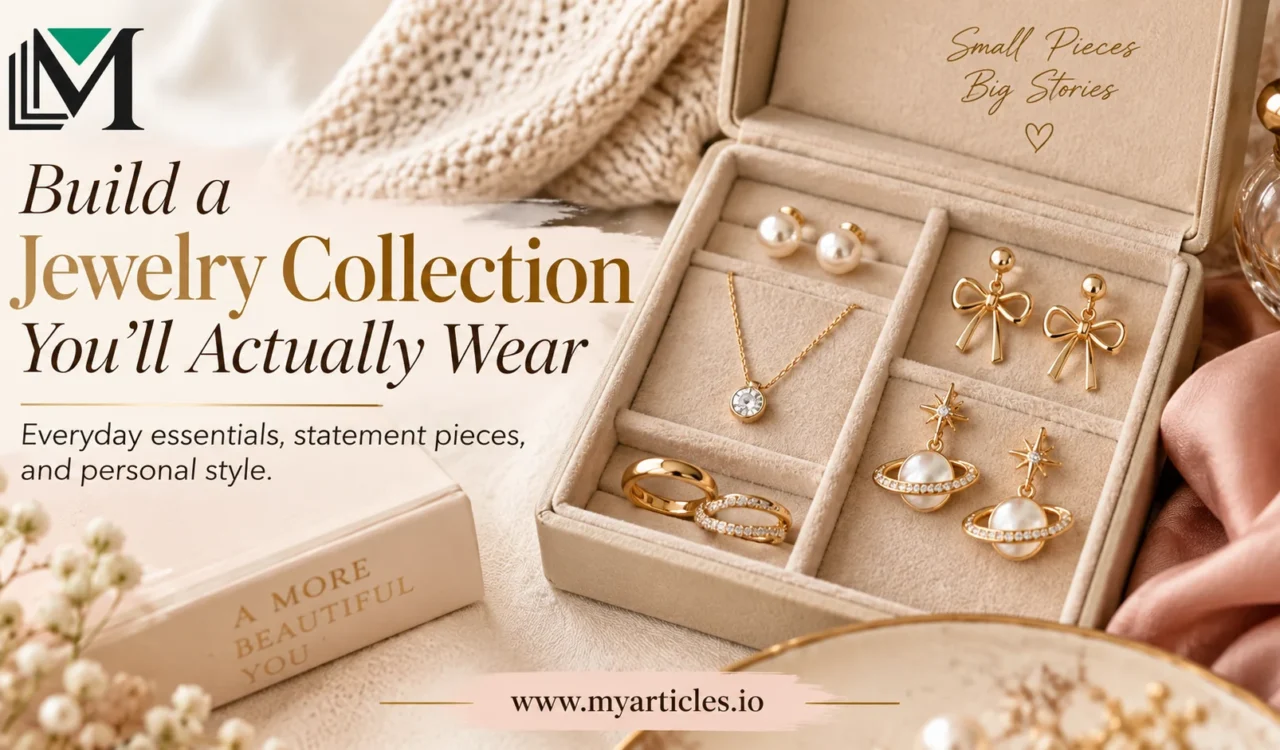
A jewelry collection is useful when the pieces actually fit your life. It is easy to accumulate earrings, necklaces, bracelets, and rings because they look beautiful individually, only to discover that they rarely work with the clothes you wear, the places you go, or the amount of maintenance you are willing to do. A better collection is smaller, more intentional, and built around repeat wear. That usually means combining dependable everyday pieces with a few statement designs, selecting metals and colors that work with your wardrobe, understanding material quality, and being realistic about comfort, storage, care, and budget. The goal is not to own every jewelry trend. It is to create a personal “jewelry wardrobe” with enough variety that you can get dressed quickly while still having pieces that feel expressive and special. This guide explains how to audit what you already own, identify your most useful jewelry categories, choose materials, coordinate metals, buy statement pieces carefully, build a capsule collection, care for jewelry, and avoid purchases that become permanent residents of the jewelry box.
Start Your Jewelry Collection by Auditing What You Own
Before buying another piece, take everything out and sort it. Create four groups: Wear constantly: pieces you reach for without thinking; Wear occasionally: useful for certain outfits or events; Like but never wear: attractive pieces that somehow do not fit your life; Do not want: broken, uncomfortable, outdated for your taste, or emotionally irrelevant.
The third group is the most informative. Ask why those pieces stay unworn. Common reasons include: too heavy; too formal; hard to fasten; wrong metal tone; too delicate for everyday use; does not work with your neckline; catches on clothing; requires more care than you want to provide; causes skin irritation; or looked better online than it does on you. Those answers should guide future purchases.
Before buying another piece, take everything out and sort it. Create four groups: Wear constantly: pieces you reach for without thinking; Wear occasionally: useful for certain outfits or events; Like but never wear: attractive pieces that somehow do not fit your life; Do not want: broken, uncomfortable, outdated for your taste, or emotionally irrelevant. The third group is the most informative. Ask why those pieces stay unworn. Common reasons include: too heavy; too formal; hard to fasten; wrong metal tone; too delicate for everyday use; does not work with your neckline; catches on clothing; requires more care than you want to provide; causes skin irritation; or; looked better online than it does on you. Those answers should guide future purchases.
Build Your Jewelry Collection Around Everyday Essentials
Define Your Real-Life Jewelry Needs. Your ideal collection should reflect your calendar. Think about how much time you spend in: office or professional settings; casual everyday clothing; formal events; religious or cultural events; travel; sports or fitness; work requiring uniforms or safety equipment; and; social occasions. If 80% of your life is casual, building a collection mostly from elaborate formal pieces will create frustration. Build Around Everyday Essentials First. Everyday jewelry does not have to be boring. It simply needs to be comfortable, versatile, and easy to coordinate. Useful foundation categories can include: small studs; simple hoops; a delicate pendant; one medium-length chain; a simple ring; a bracelet that does not interfere with daily tasks; and; a watch if you wear one.
You may need only some of these categories. Why Small Earrings Work So Hard. Earrings often provide the easiest way to make an outfit feel finished because they remain visible even when necklaces are hidden by collars or layers. Small studs can work with: T-shirts; office wear; knitwear; dresses; formal outfits; and; other layered jewelry. Classic dainty pearl earrings are one example of a versatile category. Pearls can soften tailored clothing, add polish to casual outfits, and work across many formal occasions without dominating the look. Before buying pearl earrings, check whether the pearls are natural, cultured, simulated, glass, shell-based, or another material. Different materials have different values and care requirements. Choose the Right Earring Size for Daily Wear. Daily earrings should be comfortable for several hours. Consider: weight; post length; backing type; whether you wear headphones; whether earrings catch on hair; whether you sleep in jewelry; and; whether your workplace has safety restrictions. A beautiful earring that hurts after 20 minutes will not become an everyday staple.
Add Statement Pieces Selectively
Add One or Two Statement Pieces Instead of Ten. Statement jewelry is most useful when it fills a role your basics cannot. A statement piece can add: color; movement; scale; texture; humor; symbolism; cultural identity; or; an unexpected shape. You do not need a drawer full of statement jewelry. A few distinctive pieces that work with simple outfits are easier to use. Statement Jewelry Does Not Have to Be Huge. A piece can attract attention through concept rather than size. For example, a Saturn earring or another celestial-inspired design can become the focal point of an outfit because the shape is unusual, even if the earring itself is not oversized. When buying novelty or theme-based jewelry, ask whether the motif connects with your personality or whether you only like it because it is currently trending.
Use Statement Pieces With Simpler Clothing. Distinctive jewelry is easier to wear when the outfit gives it space. Try pairing statement earrings with: a solid sweater; a white shirt; a black dress; a simple blazer; a monochrome outfit; or; a clean neckline. That lets the jewelry look intentional rather than competing with several strong visual elements. Feminine Motifs Can Be Timeless When Used Selectively. Bows, florals, hearts, ribbons, and other romantic motifs move in and out of trend cycles, but they do not disappear permanently. The key is choosing a version that fits your style rather than buying every trend variation. bow dangle earrings can work as a softer statement because the recognizable motif is balanced by movement and proportion. They may pair naturally with dresses, knitwear, evening outfits, or minimal tailoring. If you rarely wear overtly feminine details in clothing, a small jewelry motif can be an easier way to experiment.
Fine, Demi-Fine, Fashion, and Metal Choices
Learn the Difference Between Fine, Demi-Fine, and Fashion Jewelry. Retailers use these terms inconsistently, so always look at actual materials. Fine jewelry. Fine jewelry generally uses precious metals such as gold, platinum, or high-quality precious-metal alloys and may include diamonds or other natural or lab-grown gemstones. It can be suitable for long-term wear and repair, but value depends heavily on craftsmanship, metal weight, gemstone quality, design, and brand. Demi-fine jewelry. “Demi-fine” commonly describes pieces between fine and costume jewelry, often using sterling silver, gold vermeil, gold-filled materials, or higher-quality plating. The term is not a universal legal quality grade, so inspect the specifications. Fashion jewelry. Fashion or costume jewelry can use base metals, plating, resin, glass, acrylic, synthetic stones, and many other materials. It can be ideal for trends and statement pieces where long-term investment is not the priority.
Understand Gold-Plated, Gold Vermeil, and Gold-Filled. These terms describe different constructions. Gold-plated jewelry uses a thin layer of gold over another metal. Thickness and durability vary widely. Gold vermeil generally refers to gold plating over sterling silver that meets applicable thickness and fineness requirements in the market where it is sold. Gold-filled material uses a mechanically bonded layer of gold that is much thicker than ordinary flash plating. None is automatically “best.” Choose according to price, wear frequency, allergies, and maintenance expectations. Sterling Silver Is Practical but Needs Care. Sterling silver is widely used because it provides a precious-metal option at a lower price than solid gold. It can tarnish when exposed to air, moisture, sulfur compounds, cosmetics, and other environmental factors. Tarnish does not necessarily mean the piece is poor quality; it can often be cleaned with an appropriate polishing method. Store silver in a dry environment and follow the maker’s care instructions, particularly when the piece includes pearls or delicate stones.
Solid Gold Can Be Useful for Frequent Wear. Solid gold does not mean pure 24-karat gold. Jewelry commonly uses gold alloys such as 10K, 14K, 18K, or region-specific standards because pure gold is very soft. Higher karat means a higher proportion of gold, but durability, color, price, and scratch resistance vary. For pieces worn frequently—such as small hoops or a wedding band—solid gold can be worth considering if the budget allows.
Sensitive Skin, Metal Mixing, and Comfort
Metal Allergies and Sensitive Ears. People with metal sensitivities should pay attention to posts, wires, clasps, and underlying alloys rather than only the visible finish. Nickel is a common cause of allergic contact dermatitis. Depending on your sensitivity, you may prefer materials such as: implant-grade titanium; niobium; appropriate nickel-free gold alloys; platinum; high-quality sterling silver for people who tolerate it; or; other materials recommended by a dermatologist or professional piercer. “Hypoallergenic” is not a guarantee that no one will react. Choose a Primary Metal—But Do Not Be Afraid to Mix. If you are starting from zero, choosing one dominant metal can make a small collection feel cohesive. For example: mostly yellow gold; mostly silver/white metal; mostly rose gold; or; a deliberate mix.
If your wardrobe already includes hardware in several tones, mixed-metal jewelry can work very naturally. How to Mix Metals Intentionally. Mixed metals usually look most intentional when one element repeats. Try: a two-tone watch plus silver and gold bracelets; a mixed-metal chain plus simple earrings in either metal; stacked rings that alternate metals; or; one dominant metal with a smaller accent in another. You do not need to follow old rules that gold and silver can never be worn together.
Necklaces, Rings, Bracelets, and Proportion
Match Necklaces to the Necklines You Actually Wear. A necklace collection should reflect your tops and dresses. Examples: Crew neck: short pendant or longer chain depending on proportions; V-neck: pendant that echoes the V can work naturally; Open collar: shorter chain often sits well in the visible space; Turtleneck: longer necklace can provide contrast; Strapless or wide neckline: short necklace or statement collar can become a focal point. If you mostly wear high necklines, collecting dozens of delicate 16-inch necklaces may not make sense. Layering Necklaces Without Creating a Knot. Use different lengths and chain weights. A simple formula: short fine chain; medium pendant; longer or slightly heavier chain. Avoid several chains with identical lengths and similar weights because they can tangle quickly. Necklace separators or layering clasps can help, but they add hardware and are not essential.
Build a Ring Collection Around Comfort. Rings are highly personal because hand shape, finger size, daily work, and comfort matter. Consider: band width; stone height; whether prongs catch on clothing; handwashing; gloves; typing; weight lifting; manual work; and; seasonal finger-size changes. An elaborate cocktail ring may be a wonderful occasion piece but a poor daily choice. Bracelets Need to Fit Your Daily Tasks. If you type all day, a thick bangle that hits the desk may stay unworn. People who use their hands heavily may prefer: fine chain bracelets; soft textile bracelets; well-fitted cuffs; or; no bracelets during work. Build around reality rather than an idealized style photograph.
Buying Online, Independent Brands, and Cost per Wear
Choose Statement Jewelry by “Cost Per Wear”. A $150 necklace worn 100 times costs less per wear than a $40 trendy piece worn once. This is not an argument for always spending more. It is a way to think about value. Before buying, ask: Can I imagine at least five outfits with it?; Would I wear it next year?; Can I tolerate the weight?; Does it require a special neckline?; Will it work for more than one type of occasion?. Trend Pieces Should Have a Budget. Trends can be fun. The problem appears when a collection is built almost entirely from them. Set a portion of your jewelry budget for experimentation and keep the rest for staples you expect to use repeatedly. This helps you enjoy trends without feeling that every purchase must last decades.
Independent Jewelry Brands Can Offer Distinctive Design. Independent brands may provide: smaller production runs; more unusual motifs; clear designer identity; specialized craftsmanship; direct communication; and; storytelling that feels personal. But “independent” does not automatically mean ethically made, handmade, high quality, or sustainable. Ask the same material and production questions you would ask a large brand. How to Evaluate an Online Jewelry Brand. Before purchasing, check: complete material description; dimensions; weight where available; photographs from several angles; return policy; warranty; shipping costs; repair options; contact information; customer-service policy; and; whether gemstone or precious-metal claims are specific. Be cautious when product descriptions rely only on vague phrases such as “premium metal” or “luxury stone.” Photographs Can Mislead About Scale. A close-up product photograph can make tiny earrings look large. Always check measurements in millimeters or inches. For earrings, useful dimensions include: drop length; width; post length; hoop diameter; and; weight.
Care, Storage, Repair, Insurance, and Decluttering
Jewelry Care Begins With Knowing the Material. You cannot care for all jewelry the same way. Solid gold, plated metal, pearls, opals, turquoise, silver, diamonds, resin, enamel, and costume jewelry have different needs. Always follow the maker’s instructions when the piece contains delicate materials. Pearl Care. Pearls are relatively soft and can be affected by perfumes, cosmetics, acids, and abrasion. Useful habits include: putting pearls on after perfume and cosmetics; wiping gently after wear; storing away from sharp jewelry; avoiding harsh chemical cleaners; and; having frequently worn pearl strands checked periodically for string wear. Protect Plated Jewelry. Plating eventually wears, especially on high-friction areas. You can extend its appearance by reducing exposure to: chlorine; salt water; perfume; lotions; heavy sweating; abrasive cleaners; and; repeated rubbing.
If you want a piece you can wear constantly in showers, pools, and exercise, a delicate plated finish may not be the most practical choice. Store Jewelry So You Can See It. Jewelry is more likely to be worn when it is accessible. Useful storage options include: divided trays; earring organizers; ring rolls; necklace hooks; soft pouches; travel cases; and; anti-tarnish storage for suitable metals. Prevent chains from tangling and soft gemstones from scraping against harder pieces. Keep a Small Jewelry Repair Kit. Useful basics can include: spare earring backs; soft polishing cloth appropriate to the material; small jewelry pouches; ring-size adjusters for temporary use where suitable; and; contact information for a trusted jeweler. Do not attempt complex repairs on valuable jewelry without the correct tools.
Know When a Professional Repair Is Needed. See a jeweler if: a stone is loose; a prong is bent; a clasp is failing; a chain is thinning; a ring is badly misshapen; a pearl strand is stretching; or; a valuable piece needs resizing. Small maintenance can prevent loss. Insure Valuable Pieces When Appropriate. If your collection includes expensive engagement rings, inherited pieces, rare watches, or other high-value items, check whether your home or renters insurance provides enough coverage. Some items may require: appraisal; photographs; receipts; separate scheduled coverage; or; specialist jewelry insurance. Keep records stored securely. A 12-Piece Jewelry Capsule Example. A compact collection might include: small everyday studs; medium hoops; pearl or other classic earrings; one statement earring; short chain; medium pendant; longer necklace; simple everyday ring; one statement ring; fine bracelet; one occasion bracelet or cuff; and; a meaningful sentimental piece.
Your version may be six pieces or thirty. The number is less important than the fact that every category has a role. Use the “Three Outfit Test” Before Buying. Before purchasing, mentally build three outfits using clothes you already own. If you cannot think of three realistic ways to wear the piece, ask why. Maybe it fills a very specific formal role, which is fine. But if the piece is meant to be versatile and you cannot style it, it may not belong in your collection. Use a 30-Day Wish List for Expensive Pieces. When something is expensive and nonessential, save it rather than buying immediately. During the waiting period, ask: Do I still think about it?; Did I find similar pieces already in my collection?; Is it going on sale because the trend is ending?; Can I afford it without compromising a more important goal?; What would I wear it with?.
Desire that survives time is more informative than the excitement of a product launch. Sentimental Jewelry Deserves Its Own Category. Not everything has to earn its place through frequent wear. A family heirloom, graduation gift, religious item, childhood keepsake, or piece connected with someone important can be valuable even if you rarely wear it. Store sentimental pieces separately from the “daily wardrobe” so they do not create the false impression that your collection is too large simply because it contains meaningful objects. Declutter Without Regret. For pieces you no longer want: repair and wear; gift; sell; donate; repurpose; recycle precious metals; or; keep only if sentimental value justifies the space. Check the material and value before donating or discarding something you do not recognize.
Common Jewelry Collection Mistakes. Buying only for trends; Ignoring comfort; Not checking dimensions online; Buying colors that do not work with your wardrobe; Owning many near-identical pieces while missing useful basics; Assuming every “gold” description means solid gold; Ignoring allergies; Storing jewelry in a tangled pile; Wearing delicate pieces in pools or during sports; Buying a statement piece with no realistic outfit; Keeping broken jewelry indefinitely without repairing or letting it go. A Practical Buying Checklist. Before adding a piece, ask: What role does this fill?; Do I already own something very similar?; Can I wear it with at least three outfits?; Is it comfortable?; What is it actually made from?; Will it irritate my skin?; How much care does it need?; Is the size what I think it is?; Can it be repaired?; Does it fit my budget?; Do I like it independently of the current trend?.
Conclusion
The best jewelry collection is not the one with the most pieces. It is the one that makes getting dressed easier while still giving you room to express personality. Start with the pieces you already wear and learn from the ones you do not. Build versatile everyday foundations first, then add a few statement designs that genuinely feel like you. Understand metals, finishes, allergies, and care requirements before buying, especially online. Allow your collection to change as your life changes. A person who starts a new job, becomes a parent, begins traveling more, develops a metal sensitivity, or simply changes style may need different jewelry than they did five years ago. A small collection that is comfortable, coordinated, meaningful, and regularly worn is far more satisfying than a crowded drawer of beautiful purchases you never remember to put on.