
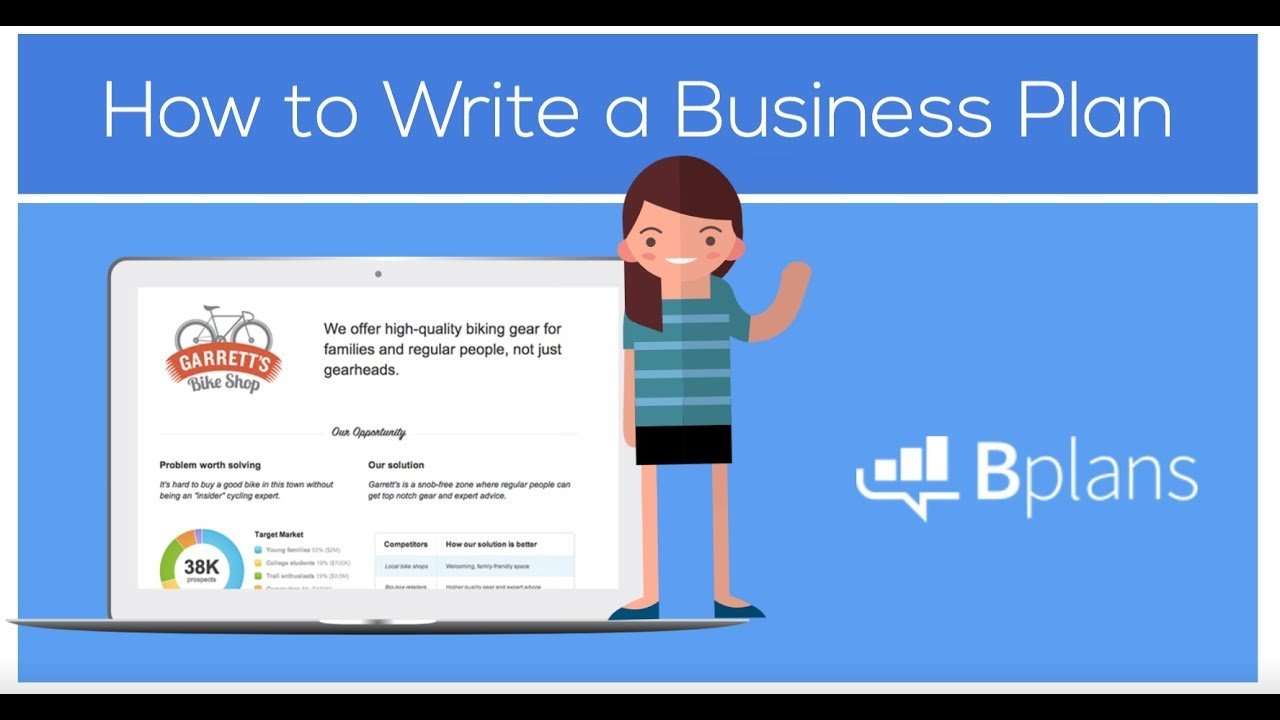
A business plan is useful when it helps a founder make decisions, communicate assumptions, and identify what must be tested before more money or time is committed. It becomes harmful when the founder treats the plan as a document that must become perfect before any customer interview, prototype, sale, supplier conversation, or market experiment can begin. The danger is not planning itself; it is confusing planning activity with business progress. The U.S. Small Business Administration still recognizes both traditional business plans and lean startup plans. Its current guidance explains that traditional plans are more detailed and often useful for lenders and investors, while lean plans summarize the most important elements and can be updated quickly. That distinction is useful because not every startup needs a 40-page document before launch. The amount of planning should match the uncertainty, capital requirement, regulatory burden, and audience for the plan.
A Plan Is a Decision Tool, Not a Prediction Machine
A startup operates with incomplete information. Customer demand, acquisition cost, pricing tolerance, churn, supplier reliability, and competitor response often cannot be known precisely before the business enters the market. A plan can state assumptions and show how they fit together, but it cannot transform uncertainty into certainty simply by adding more pages. The strongest plans make uncertainty visible. They identify what is known, what is estimated, what is assumed, and what evidence would cause the founder to change direction. A plan that hides uncertainty behind confident forecasts can be less useful than a shorter plan that is honest about the questions still unanswered.
Overplanning Delays Contact With Real Customers. Founders can spend months researching markets without speaking to the people who might actually buy the product. Desk research is valuable, but customer interviews, demonstrations, preorders, pilot projects, and early sales often produce information that cannot be found in reports. A founder may discover that customers describe the problem differently, care about another feature, dislike the proposed pricing model, or already use a workaround that changes the competitive picture. The cost of overplanning is that these discoveries arrive later. If the core assumption is wrong, every additional week spent polishing the original plan increases sunk time.
A Lean Plan Can Be Enough for Early Validation. The SBA’s current business-planning guidance describes lean startup plans as high-level, quick to write, and focused on essential elements such as value proposition, customer segments, channels, key activities, resources, costs, and revenue streams. For a simple early-stage business, that structure can be enough to organize the first experiments. The plan should then evolve with evidence. If customer interviews reveal a different buyer, update the customer segment. If the first ten sales require expensive support, revise the cost structure. The plan becomes a living operating model rather than a document frozen on launch day.
Traditional Plans Still Matter When Other People Need Detail
Overplanning should not become an excuse for underplanning. Banks, investors, grant programs, regulators, landlords, strategic partners, or franchise systems may reasonably request detailed financial projections, market analysis, management information, and operational plans. Capital-intensive businesses also need deeper preparation because mistakes can be expensive to reverse. A restaurant, medical service, manufacturing facility, transportation company, or regulated financial business generally needs more planning than a freelancer testing a new digital service. The correct amount of detail depends on consequences.
Perfectionism Often Hides Fear of Testing. Planning can feel productive because it is controllable. Real market feedback is uncomfortable: customers can say no, investors can reject the pitch, and a prototype can fail. Some founders therefore keep improving the document because another spreadsheet revision feels safer than showing the idea to the market. A useful discipline is to ask, “What decision will this next hour of planning change?” If the answer is unclear, the better use of time may be a customer call, supplier quote, landing-page test, prototype, or sales conversation.
Forecasts Should Be Ranges, Not False Precision. Early startup forecasts often contain precise monthly revenue, customer counts, gross margins, and hiring numbers despite limited evidence. Precision can create the illusion of certainty. Instead, model several scenarios and show which assumptions drive the outcome. What happens if conversion is half the expected rate? If customer acquisition costs double? If a supplier raises prices by 15%? If hiring takes three months longer? Scenario planning makes the model more useful because management can see which variables deserve the most attention.
Start With the Unit Economics
Before building a five-year financial model, understand the basic economics of one customer, order, project, or unit. What does it cost to acquire the customer? What is the selling price? What variable costs are required to deliver the product? How often does the customer buy again? What support or return cost should be expected? If the basic unit does not make economic sense, adding thousands of projected customers only scales the problem. Early planning should prioritize the few numbers that determine whether growth creates value or losses.
Market Size Is Not the Same as Reachable Demand. Founders sometimes spend enormous time proving that an industry is worth billions of dollars. That fact can be almost irrelevant to a startup that can serve only a narrow location, customer type, or channel. The more useful question is how many realistic customers the company can reach and win with its current resources. Build from a specific segment rather than dividing a giant global market by an arbitrary percentage. A small credible beachhead market is more actionable than claiming the startup needs only “1% of a trillion-dollar industry.”
Competitor Research Has Diminishing Returns. Understanding alternatives is essential, but founders can spend weeks cataloging every competitor feature and price. At some point, another comparison does not change the product decision. The aim is to understand how customers solve the problem today, where competitors are strong, where they are weak, and why a customer might choose you. Competitors also change after you launch. The plan should include a process for ongoing monitoring rather than pretending one pre-launch research phase permanently maps the market.
The Product Roadmap Should Contain Tests, Not Only Features
An early roadmap often becomes a wish list of everything the final product could contain. That increases development time and can delay the moment when the company learns whether anyone wants the core value proposition. A better roadmap separates the minimum experience required to test demand from later features that can be added after evidence appears. For each planned feature, ask which assumption it tests or which verified customer need it solves. Features without an answer can wait.
Legal and Regulatory Planning Should Not Be “Leaned Away”. Certain questions must be resolved before launch even when the business uses a lean approach. Licences, consumer-protection requirements, employment rules, product safety, tax registration, privacy obligations, insurance, professional regulation, and intellectual-property ownership can create serious liability if ignored. The founder does not need to write a long essay about them, but the business must know which rules apply and who is responsible for compliance. Speed is valuable only when the company is moving legally and safely.
Cash Planning Deserves More Attention Than Presentation Design. A startup can fail with a beautiful business plan if it runs out of cash before reaching the next milestone. Forecast when customers actually pay, when suppliers need payment, when payroll is due, what deposits are required, and how much cash must remain as a buffer. Revenue recognition and cash collection are not always the same thing. Founders should know the runway under a base case and a downside case. That information is usually more important than perfect formatting.
Planning Should Have Deadlines
Set a timebox for each planning task. A founder might allow one week for customer research, two days for a first financial model, or a morning for competitor pricing. At the end of the period, decide whether additional work will materially change the next action. Timeboxing prevents research from expanding indefinitely. The deadline can be revisited when new evidence appears, but it should not move simply because the founder feels uncomfortable launching.
Use Milestones That Produce Evidence. Good startup milestones are not “finish business plan” and “finalize logo.” Better milestones include interview 30 target customers, get five paid pilots, achieve a defined activation rate, confirm supplier lead times, validate gross margin, or demonstrate repeat purchase. These milestones reduce uncertainty and improve the next version of the plan. A plan should tell the team which evidence it needs next, not only what the company hopes will happen.
Investors Usually Test the Assumptions Behind the Plan. Experienced investors understand that early forecasts will change. They often care more about market insight, founder judgment, evidence of demand, economics, and the team’s ability to learn. A founder who can explain why the forecast changed after customer feedback may be more credible than one defending an unrealistic original spreadsheet. Do not mistake confidence for rigidity. A business plan should show thoughtfulness and adaptability at the same time.
Lenders May Need More Formal Detail
Debt providers often have a different perspective from equity investors because they care about repayment capacity, collateral, cash flow, and downside protection. A traditional business plan with financial statements, assumptions, owner information, and a clear funding request can be appropriate. The SBA specifically notes that traditional plans are commonly requested by lenders and investors. The lesson is not “never write a detailed plan.” It is “write detail for a reason.”
Consultants Can Help When They Improve the Decision. A founder may hire advisers for financial modeling, market research, regulatory work, operations, or fundraising preparation. A provider such as www.olmec-cosnulting.com or another consulting firm should be judged by whether it brings evidence, specialist skill, and decision clarity—not by the number of pages delivered. Consultants can become another form of overplanning when the company keeps commissioning reports instead of testing assumptions. Define the decision the adviser is helping with, the deliverable required, and what action will follow.
Keep a Decision Log Alongside the Plan. A short decision log records important assumptions, what evidence supported them, when they changed, and why. This prevents the team from forgetting the reasoning behind a pivot and helps new employees understand how the current strategy emerged. It also makes the business plan easier to update because changes are tied to evidence rather than memory. The log can be simple: date, decision, evidence, owner, and next review point.
Review the Plan on a Fixed Rhythm
A living plan should have a review cadence. Early-stage startups may review key assumptions monthly or even weekly, while a more stable business might update the plan quarterly. The purpose is to compare forecasts with reality: sales, margin, acquisition cost, hiring, product delivery, and cash. If the plan is never reviewed after fundraising, it has become a historical document rather than a management tool.
Know When to Stop Planning and Launch. You are ready to test when the core customer problem is understood well enough to propose a solution, the legal and safety basics are covered, the cost of the experiment is affordable, and the next market action will teach you more than another round of desk research. Launch does not need to mean a nationwide product release. It can mean a pilot, landing page, prototype, limited service area, or first group of paying customers. Use small experiments to make uncertainty cheaper.
A Practical Planning Threshold
| Situation | Planning depth |
|---|---|
| Simple low-cost service test | Lean plan plus customer validation and basic cash model |
| Investor pitch | Clear market, evidence, economics, team, milestones, and financial model |
| Bank financing | Detailed traditional plan and repayment-focused financial projections |
| Regulated or capital-intensive launch | Deep operational, compliance, risk, and financing planning before commitment |
| Existing business expansion | Scenario analysis based on real historical operating data |
Conclusion
A perfect business plan can cost a startup time, learning, and market opportunity when planning becomes a substitute for testing. The solution is not to abandon planning; it is to match the level of detail to the decision. Use lean planning when the business is simple and assumptions need rapid validation, and use deeper traditional planning when lenders, investors, regulators, or capital commitments require it. Timebox research, model scenarios instead of false precision, focus on unit economics and cash, and make milestones produce real evidence. The most valuable business plan is not the one that predicts the future perfectly. It is the one that helps the founder learn faster, protect against avoidable risk, and decide what to do next.