
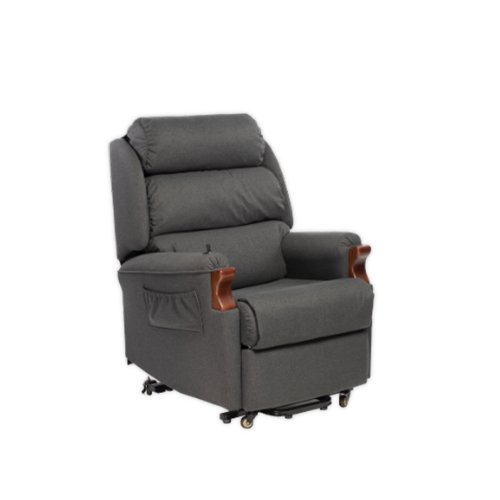
Electric recliners combine upholstered furniture with an electric drive system that moves the backrest, footrest, headrest, or lift mechanism at the press of a button. Instead of relying entirely on a manual lever and the user’s body weight, the chair uses one or more low-voltage motors connected to moving metal linkages inside the frame. Power normally comes from a household electrical outlet through an external transformer or power supply that converts mains electricity into the lower-voltage direct current required by the motors and control system. Some models also include rechargeable battery packs that allow limited operation during a power outage or provide greater flexibility in room placement. The exact system varies by manufacturer and chair type, so buyers should review the technical specifications for the model they are considering rather than assuming every powered recliner uses the same motor, voltage, controls, or backup arrangement.
How the Motor and Control System Work Together
When a user presses a wired handset, side-mounted button, or integrated control panel, the switch sends an electrical signal to the chair’s control box or motor assembly. The motor then drives an actuator, which extends or retracts a metal shaft and changes the position of the reclining mechanism. In a basic power recliner, one motor may control the main reclining motion. More advanced chairs can use separate motors for the backrest, footrest, headrest, lumbar support, or lift function, allowing the user to adjust each section independently. This multi-motor design increases flexibility but also adds more wiring, connectors, control components, and moving parts. If one function stops working while others continue normally, the problem may be isolated to a particular actuator, switch, cable, or connection rather than the chair’s entire electrical system.
The power supply is an equally important part of the system because it allows the motors to operate safely from ordinary household electricity. Many recliners use an external transformer located between the wall outlet and the chair, while some power components may be integrated inside the furniture. The transformer reduces and converts the incoming electricity to the level required by the recliner. Connections should remain secure and free from crushing, stretching, or pinching under the moving frame. Extension cords and adapters should only be used when permitted by the manufacturer because an unsuitable cable can create a trip hazard or electrical risk. If the chair suddenly loses all powered movement, users should first check the wall outlet, transformer indicator where provided, plugs, and visible cable connections before assuming that the motor itself has failed.
Battery Backup and Additional Powered Features
Battery backup is especially useful in lift recliners because a power failure could otherwise leave the chair in a position that is difficult for someone with limited mobility to exit. Some chairs use disposable batteries only for emergency lowering, while others use rechargeable battery packs capable of multiple movements. The capacity, charging method, and expected number of cycles differ considerably between products, so backup power should be treated as a model-specific feature. Buyers who depend on powered positioning for mobility should understand exactly what happens when household power fails and how the backup is maintained. Additional reclining features can include powered headrests, adjustable lumbar sections, memory positions, USB charging, heat, massage, or synchronized multi-motor movement, but each added function increases the importance of proper electrical maintenance and compatible replacement parts.
Powered recliners are generally simple to use, but they still contain pinch points and moving mechanisms that need clear space. Cables should not run through the scissor mechanism or beneath feet that can crush them, and children or pets should be kept away from the moving underside of the chair. Users should avoid forcing the recliner manually when the motor is engaged because this can damage linkages or actuators. The chair should also be placed far enough from walls or nearby furniture to complete its intended movement. If the recliner begins making unusual grinding noises, moves unevenly, stops repeatedly, or becomes noticeably slower, continuing to operate it may worsen the problem. A visual inspection for obstructions, loose plugs, damaged wiring, or a shifted mechanism can identify simple causes, while internal electrical repair is better left to a qualified technician.
Maintenance and Troubleshooting
Routine care is mostly about protecting the mechanism rather than servicing the motor itself. Keep the area under the chair free from objects, vacuum around moving parts without disturbing wiring, and inspect accessible connectors periodically for looseness or damage. Avoid spilling liquids near control buttons, transformers, or electrical connections. If a detachable handset stops responding, confirm that it is plugged in securely before replacing components. Power cycling the chair may clear some temporary control faults, but repeated failures should be investigated rather than ignored. Replacement transformers, hand controls, actuators, and cables need to match the original system because similar-looking parts can use different voltages or connector arrangements. The model label and manufacturer documentation provide the safest basis for identifying compatible components. For warranty-covered furniture, unauthorized repairs can also affect coverage, making the manufacturer or authorized service provider the preferred first contact.
Conclusion
Electric recliners are powered furniture systems in which a household outlet, transformer, controls, motors, and mechanical actuators work together to move the chair smoothly. More advanced models may add multiple motors, battery backup, memory settings, powered lumbar support, headrests, heat, massage, or charging ports, but the basic principle remains the same: an electrical command activates a motor that changes the position of the reclining mechanism. Safe use depends on keeping cables and moving parts unobstructed, maintaining clear space around the chair, and using replacement components that match the original specifications. When a recliner stops working, the fault may be as simple as a loose connection or failed power supply rather than a damaged motor. Understanding how the system is powered makes troubleshooting easier and helps buyers compare features that genuinely improve comfort, convenience, or mobility.