
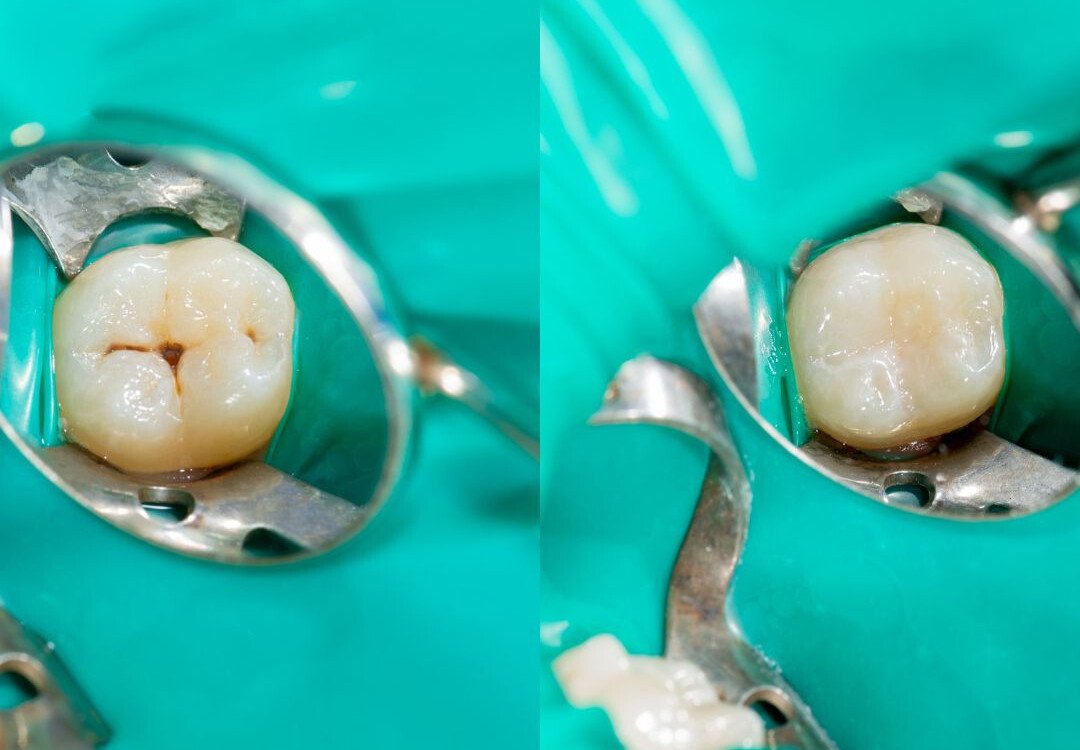
Fissure sealants are thin protective coatings placed over the pits and grooves of back teeth to make those surfaces easier to protect from decay. The safety question usually centers on two issues: whether the material itself is harmful and whether sealing a groove could hide or worsen early decay. Current guidance from major dental and public-health organizations supports sealants as a safe, evidence-based preventive treatment when they are selected and placed appropriately. The short answer is therefore yes: fissure sealants are generally considered safe. The CDC: Dental Sealant Facts reports that dental sealants can prevent about 80% of cavities in molars during the first two years after placement and can continue to protect against about 50% of cavities for up to four years. The American Dental Association also states that the very small, temporary bisphenol A exposure that can follow placement of some resin-based dental materials does not represent a health concern based on current evidence. That does not mean every tooth needs a sealant or that the treatment is permanent. Sealants can wear, partially detach, or fail if the tooth cannot be kept dry during placement. They also do not replace fluoride toothpaste, good brushing, sensible sugar intake, or routine dental checkups. A better way to think about sealants is as one targeted layer in a broader cavity-prevention plan.
What current evidence says about sealant safety
The strongest reassurance comes from organizations that evaluate both dental materials and cavity-prevention outcomes. The American Dental Association: Dental Sealants guidance says pit-and-fissure sealants are effective for preventing caries on the chewing surfaces of primary and permanent molars in children and adolescents. The ADA/AAPD Pit-and-Fissure Sealants Clinical Practice Guideline also supports their use on certain noncavitated early caries lesions because sealing the surface can help limit progression when the lesion is properly diagnosed and monitored. The CDC describes sealants as thin coatings painted onto back teeth and highlights their role in preventing decay in pits and fissures that toothbrush bristles may not clean effectively. This is important because molar grooves are anatomically complex: food particles and bacterial biofilm can remain in narrow fissures even when a child or adult brushes conscientiously. Safety therefore has to be judged against both sides of the decision. The material has a very low risk profile when used correctly, while untreated decay can lead to pain, fillings, infection, missed school or work, and progressively more complex dental treatment. The goal is not to seal teeth indiscriminately but to use the intervention where the expected preventive benefit is meaningful.
The BPA question: what the concern is, and what it is not
Bisphenol A, or BPA, attracts attention because it is used in the manufacture of some plastics and has been studied for possible endocrine effects. Dental sealants are sometimes pulled into that discussion because certain resin chemistries can be associated with tiny amounts of BPA as a contaminant or degradation by-product. The American Dental Association: Bisphenol A overview explains the issue in the context of dental materials. That distinction matters: the ADA states that BPA is not intentionally used as a formula ingredient in dental sealants. Research reviewed by the ADA shows that resin-based sealants can produce a small, temporary rise in BPA measured in saliva or urine after placement. The exposure is short-lived and is concentrated in the period immediately after curing. The ADA’s current conclusion is that this very low exposure does not create a health concern from dental materials. Clinicians can also reduce residual surface material by following manufacturer curing instructions carefully, ensuring that the curing light is functioning correctly, washing the surface, and using other recommended finishing steps. Parents who remain concerned can ask which sealant product will be used and request the manufacturer’s safety information rather than relying on broad claims that all dental resins are either completely harmless or inherently dangerous.
What fissure sealants actually do
Sealants are normally placed on the occlusal, or chewing, surfaces of molars and sometimes premolars. These surfaces contain pits and fissures that may be deep enough to retain plaque and food. A sealant flows into the grooves and hardens into a thin protective barrier, physically separating the vulnerable enamel from much of the debris and bacterial activity that drives cavity formation. The process is usually quick and non-invasive. The tooth is cleaned, isolated, and dried; the surface is prepared according to the material system; the sealant is applied and cured when required; and the dentist checks retention and the patient’s bite. Healthy tooth structure is not normally drilled away simply to place a preventive sealant, and local anesthetic is generally unnecessary. Moisture control is one of the most important technical details. Resin-based materials bond best when the tooth stays dry during placement. If saliva contaminates the surface at the wrong time, retention can be reduced. This is why a newly erupting molar that is difficult to isolate may require a different material choice, a delayed appointment, or a modified technique.
Who benefits most?
Sealants are commonly discussed for children because the first permanent molars often erupt around age six and the second permanent molars around age twelve. Newly erupted teeth can be especially vulnerable: their grooves are fresh, they may sit far back in the mouth, and younger children may still be developing consistent brushing habits. Applying sealants soon after eruption can protect the chewing surface during that high-risk period. Age alone, however, is not the deciding factor. Dentists consider the anatomy of the tooth and the person’s overall caries risk. Adults can benefit too when they have deep, intact pits and fissures and a meaningful risk of decay. Primary molars may also be sealed in selected children when the grooves are susceptible and the tooth is expected to remain in the mouth long enough for prevention to be worthwhile.
Risk is individualized. Previous cavities, visible plaque, frequent sugar intake, low fluoride exposure, dry mouth, orthodontic appliances, developmental challenges, difficulty cleaning back teeth, and limited access to regular dental care can all influence the decision. A patient with shallow, self-cleansing grooves and very low caries risk may gain little from sealing every posterior tooth.
Seven common myths, tested against the evidence
Myth 1: “Sealants are toxic because they contain BPA.” The concern over BPA is real enough to study, but the conclusion is often overstated. Current ADA guidance says dental materials can contribute a very low level of BPA exposure for a few hours after placement, yet the available evidence does not identify that exposure as a health concern. The clinically relevant response is proper product selection and placement, not assuming that any trace exposure makes the treatment unsafe. Myth 2: “A sealant traps decay and makes it worse.” A sealant should not be placed over an obvious cavitated lesion and then ignored. However, evidence-based guidance supports sealing certain noncavitated occlusal lesions because isolating the area from the oral environment can slow or arrest progression. The crucial step is diagnosis: the dentist must decide whether the surface is appropriate for sealing or whether restorative treatment is needed.
Myth 3: “Fissure sealants don’t really work.” CDC data directly contradict this claim. Sealants can prevent around 80% of cavities on molar chewing surfaces during the first two years and continue to provide substantial protection for several years. Their effectiveness depends on retention, so routine review and repair when necessary are part of the preventive strategy rather than evidence that the treatment has failed. Myth 4: “Only children can have sealants.” Children and adolescents receive them most often because newly erupted molars are an obvious preventive target, but adults are not excluded. A dentist may recommend sealants for an adult with deep, unfilled fissures and elevated caries risk. The decision is based on tooth condition and risk, not on a strict age cutoff.
Myth 5: “Every back tooth should be sealed.” Preventive dentistry works best when it is risk-based. Some grooves are shallow and easy to clean; some teeth already have restorations; some lesions require a filling rather than a sealant. The right question is not “Should every molar be sealed?” but “Which surfaces are sufficiently vulnerable that a sealant is likely to reduce future disease?” Myth 6: “Sealants make brushing and fluoride unnecessary.” Sealants protect selected pits and fissures. They do not cover the sides of teeth, the spaces between teeth, the gumline, or every surface where plaque can accumulate. Good preventive dentistry still includes fluoride toothpaste, effective brushing, cleaning between teeth where appropriate, dietary control, and regular professional assessment. Myth 7: “The procedure is painful.” Routine sealant placement is generally non-invasive. The tooth is cleaned and conditioned, but there is normally no drilling into healthy tooth structure and no injection. A patient may notice a slight change in the bite immediately after placement; if the material sits too high, the dentist can adjust it.
The real limitations and risks are more practical than dramatic
No preventive material is perfect. The most common limitation is partial or complete loss of the sealant over time. Chewing forces, tooth grinding, moisture contamination during placement, material choice, and normal wear can all influence retention. A partially lost sealant is usually not an emergency, but the tooth should be assessed because an exposed groove may once again be vulnerable to decay. Allergic reactions to sealant materials appear to be uncommon, but patients with known resin allergies or previous reactions to dental materials should tell the dentist before treatment. The clinician can review ingredient information and consider alternatives. Likewise, a patient with a tooth that cannot be adequately isolated may be better served by another material or by waiting until eruption allows more reliable placement. The other limitation is expectation. A sealant does not make a person “cavity-proof.” Caries is multifactorial, so frequent sugar exposure, inadequate fluoride, dry mouth, poor plaque control, and missed dental care can still lead to disease on unsealed surfaces. This is why advice about sealants should sit alongside broader guidance such as healthy smile habits at every age.
Sealants, fluoride, and fillings solve different problems
| Approach | Main purpose | Where it works | Does it remove tooth structure? |
|---|---|---|---|
| Fissure sealant | Prevent or help arrest selected early pit-and-fissure caries | Chewing-surface pits and grooves | Usually no |
| Fluoride toothpaste/varnish | Strengthen enamel and support remineralization | Broad exposed tooth surfaces | No |
| Filling | Restore a cavitated or structurally damaged tooth | Area where tooth tissue has been lost or must be removed | Often yes |
These are not competing options in the simple sense. Fluoride and sealants can work together because they target different aspects of cavity prevention. A filling becomes necessary when disease has progressed to a point where preventive sealing alone is no longer the appropriate treatment.
What parents and adults should ask before saying yes
A good sealant recommendation should be explainable. The dentist should be able to identify which tooth or teeth are at risk, why the anatomy or caries history makes prevention worthwhile, and what material is planned. Patients do not need to become experts in resin chemistry, but they should receive enough information to understand the expected benefit and what follow-up is required.
- Why is this particular tooth considered at risk? Deep fissures, previous decay, eruption stage, or individual risk should support the recommendation.
- Is there already a lesion in the groove? Ask whether it is sound enamel, a noncavitated early lesion, or a cavity that needs restoration.
- Which material will be used? Resin-based and glass-ionomer-type materials have different handling and retention characteristics.
- How will the sealant be checked? Retention should be reviewed during future dental examinations.
- What happens if part of it comes off? Repair or replacement is often straightforward after the tooth is reassessed.
- What if I am concerned about BPA or allergies? Ask for the product name and manufacturer information so the discussion is specific rather than hypothetical.
For a general overview from a dental provider, see fissure sealants. The most useful decision is still the one made after a clinician has examined the actual tooth rather than applying a universal rule from an online checklist.
Aftercare: what changes once a tooth is sealed?
Very little changes in normal daily care. The patient should continue brushing twice daily with fluoride toothpaste, clean between teeth as advised, and avoid frequent exposure to sugary drinks and snacks. The sealed chewing surface should still be brushed because plaque can collect around the margins and on nearby unsealed areas.
At routine visits, the dentist checks whether the material is fully retained, partly lost, worn, stained around the edges, or associated with any new caries risk. If the sealant is intact, no special treatment may be needed. If it has partly detached, the surface can be cleaned, examined, and repaired or replaced when indicated.
Some sealants remain functional for many years, but no responsible clinician should promise a fixed lifespan for every tooth. Retention varies with material, technique, bite forces, tooth position, and patient behavior. The preventive value comes from maintaining coverage over the vulnerable fissures, not from reaching an arbitrary ten-year milestone.
What Current ADA and CDC Evidence Says
The current American Dental Association sealant topic page, updated in October 2025, continues to recommend pit-and-fissure sealants as an effective preventive option for children and adolescents and states that the very low temporary BPA exposure associated with some dental materials does not represent a health concern based on current evidence. CDC guidance likewise reports that sealants can prevent about 80% of cavities in back teeth during the first two years after placement and continue to provide meaningful protection for several years.
Conclusion
For appropriately selected teeth, current evidence supports fissure sealants as a safe and effective preventive option. The most publicized material concern—temporary BPA exposure from some resin-based products—has been reviewed by the ADA, which states that the levels associated with dental materials do not represent a health concern based on current evidence. The CDC continues to recommend sealants as an effective way to reduce cavities in molars. The balanced view is not that sealants are risk-free magic coatings. They can wear, they require good placement technique, and they need periodic inspection. They also protect only specific surfaces. Their value is that a small, non-invasive intervention can substantially reduce decay on teeth that are anatomically difficult to keep clean. Used together with fluoride, daily plaque control, sensible diet, and regular dental care, sealants can prevent the need for more invasive treatment later. If a parent or adult is uncertain, the best next step is to ask the dentist to explain the tooth’s individual cavity risk, the chosen material, and the plan for follow-up.