
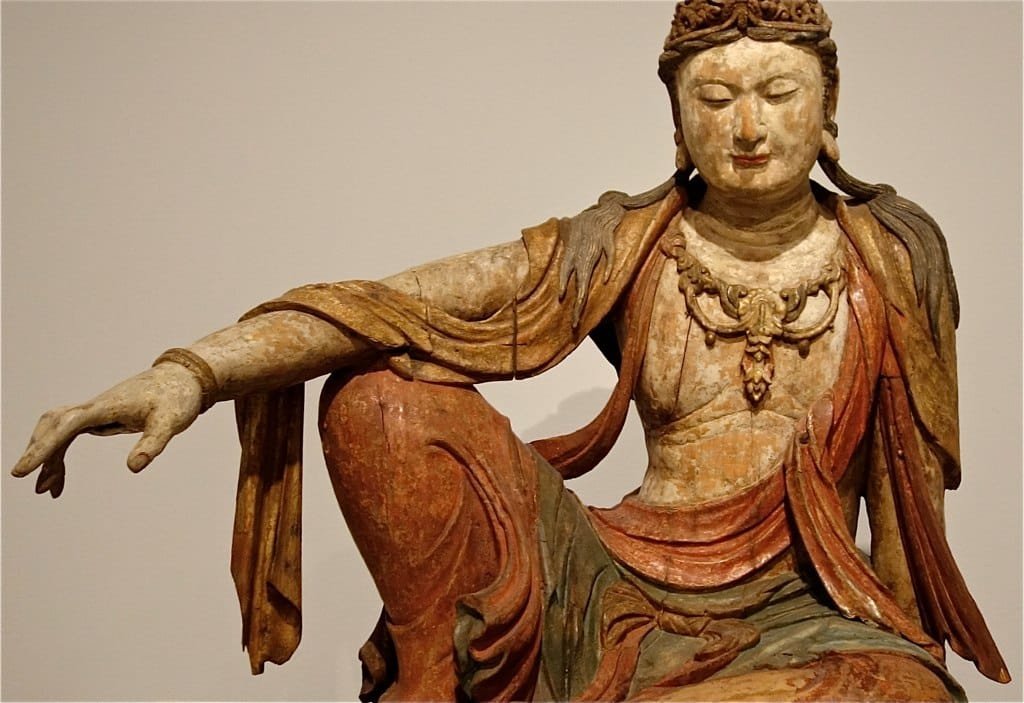
The bodhisattva path is one of the central ideals of Mahāyāna Buddhism. A bodhisattva is a person committed to awakening not only for personal liberation but for the benefit of all sentient beings. The path is therefore shaped by two qualities that are repeatedly joined in Buddhist philosophy: compassion for suffering beings and wisdom about the nature of reality. The older version of this article described the bodhisattva path as a simple three-step sequence of renunciation, bodhicitta, and wisdom. Those ideas are important in some teaching traditions, but Buddhism is too diverse for one universal three-step formula. Mahāyāna texts more commonly describe a long course of training built around bodhicitta—the aspiration toward Buddhahood for the welfare of beings—and practices such as the six perfections of generosity, ethical discipline, patience, perseverance, meditative stability, and wisdom. Different Buddhist traditions explain the path in different ways. The bodhisattva ideal is especially central in Mahāyāna Buddhism, including Tibetan, Chinese, Korean, Japanese, and Vietnamese traditions. Earlier Indian Buddhist traditions also use the related term bodhisatta for a being progressing toward Buddhahood, especially in accounts of the Buddha’s previous lives. This guide explains what a bodhisattva is, what bodhicitta means, how the six perfections structure the path, why compassion and wisdom belong together, and how meditation practices such as mindfulness and vipassanā relate to—but are not identical with—the bodhisattva path.
The Bodhisattva Ideal and the Meaning of Bodhicitta
The Stanford Encyclopedia of Philosophy – Śāntideva provides an important philosophical entry point into Mahāyāna accounts of the bodhisattva path, especially the union of compassion, ethical discipline and wisdom. A bodhisattva is not simply “a good Buddhist” but an aspirant oriented toward awakening for the benefit of sentient beings. The Sanskrit term bodhisattva is usually translated as “awakening being,” “being destined for awakening,” or a person oriented toward Buddhahood. The related Pali form is bodhisatta. The word combines: Bodhi — awakening or enlightenment.; Sattva — a being or sentient being..
In broad Mahāyāna usage, a bodhisattva is someone whose spiritual life is directed toward complete awakening for the benefit of others. The Bodhisattva Ideal Across Buddhist Traditions It is important not to imply that every Buddhist tradition defines the bodhisattva path in precisely the same way. Early and Theravāda Traditions
In early Buddhist literature and Theravāda tradition, bodhisatta often refers particularly to the Buddha before his awakening and to beings who make an aspiration to become a future Buddha. The goal of arhatship—liberation through following a Buddha’s teaching—also remains highly valued. Mahāyāna Traditions Mahāyāna Buddhism gives the bodhisattva ideal a much broader and more central role. Practitioners are encouraged to generate bodhicitta and train in qualities necessary for Buddhahood so that they can benefit sentient beings as fully as possible. Famous bodhisattvas in Mahāyāna traditions include Avalokiteśvara, Mañjuśrī, Kṣitigarbha, Samantabhadra, and Maitreya, although their roles and devotional importance vary among traditions. What Is Bodhicitta? Bodhicitta is often translated as the “mind of awakening” or “awakening mind.” It is the aspiration to attain Buddhahood for the sake of sentient beings. That motivation distinguishes the Mahāyāna bodhisattva ideal from a purely private pursuit of spiritual peace. Bodhicitta contains two interconnected intentions:
- To reach complete awakening.
- To do so in order to help beings overcome suffering.
Compassion therefore becomes part of the purpose of enlightenment rather than an optional virtue added afterward. Aspirational and Engaged Bodhicitta Some Buddhist teachers distinguish between two aspects of bodhicitta. Aspirational bodhicitta is the sincere wish to attain awakening for the welfare of beings. Engaged bodhicitta means actively undertaking the practices and ethical commitments of the bodhisattva path. A simple analogy is the difference between sincerely deciding to make a journey and actually beginning to travel. The Bodhisattva Vow In many Mahāyāna traditions, practitioners formally take bodhisattva vows. Wording varies across schools, but the central commitment is to cultivate awakening while working for the liberation and welfare of sentient beings. The vow should not be interpreted as a promise that one individual can immediately eliminate every form of suffering. It establishes a direction for conduct and practice. That direction influences: Ethical choices.; Meditation.; Study.; Compassion.; Patience.; How practitioners relate to other beings..
The Six Perfections as a Practical Training Framework
The Stanford Encyclopedia of Philosophy – Ethics in Indian and Tibetan Buddhism helps place generosity, ethical discipline, patience, perseverance, meditation and wisdom within a broader Buddhist ethical tradition in which character is trained through repeated practice rather than reduced to abstract belief. One of the best-known frameworks for the bodhisattva path is the cultivation of the six pāramitās, usually translated as perfections or transcendent virtues. Śāntideva’s influential eighth-century work Bodhicaryāvatāra, often translated as A Guide to the Bodhisattva Way of Life, gives these practices a central role. 1. Generosity Generosity, or dāna, involves loosening attachment and benefiting others through giving. It can include: Material assistance.; Time.; Protection.; Knowledge.; Compassionate attention.. Its deeper purpose is not simply charitable activity. Generosity trains the practitioner to reduce possessiveness and self-centeredness. 2. Ethical Discipline Ethical discipline, or śīla, means shaping conduct so that it avoids harm and supports awakening. Buddhist ethical practice commonly includes commitments related to: Non-harming.; Honesty.; Responsible sexuality.; Avoiding theft.; Clear-minded conduct.. Specific vows differ between lay and monastic practitioners and among traditions. 3. Patient Endurance Kṣānti is often translated as patience, forbearance, or patient endurance. It includes the ability to remain steady when facing:
Insults.; Difficulty.; Pain.; Frustration.; Challenging teachings.. This does not require passively tolerating abuse or injustice. Its spiritual purpose is to prevent anger and hostility from controlling one’s response. 4. Perseverance Vīrya is energetic perseverance in wholesome practice. Compassionate aspirations accomplish little without sustained effort. Perseverance addresses discouragement, laziness, and the tendency to abandon practice when progress is slow. 5. Meditative Stability Dhyāna refers to meditation and stable concentration. Meditative training helps develop: Attention.; Emotional steadiness.; Awareness of mental habits.; The capacity for deeper insight.. Different Buddhist schools use many specific meditation methods, so there is no single technique that defines bodhisattva meditation. 6. Wisdom Prajñā, or wisdom, is often considered the culmination of the perfections. In Mahāyāna philosophy, wisdom includes insight into emptiness—the absence of fixed, independent essence in persons and phenomena. This is not the claim that nothing exists. It is a way of understanding that things arise through causes, conditions, relationships, concepts, and dependent processes rather than existing as isolated permanent entities.
Compassion, Wisdom, Emptiness and Skillful Means
The Stanford Encyclopedia of Philosophy – Madhyamaka is useful for understanding why Mahāyāna discussions of wisdom are closely tied to teachings on emptiness and dependent arising. In many presentations of the bodhisattva path, compassion without wisdom can become confused or partial, while wisdom without compassion can become detached from the suffering of others. A major theme in Mahāyāna Buddhism is that compassion without wisdom can become confused, while wisdom without compassion can become detached. Compassion motivates the practitioner to respond to suffering. Wisdom helps the practitioner understand: How suffering arises.; How attachment and ignorance operate.; Why self and other are not as independent as they appear.; Why good intentions still need skillful action.. The bodhisattva ideal therefore does not ask practitioners to choose between insight and service. What Is Renunciation? Renunciation is important in Buddhism, but it should not be reduced to rejecting ordinary life or possessions.
At a deeper level, renunciation involves seeing the limitations of compulsively seeking lasting satisfaction from changing conditions. For monastics, renunciation can involve formal vows and a radically simplified life. Lay practitioners may express it through reduced attachment, ethical discipline, and prioritising spiritual practice. In Tibetan presentations of the Mahāyāna path, renunciation often appears alongside bodhicitta and insight into emptiness as foundational motivations and understandings. That does not make those three concepts a universal sequence accepted identically by every Buddhist school. The Ten Bodhisattva Grounds Some Mahāyāna texts describe the advanced path through ten bhūmis, or bodhisattva grounds. These represent progressively deeper stages of realization and ability. The details differ by textual system, but the framework emphasizes an important point: Buddhahood is not normally portrayed as a quick achievement. The bodhisattva path is a profound transformation of motivation, perception, conduct, and wisdom. Skillful Means
Another major Mahāyāna idea is skillful means, or upāya. Helping people effectively requires understanding their circumstances. The same teaching or intervention may not benefit everyone in the same way. A bodhisattva therefore tries to respond in ways suited to: A person’s needs.; Understanding.; Capacity.; Situation.. Compassion is not merely feeling sympathy. It requires wise responsiveness. Does a Bodhisattva Delay Nirvana? A popular Western summary says a bodhisattva “refuses nirvana until everyone else is enlightened.” That phrase captures something of the altruistic ideal, but it can oversimplify Mahāyāna philosophy. Different texts describe the relation between Buddhahood, nirvana, and compassionate activity in more sophisticated ways. The essential point is that the bodhisattva does not seek liberation while abandoning other beings. Awakening and compassionate activity are understood as deeply connected. Mindfulness and the Bodhisattva Path Mindfulness can support the bodhisattva path by helping practitioners notice: Anger before acting on it.; Self-centered motivations.; Habitual reactions.; Suffering in oneself and others.; Changes in thoughts and emotions.. But mindfulness by itself is not the entire bodhisattva path. Mahāyāna practice also emphasizes motivation, ethics, compassion, wisdom, and the other perfections. How Does Vipassanā Relate to the Bodhisattva Path? Vipassanā, or insight meditation, is a broad term used in Buddhist traditions for practices aimed at seeing experience clearly and developing insight. It should not be presented as one mandatory stage of the bodhisattva path.
Vipassanā is especially prominent in modern Theravāda meditation movements, although insight practices also exist in Mahāyāna traditions under different frameworks. The older article connected the documentary Doing Time, Doing Vipassana directly to the bodhisattva path. The documentary is better understood as an example of modern vipassanā practice in a prison setting, not as an explanation of Mahāyāna bodhisattva doctrine. What the Documentary Doing Time Doing Vipassana Is About Doing Time, Doing Vipassana documents the introduction of vipassanā meditation courses at Tihar Jail in India during the tenure of prison official Kiran Bedi. Its subject is meditation, rehabilitation, and prison reform. It can be discussed alongside Buddhist practice because it demonstrates the modern application of meditation, but viewers should avoid assuming that a contemporary secular or semi-secular vipassanā course represents Buddhism as a whole. Is the Bodhisattva Path Only for Monks and Nuns? No. Mahāyāna traditions include both monastic and lay bodhisattva practice. A lay practitioner may cultivate the path through: Ethical conduct.; Generosity.; Meditation.; Study.; Caregiving.; Service.; Patience in ordinary relationships.. Monastic life provides a specialised form of training, but the aspiration toward bodhicitta is not limited to monasteries.
Texts, Traditions and Everyday Practice
Several Buddhist works have profoundly shaped explanations of the path. Bodhicaryāvatāra Śāntideva’s Bodhicaryāvatāra is one of the most influential guides to bodhisattva conduct. Its chapters examine bodhicitta, ethical vigilance, patience, perseverance, meditation, and wisdom. Lotus Sūtra The Lotus Sūtra became especially influential in East Asian Buddhism and presents a broad vision of the path to Buddhahood. Vimalakīrti Nirdeśa The Vimalakīrti Sūtra is notable for portraying an exceptionally accomplished lay practitioner and exploring nonduality and skillful means. Different schools privilege different texts, so no one book functions as the universal bodhisattva manual. What Does the Path Look Like in Everyday Life? For most practitioners, the bodhisattva path is not expressed through dramatic acts. It appears in repeated choices. Examples include: Listening instead of reacting defensively.; Giving without demanding recognition.; Refusing to dehumanize an opponent.; Studying one’s own anger.; Helping while respecting another person’s autonomy.; Admitting when one’s good intentions caused harm.. The practices are demanding precisely because ordinary situations repeatedly expose attachment, pride, fear, anger, and self-interest. Common Misunderstandings “Every Buddhist Is Automatically a Bodhisattva” No. The term has particular doctrinal meanings and is used differently across traditions.
“The Path Has Exactly Three Steps” No. Renunciation, bodhicitta, and wisdom are important in some presentations, but other traditions use the six perfections, ten grounds, vows, and other frameworks. “Wisdom Means Having Lots of Life Experience” Buddhist wisdom is not merely accumulated experience. It refers to insight into suffering, impermanence, dependent arising, emptiness, and other core teachings depending on the tradition. “Vipassanā and the Bodhisattva Path Are the Same Thing” No. Vipassanā is an approach to insight meditation; the bodhisattva path is a much broader ethical, motivational, philosophical, and contemplative framework.
Conclusion
The bodhisattva path is best understood not as a short checklist but as a long transformation of motivation, conduct, attention, and understanding. Bodhicitta gives the path its direction: awakening is pursued for the benefit of sentient beings. The six perfections give that aspiration practical form through generosity, ethics, patience, perseverance, meditation, and wisdom. Compassion keeps the path oriented toward suffering, while wisdom prevents compassion from becoming confused or self-centered. Buddhist traditions differ in how they map the journey, and that diversity is important. What remains central across Mahāyāna presentations is the refusal to separate personal awakening from responsibility toward others.