
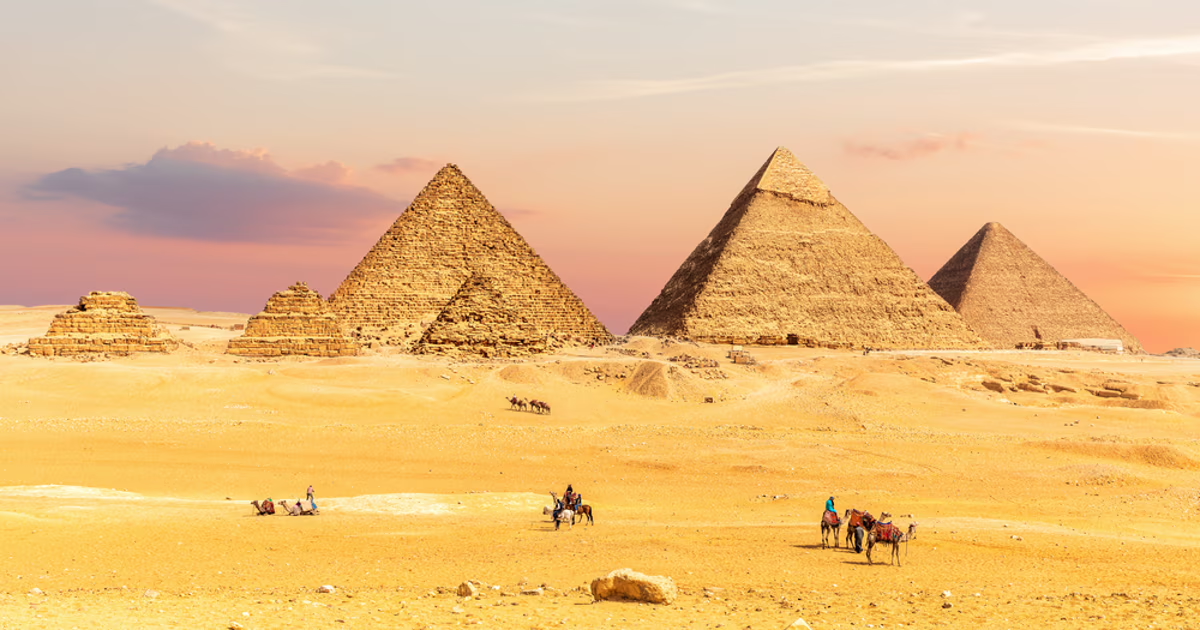
Egypt has captivated the hearts and minds of travelers for centuries, offering a unique blend of ancient wonders, natural beauty, and cultural richness. This North African gem provides an experience unlike any other, where you can walk among monuments that have stood for thousands of years, sail down the legendary Nile, and immerse yourself in a society that honors both its past and present.
Exploring Egypt’s Magnificent Historical Heritage
The story of Egypt begins over 5,000 years ago with one of the world’s earliest and most influential civilizations. The ancient Egyptians achieved remarkable feats in architecture, mathematics, medicine, and governance that continue to astound scholars and visitors alike. The pyramids of the Old Kingdom represent engineering accomplishments that modern science still works to fully understand, while the elaborate temple complexes of Luxor and Karnak showcase the artistic and religious sophistication of the New Kingdom. Visitors exploring Giza tours and attractions will encounter the Great Pyramid of Khufu, the only surviving wonder of the ancient world, alongside the mysterious Sphinx that has guarded the plateau for millennia. The Valley of the Kings conceals elaborate tombs carved deep into the mountainside, their walls covered with vibrant paintings depicting the journey to the afterlife. Museums across the country, particularly the Egyptian Museum in Cairo and the newer Grand Egyptian Museum, house millions of artifacts including mummies, jewelry, statues, and everyday objects that bring ancient life into focus. The Greco-Roman period added cities like Alexandria with its legendary lighthouse and library, while Coptic Christians built some of the world’s oldest monasteries and churches. The Islamic conquest brought magnificent mosques, madrasas, and the medieval splendor of Islamic Cairo, creating layers of history that make Egypt a living museum where every era has left its indelible mark.
The Geographic Diversity of the Land of the Pharaohs
Egypt occupies a strategic position at the crossroads of Africa and Asia, with landscapes that vary dramatically from region to region. The Nile River, flowing north from the heart of Africa to the Mediterranean Sea, creates a narrow strip of fertility that has sustained Egyptian civilization throughout history. Without this mighty river, Egypt would be entirely desert, yet the Nile’s presence allows lush agricultural lands, palm groves, and vibrant communities to flourish along its banks. The Western Desert, part of the great Sahara, features stunning oases like Siwa and Bahariya, where hot springs, date palms, and ancient ruins create havens of life amid the dunes. The Eastern Desert stretches toward the Red Sea, a more mountainous terrain rich in minerals and semi-precious stones that the ancient Egyptians mined extensively. The Red Sea itself ranks among the world’s top diving destinations, with crystal-clear waters, spectacular coral reefs, and marine life that includes dolphins, sea turtles, and countless species of tropical fish. The Sinai Peninsula offers yet another landscape, with its dramatic mountains including Mount Sinai where, according to tradition, Moses received the Ten Commandments. The northern Mediterranean coast features Alexandria and other cities with a distinctly different atmosphere, more cosmopolitan and influenced by European culture. This incredible variety ensures that vacations in egypt can be tailored to any interest, whether you dream of camel treks across golden dunes, snorkeling in turquoise waters, or simply relaxing in luxurious Nile-side resorts while watching feluccas drift past ancient temples.
Climate Patterns and Social Dynamics
Egypt experiences a hot desert climate with distinct seasonal variations that significantly impact travel experiences. The winter season, spanning December through February, brings mild and pleasant weather ideal for sightseeing, with daytime temperatures typically ranging from 15-25°C (59-77°F) in most areas, though evenings can be surprisingly cool, especially in desert regions. Spring arrives in March with warming temperatures and occasionally brings the khamsin, strong winds from the south that can carry sand and dust. Summer extends from May through September with intense heat, particularly in southern regions where temperatures frequently exceed 40°C (104°F), making midday outdoor activities challenging but creating perfect conditions for Red Sea beach resorts. Autumn provides a gradual cooling period that offers another comfortable window for travel. Rainfall is minimal throughout most of Egypt, concentrated mainly in the winter months along the Mediterranean coast. Egyptian society reflects a blend of ancient traditions and modern aspirations, with approximately 100 million people making Egypt the most populous country in the Arab world. The vast majority of the population lives within a few kilometers of the Nile, creating densely populated urban centers like Cairo, one of the world’s largest megacities. Family structures remain strong and extended families often live in close proximity, with respect for elders deeply embedded in social customs. Egyptian cuisine offers delicious vegetarian and meat dishes, with staples including ful medames, koshari, ta’ameya (Egyptian falafel), and freshly baked baladi bread. Social life often revolves around cafes where men gather to smoke shisha, play backgammon, and discuss everything from politics to football. Women’s roles vary significantly between urban and rural areas, with cities offering more progressive attitudes while traditional values remain stronger in countryside communities. English proficiency is common in tourist areas, but learning basic Arabic phrases demonstrates respect and often results in warmer interactions and better experiences.
Expert Advice for Travelers
Successfully navigating Egypt requires preparation, cultural awareness, and practical knowledge that can transform a good trip into an extraordinary one. Begin your planning by researching visa requirements for your nationality, as these vary considerably, with some countries eligible for visa-on-arrival while others must apply in advance through Egyptian embassies or online portals. Booking accommodations and major experiences in advance is highly recommended, particularly during peak season from October through April, and many travelers find that Egypt Private Tour Packages offer exceptional value by combining transportation, expert guides, entrance fees, and sometimes meals into comprehensive itineraries that eliminate stress and maximize time at important sites. Health precautions include ensuring routine vaccinations are current, considering hepatitis A and typhoid vaccines, and bringing anti-diarrheal medication as traveler’s stomach can affect visitors adjusting to local food and water. Always drink bottled water, avoid raw vegetables and fruits you haven’t peeled yourself at street vendors, and stick to reputable restaurants. Dress code expectations require modesty, particularly for women who should pack clothing that covers shoulders, cleavage, and knees, along with a lightweight scarf for entering mosques and certain churches. Men should avoid shorts when visiting religious sites. Currency exchange is best done at official banks or airport exchange counters rather than unofficial money changers, and ATMs are widely available in cities. The Egyptian pound fluctuates, so check current exchange rates before your trip. Bargaining is expected in souks and markets, where vendors typically start at prices two to three times what they’re willing to accept, making negotiation part of the shopping experience rather than an insult. However, fixed prices apply in malls, pharmacies, and modern shops. Safety considerations include registering with your embassy, avoiding political demonstrations, being cautious with valuables in crowded areas, and using reputable transportation services. Women traveling alone should take extra precautions, perhaps joining group tours for certain activities and dressing conservatively to avoid unwanted attention. Photography restrictions apply at many sites, with fees for cameras and prohibitions on flash photography or filming certain artifacts, so always check before photographing. Respect prayer times, especially during Ramadan when eating, drinking, and smoking in public during daylight hours is considered disrespectful. Finally, embrace the Egyptian concept of time, which moves more slowly than Western schedules, and remember that building relationships often takes precedence over punctuality in this relationship-oriented culture.
Egypt rewards those who come with open hearts and curious minds. Beyond the iconic images you’ve seen in photographs and documentaries lies a living, breathing country full of generous people, delicious food, stunning landscapes, and experiences that will challenge your perceptions and expand your worldview. With thoughtful preparation and respectful engagement, your Egyptian journey will become one of the defining travel experiences of your life, offering insights into human history, cultural diversity, and the enduring power of one of the world’s greatest civilizations.