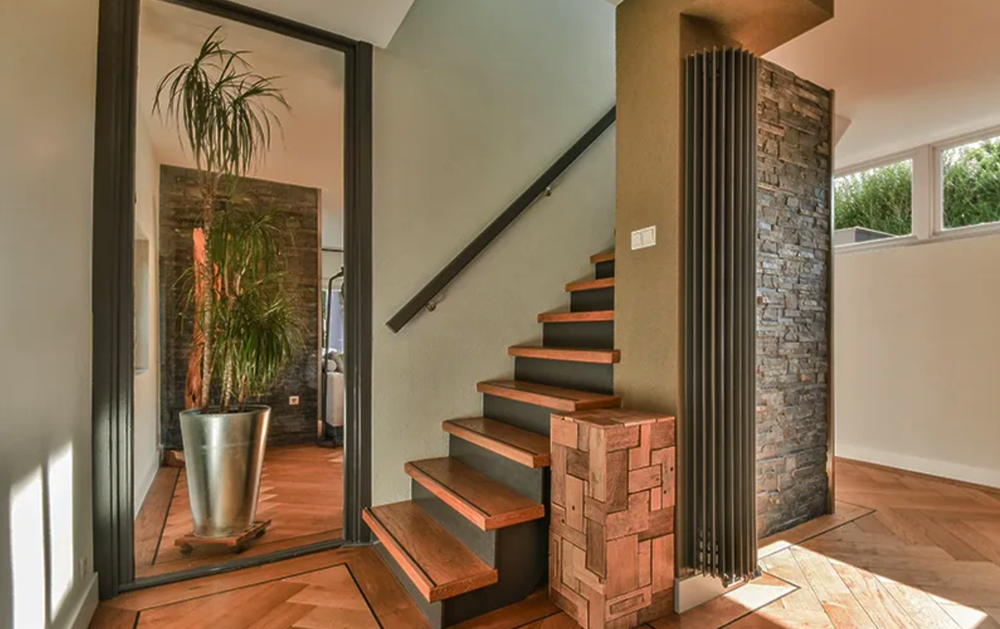
Staircase painting is one of the most technically demanding interior painting projects in a home. Unlike standard walls, stairs endure constant foot traffic, friction, impact, and cleaning. They also serve as a visual focal point that connects multiple levels of your home. Choosing the wrong paint or finish can result in premature wear, visible scuffs, and even safety concerns.
Homeowners researching staircase painting often focus on colour, but durability, adhesion, cure time, and slip resistance are equally critical. According to guidance from the Paint Quality Institute, high-traffic surfaces require coatings specifically formulated for abrasion resistance and proper surface preparation to ensure long-term performance. In Canada, indoor air quality considerations outlined by Health Canada also play a role when selecting low-VOC products for enclosed spaces.
This guide explains how to choose the right paint type and finish for staircase painting, what preparation steps matter most, and when hiring a professional contractor becomes the safest and most cost-effective option.
Why Staircase Painting Requires Special Consideration
Stairs are high-traffic architectural elements. Treads experience horizontal pressure from shoes, while risers and balusters face vertical contact and impact. This combination creates unique coating demands.
High traffic means increased abrasion. Unlike walls, which are rarely touched below shoulder height, stair treads experience constant mechanical wear. The Canada Mortgage and Housing Corporation notes that surfaces exposed to repeated friction require coatings with enhanced film strength and adhesion to prevent early failure.
Safety is another factor. A glossy finish may look refined but can increase slipperiness. In households with children or seniors, slip resistance should be a priority.
Environmental conditions also matter. Staircases are often located near entryways or in central hallways where humidity and temperature fluctuations occur. Paint must be flexible enough to withstand seasonal expansion and contraction without cracking.
For these reasons, staircase painting demands a deliberate selection process rather than using leftover wall paint.
Understanding Paint Types for Staircase Painting
Choosing the correct paint formulation is the foundation of long-lasting staircase painting.
Water-Based Latex Paint
Modern acrylic latex paints have significantly improved in durability. They offer fast drying times, lower odour, and easier cleanup. For risers, spindles, and vertical surfaces, high-quality acrylic latex can perform well when paired with proper primer.
Health Canada recommends selecting low-VOC products to reduce indoor air contaminants during interior painting. Many premium water-based formulations meet these guidelines while delivering improved hardness once cured.
However, not all latex paints are equal. Standard wall paint is generally unsuitable for stair treads due to limited abrasion resistance.
Oil-Based Paint
Oil-based paints historically offered superior hardness and smooth levelling. They create a durable film that resists scuffing. However, they have longer drying times, stronger odours, and higher VOC content.
In some cases, oil-based or alkyd-modified paints are still used for handrails and trim where maximum smoothness is desired. That said, advances in waterborne alkyd technology have narrowed the performance gap while reducing environmental impact.
Acrylic Enamel and Urethane-Modified Paints
For most staircase painting projects, professionals recommend acrylic enamel or urethane-modified waterborne paints. These are engineered specifically for cabinets, trim, and high-contact surfaces.
They cure to a harder finish than standard latex paint and offer improved resistance to scratching, chipping, and household cleaning products. Their self-levelling properties also reduce visible brush strokes, which is essential for achieving a refined appearance on detailed balusters.
When durability is the primary concern, these specialty coatings are often the most reliable option.
Choosing the Right Finish for Durability and Appearance
The paint finish affects both performance and aesthetics.
Satin Finish
Satin provides a soft sheen that balances durability with subtle appearance. It is easier to clean than matte paint and does not highlight imperfections as aggressively as higher gloss levels.
For staircase painting, satin is commonly used on risers and side stringers where moderate washability is needed without excessive shine.
Semi-Gloss Finish
Semi-gloss is more durable and moisture-resistant. It stands up well to repeated cleaning and contact. For handrails, balusters, and trim, semi-gloss is often preferred because it resists skin oils and hand marks.
According to durability comparisons published by the National Wood Flooring Association, higher sheen levels generally correspond to increased surface resilience, though preparation quality remains equally important.
Gloss Finish
Gloss offers maximum hardness and reflectivity. It creates a dramatic visual effect but reveals surface flaws. If stair treads are not perfectly smooth, gloss can amplify imperfections.
In contemporary homes with carefully prepared surfaces, gloss can create a striking feature. In most residential settings, semi-gloss provides a better balance of durability and practicality.
Surface Preparation: The Foundation of Long-Lasting Staircase Painting
Even the best paint will fail without proper preparation. The Painting Contractors Association emphasizes that surface preparation accounts for the majority of coating longevity.
Existing finishes must be cleaned thoroughly to remove oils, dust, and contaminants. Glossy surfaces should be sanded or deglossed to promote adhesion. Any cracks, dents, or nail holes should be filled and sanded smooth.
Priming is essential when transitioning from stained wood to painted surfaces. A high-quality bonding primer prevents tannin bleed and ensures consistent coverage.
Skipping these steps may lead to peeling, uneven sheen, or premature chipping. In staircase painting, where wear is constant, preparation cannot be compromised.
Safety Considerations in Staircase Painting
Slip resistance should be addressed, particularly on treads. Anti-slip additives can be incorporated into paint to increase traction without dramatically affecting appearance.
Drying time and curing time are different. While paint may feel dry within hours, full cure can take several days. Using stairs before the coating reaches proper hardness can damage the finish.
Proper ventilation is also critical. Following indoor air quality recommendations from Health Canada reduces exposure to fumes and accelerates drying.
Planning temporary access to upper floors during painting ensures safety for families and pets.
When to Hire a Professional Staircase Painting Contractor
Staircase painting involves detailed brushwork, tight corners, and multiple surfaces with different exposure levels. Achieving a uniform finish across treads, risers, and spindles requires technical skill.
Professionals understand proper film thickness, curing schedules, and surface preparation standards. They also have access to commercial-grade coatings not typically available in retail stores.
If you are evaluating whether to handle the project yourself or consult a contractor, reviewing professional staircase painting services can provide insight into process, preparation standards, and expected results. For example, detailed service information about staircase painting demonstrates the scope of work required for a high-quality finish.
Hiring a qualified contractor reduces the risk of peeling, uneven sheen, or safety issues caused by improper product selection.
Long-Term Maintenance After Staircase Painting
Maintaining staircase paint extends its lifespan. Regular cleaning with mild, non-abrasive cleaners prevents buildup that can degrade the finish.
Avoid harsh scrubbing pads that may scratch the surface. Monitor high-wear areas such as the front edge of treads. Early touch-ups prevent more extensive refinishing later.
Depending on household traffic, staircase painting may require refreshing every five to ten years. High-traffic homes may see shorter intervals.
Conclusion
Choosing the right paint and finish for staircase painting requires careful consideration of durability, safety, and environmental factors. High-quality coatings, proper preparation, and appropriate sheen levels all contribute to long-term performance.
While homeowners can manage smaller projects, staircase painting demands technical precision. Whether selecting materials or evaluating professional support, informed decisions ensure that your staircase remains both attractive and resilient for years to come.