
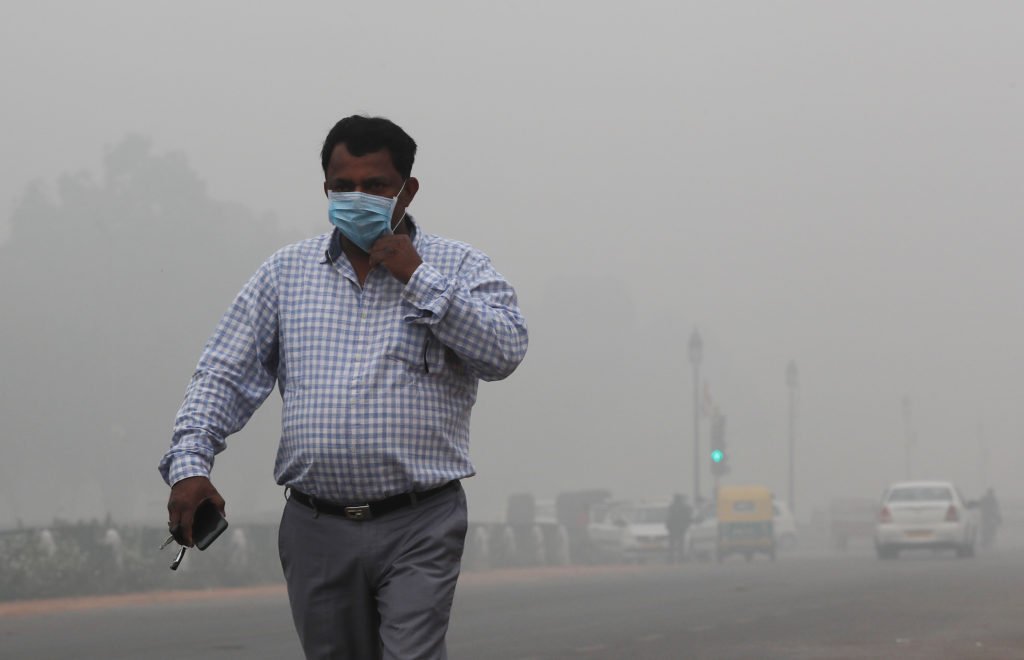
Municipalities in India face one of the most difficult air-quality problems in the world: urban pollution is produced by many sources operating across large geographic areas. Road dust, vehicles, industry, construction, waste burning, household fuels, diesel generators, regional transport, and weather all influence the air people breathe. That reality is important when considering air purification systems. Filtration can be useful in carefully selected indoor or semi-enclosed spaces, and some technologies may reduce pollutants in localized outdoor microenvironments. But no outdoor purifier, smog tower, or street device can replace emission control across an entire city. The World Health Organization describes source reduction as the preferred strategy for ambient air pollution. Cleaner transport, industrial emission control, better waste management, cleaner energy, urban planning, and construction-dust control address pollution before it spreads through the city. WHO guidance treats personal or local filtration as a lower-level exposure-control measure rather than the primary solution. India’s National Clean Air Programme (NCAP) follows that broader approach. By July 2026, the Government of India reported city-specific clean-air plans for 130 cities, targeting road and soil dust, vehicle emissions, waste burning, construction and demolition, industry, and greening. In FY 2025–26, 108 cities recorded lower annual PM10 concentrations than in 2017–18, while 14 cities met the national PM10 standard. This guide explains where air purification can genuinely help municipalities, where its limits are, how cities should prioritize interventions, how to select filtration for public buildings, what outdoor pilot projects need to measure, and how purification can fit into a larger evidence-based clean-air strategy.
Start With the Pollution Source, Not the Device
A city should not buy technology before understanding its pollution sources. Air-quality planning should identify: PM2.5; PM10; nitrogen dioxide; sulfur dioxide; ozone; carbon monoxide; other locally important pollutants. PM2.5 and PM10 Are Different. Particulate matter is commonly classified by aerodynamic diameter. PM10 includes particles up to 10 micrometers. PM2.5 includes smaller particles up to 2.5 micrometers. Fine particles can penetrate deeply into the respiratory system and are strongly associated with cardiovascular and respiratory harm. WHO — Ambient Air Pollution emphasizes that outdoor air pollution is a population-level health risk driven by multiple sectors. A municipal purifier can create a cleaner microenvironment under the right conditions, but it cannot compensate for uncontrolled emissions across roads, construction sites, waste burning, industry, power generation, and transport. That is why the relevant question is not “Does the machine filter particles?” but “How much exposure reduction does it create for real people in the actual space, at what operating cost, and compared with alternative source-control measures?”
Why Municipal Air Pollution Is Hard to Filter. Outdoor air is continuously moving. A device that filters air at one point must compete with: wind; traffic plumes; regional pollution; new emissions every second. That makes citywide purification fundamentally different from cleaning air inside a room. Indoor Filtration Is More Controllable. In a classroom, clinic, office, or control room, the city can manage: room volume; air exchange; filter efficiency; operating hours; maintenance. This makes indoor filtration much more predictable.
Where Municipal Air Purification Can Actually Help
Appropriate locations may include: schools; clinics; municipal offices; libraries; emergency shelters; traffic-control rooms; other occupied indoor spaces. Prioritize Vulnerable Populations. Children, older adults, and people with cardiovascular or respiratory disease can be more vulnerable to air pollution. If a municipality has limited funds, clean-air rooms in: schools; health facilities; senior centers. may produce more measurable exposure reduction than a high-profile outdoor installation.
Indoor Filtration in Schools, Clinics, and Public Buildings
Portable filtration units can reduce particle concentrations indoors when appropriately sized. Important variables include: clean-air delivery rate; room volume; filter quality; placement; noise; maintenance. Central HVAC Filtration. Buildings with mechanical ventilation can improve particle removal through better filters when the HVAC system can handle the pressure drop. Engineering review is needed before installing a higher-resistance filter. Filtration Does Not Remove Every Pollutant. Particle filters are not designed to remove all gases. For gaseous contaminants, systems may require: activated carbon; special sorbents; source control; ventilation changes.
Why Outdoor Purifiers and Smog Towers Need Cautious Evaluation
Outdoor air-cleaning devices can create localized changes around the machine, but municipalities should demand independent performance evidence. Questions include: How large is the measurable clean-air zone?; How does performance change with wind?; What is the electricity consumption?; What is the cost per kilogram of pollutant removed?; How frequently are filters replaced?; Where is captured pollution disposed?. Do Not Measure Only at the Device Outlet. A purifier can show very clean air directly at its outlet while making little difference to population exposure. Municipal evaluation should measure: upwind concentrations; downwind concentrations; multiple distances; different wind conditions; background pollution. Use a Controlled Pilot. Before large procurement: Define a target pollutant.; Select a representative location.; Measure baseline conditions.; Install the system.; Monitor during multiple weather conditions.; Compare with a control location.; Calculate cost per unit of exposure reduction.
The national strategy itself shows why a municipality should not treat air purifiers as the primary citywide intervention. Government of India — NCAP Progress, July 2026 reports that 130 cities have city-specific clean-air action plans targeting sources such as road and soil dust, vehicle emissions, waste burning, construction and demolition, industrial pollution, and greening. The same July 2026 update says 108 cities recorded lower annual PM10 concentrations in 2025–26 than in 2017–18, 72 cities achieved reductions above 20%, and 26 achieved reductions above 40%. Those results support continued source-control work rather than replacing it with stand-alone outdoor filtration hardware. The funding and governance structure also matters for local procurement. The July 2026 government release reports ₹16,423.55 crore in performance-linked grants provided to 130 NCAP cities from FY 2019–20 through 2025–26, with about 70.5% reported as utilized on the PRANA portal. Municipal commissioners and district-level committees are part of the monitoring structure. For a local government, that means a clean-air investment should be tied to the city action plan, measurable pollution sources, maintenance responsibility, and outcomes that can be compared with baseline monitoring—not just a vendor’s removal-efficiency claim.
NCAP and the Municipal Role in Source Control
NCAP was launched in 2019 as a national strategy for reducing urban air pollution. The programme uses: city action plans; monitoring; source-specific interventions; state and municipal implementation; performance review. 2026 NCAP Progress. In a July 30, 2026 parliamentary response, the Ministry of Environment, Forest and Climate Change reported: 130 cities with city-specific clean-air action plans; 108 cities with lower annual PM10 than in 2017–18; 72 cities with reductions above 20%; 26 cities with reductions above 40%; 14 cities meeting PM10 national standards in FY 2025–26. The same response reported that 73 cities reduced annual PM2.5 in calendar year 2025 compared with 2024, including 17 cities with reductions above 20%. What Those Results Do Not Prove. City-level improvement can result from: policy; weather; economic activity; fuel changes; transport; construction activity. Air-quality trends should be interpreted over multiple years. The broader source-control hierarchy is consistent with WHO — Ambient Air Pollution Strategies, which focuses on cleaner transport, energy, industry, waste management, urban planning, and other structural interventions. For Indian cities, the strongest municipal program usually combines those measures with targeted clean-air rooms or filtered public buildings where vulnerable populations spend time.
Source Control: Dust, Construction, Waste, Transport, and Industry
Many Indian city action plans target resuspended road dust. Interventions can include: paved shoulders; mechanized sweeping; dust suppression; street maintenance; controlling loose soil. Municipal Priority 2: Construction Dust. Cities can enforce: site covering; material containment; wheel washing; debris transport rules; demolition dust control. Municipal Priority 3: Waste Burning. Open waste burning directly creates harmful particles and gases. Reducing it requires: reliable waste collection; enforcement; composting; landfill management; public reporting. Municipal Priority 4: Transport. WHO recommends cleaner transport strategies such as: public transit; walking and cycling infrastructure; cleaner fuels; lower-emission vehicles; better freight management. Municipal Priority 5: Industry. Industrial pollution control can involve: emission standards; continuous monitoring; cleaner fuels; process changes; stack controls; enforcement. Municipal Priority 6: Diesel Generators. Backup generators can be significant local sources. Long-term reduction may involve: more reliable grid power; cleaner backup technologies; maintenance; emission standards.
Monitoring and Pilot Design Before Procurement
A municipality should know: where pollution is highest; which pollutants dominate; which seasons are worst; which populations are most exposed. Reference-Grade vs. Low-Cost Sensors. Low-cost sensors can expand spatial coverage but require: calibration; quality assurance; co-location with reference instruments. Do not treat every sensor reading as equivalent to regulatory monitoring.
Protecting Schools, Clinics, and Other Vulnerable Spaces
Municipal school programs can combine: indoor filtration; traffic restrictions at gates; anti-idling rules; dust control; ventilation management. When Outdoor Pollution Is High. Buildings may need to balance: ventilation; filtration; indoor CO2; thermal comfort. Simply sealing a building can create indoor-air problems. Hospitals and Clinics. Health facilities can use high-quality filtration to reduce indoor particle exposure, but clinical areas may have specialized ventilation requirements. HVAC changes should therefore involve healthcare engineering specialists. Bus Shelters and Transit Hubs. Localized filtration has been proposed for: bus shelters; platforms; waiting areas. These installations should be tested for real exposure reduction rather than evaluated by marketing airflow numbers alone.
Maintenance, Energy, Noise, and Filter Disposal
An air purifier creates an environmental trade-off if electricity comes from fossil-heavy generation. Evaluate: power demand; hours of operation; filter replacement; maintenance visits. Filter Disposal. Used filters contain captured particulate matter. Municipal contracts should define: replacement frequency; worker protection; sealed handling; disposal method. Noise. High-airflow equipment can be noisy. This matters in: schools; clinics; libraries; residential areas. A purifier that occupants switch off because of noise provides no benefit. Maintenance Is the Hidden Cost. A procurement budget should include: filters; fans; sensors; cleaning; electricity; monitoring; repairs. Avoid “Install and Forget” Projects. Municipal technology can fail when there is no clear owner after installation. Assign responsibility for: filter replacement; performance logging; complaints; spare parts. A municipal specification should define the target pollutant, room or outdoor zone, airflow, clean-air delivery rate where applicable, filtration class, pressure drop, noise ceiling, energy use, replacement-filter cost, maintenance frequency, sensor accuracy, data logging, warranty, local service capability, and the method used to verify performance after installation. For outdoor devices, the specification should also require an independent before-and-after monitoring plan at meaningful distances from the unit rather than accepting measurements taken only at the clean-air outlet.
Procurement should include life-cycle cost rather than purchase price alone. A lower-cost device can become expensive if filters clog rapidly during severe particulate episodes, if replacement cartridges are proprietary, or if maintenance is neglected because budgets cover capital expenditure but not operations. Municipalities should require a multi-year estimate covering electricity, filters, technician visits, sensor calibration, downtime, disposal, and replacement parts so decision-makers can compare purification with ventilation upgrades, dust control, enforcement, fleet changes, or other interventions on a common cost basis.
How Municipalities Should Specify and Evaluate a System
Require vendors to state: target pollutants; tested efficiency; airflow; energy use; noise; replacement interval; maintenance cost; independent test standards. Do Not Accept “Removes 99% of Pollution” Without Context. Ask: 99% of what pollutant?; at what particle size?; measured where?; at what airflow?; in a chamber or outdoors?.
Where Purification Fits in a Broader Clean-Air Strategy
Purification is strongest as a targeted exposure-reduction tool. Good candidates include: occupied indoor public buildings; clean-air rooms during severe episodes; controlled semi-enclosed spaces; carefully measured pilots. Worst Use. It is weakest when used as a public-relations substitute for: dust control; clean transport; industrial enforcement; waste management. Can outdoor air purifiers clean an entire Indian city?. No. Ambient pollution is continuously replenished over very large areas. Citywide improvement requires source reduction. Are air purifiers useful in schools?. Properly sized indoor particle filtration can reduce indoor particle concentrations, especially when combined with good ventilation and source control. What should municipalities measure in a pilot?. Measure pollutant concentrations before and after installation at multiple distances and under different weather conditions, plus energy and maintenance costs. What is NCAP?. India’s National Clean Air Programme coordinates city-specific action plans and pollution-reduction measures.
Conclusion
Air purification can play a useful role in municipal air-quality management, but only when its role is defined correctly. The strongest applications are controlled indoor environments and carefully selected local exposure-reduction projects. For citywide ambient pollution, source control remains the priority. India’s current NCAP framework focuses on road dust, vehicles, construction, waste burning, industry, and other sources because preventing pollution is more scalable than trying to filter open outdoor air after it has been emitted. Municipalities considering purification technology should demand independent performance testing, measure real exposure reduction, account for electricity and filter replacement, and compare the investment with source-control alternatives. The goal is not to install the most visible technology. It is to achieve the greatest health improvement per rupee spent.