
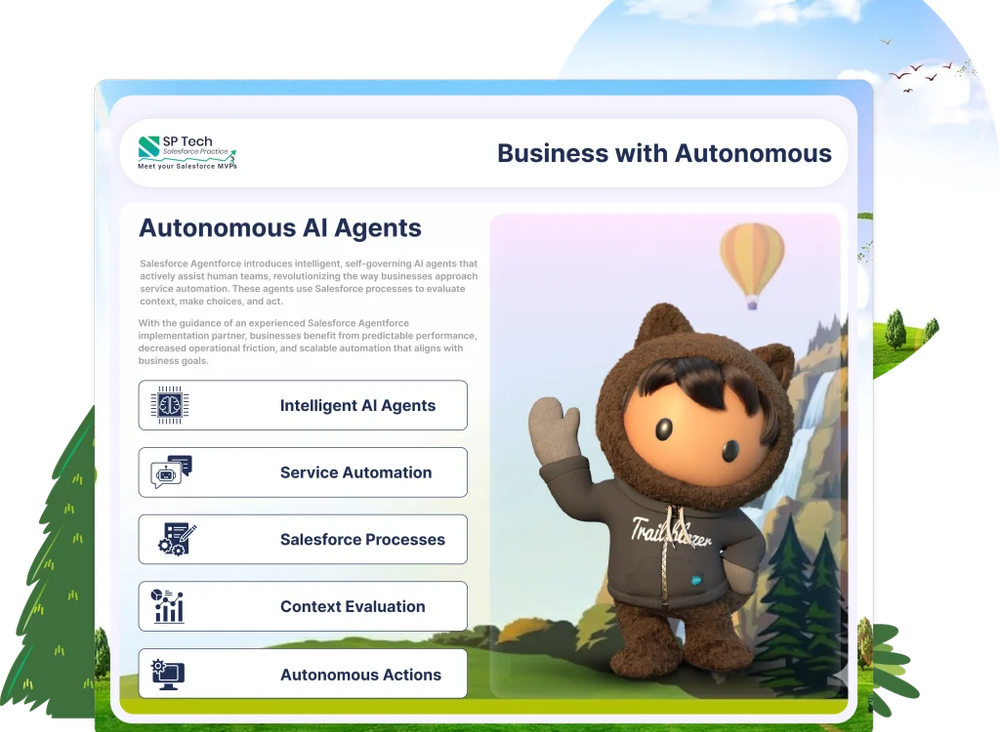
Artificial intelligence is no longer an experiment reserved for innovation labs. In 2026, AI sits at the center of business strategy, influencing how companies handle customer conversations, internal workflows, forecasting, and decision-making. What’s different now is not just the technology itself, but how organizations are adopting it — strategically, responsibly, and at scale.
At the forefront of this shift is salesforce agentforce, a solution designed to bring intelligent automation and contextual AI directly into the Salesforce ecosystem. Businesses across industries are turning to it to create practical, measurable outcomes rather than chasing hype. Let’s explore the key AI adoption trends shaping 2026 — and how Salesforce Agentforce is driving them.
1. AI Moves from Pilot Projects to Core Operations
In previous years, many companies tested AI in limited use cases. In 2026, experimentation has matured into operational deployment. Organizations are embedding AI into service workflows, sales processes, and marketing automation as standard practice.
With Salesforce Agentforce Implementation, companies integrate AI capabilities directly into CRM operations. Instead of relying on separate AI tools, Agentforce works within Salesforce environments, allowing teams to manage customer interactions, case resolutions, and predictive insights from one unified system.
This shift reflects a broader trend: AI is no longer a side project — it is part of daily business operations.
2. Responsible and Context-Aware AI Becomes Mandatory
AI adoption in 2026 comes with higher expectations around transparency and governance. Businesses want AI that understands context, respects data privacy, and aligns with compliance standards.
Through structured Agentforce AI Consulting, organizations define use cases that balance automation with human oversight. This ensures that AI recommendations are accurate, relevant, and secure. Instead of generic outputs, Agentforce uses CRM data to generate insights grounded in real customer interactions.
The focus is clear: smart AI must also be responsible AI.
3. Industry-Specific AI Configurations Gain Popularity
Generic AI tools are losing ground to industry-focused configurations. Companies now want AI tailored to healthcare, finance, professional services, retail, and other sectors.
This is where Salesforce Agentforce Implementation Services come into play. Implementation teams configure workflows, automation logic, and AI models according to industry regulations and business models. The result is AI that understands unique operational needs — not just surface-level automation.
From case prioritization in service teams to sales opportunity scoring, AI in 2026 adapts to industry demands rather than forcing businesses into rigid systems.
4. Human + AI Collaboration Defines the Workplace
Another major trend is the shift toward collaborative intelligence. AI does not replace teams; it supports them with faster insights, automated summaries, and predictive suggestions.
Through structured agentforce consulting services, companies design workflows where AI handles repetitive tasks while employees focus on complex decisions and customer relationships. For example, service agents can receive AI-generated summaries before responding to a case, while sales teams gain real-time recommendations based on customer history.
This approach improves efficiency without removing the human element that customers value.
5. Localised AI Strategies Drive Competitive Advantage
AI adoption in 2026 is not only global; it is also regional. Businesses are seeking guidance tailored to their local market conditions and workforce structures.
Organisations in the Southeast are increasingly exploring Agentforce consulting services in Atlanta to implement AI strategies that align with regional business ecosystems. Local expertise ensures that implementation considers compliance standards, customer expectations, and industry trends specific to the area.
This localised approach reflects a broader shift: AI strategy must align with real-world market dynamics.
6. Data Quality Becomes the Foundation of AI Success
One of the biggest lessons of early AI adoption was that poor data leads to unreliable results. In 2026, businesses prioritize clean CRM data before rolling out advanced automation.
A reliable Salesforce Agentforce Implementation Partner begins by auditing data structures, standardizing processes, and preparing the Salesforce environment for AI integration. Without this foundation, even the most advanced AI model cannot deliver consistent outcomes.
Data readiness is no longer optional — it is the backbone of successful AI initiatives.
7. Measurable ROI Replaces Vanity Metrics
Organizations are demanding clear, measurable results from AI investments. Instead of focusing on novelty, companies track improvements in response times, resolution rates, conversion metrics, and operational efficiency.
Working with an experienced Agentforce implementation partner, businesses define key performance indicators before deployment. This structured approach ensures that AI adoption is aligned with revenue goals and service benchmarks.
The emphasis in 2026 is simple: AI must prove its value.
8. Continuous Optimization Becomes Standard Practice
AI adoption is not a one-time setup. It requires monitoring, refinement, and adaptation as business needs evolve.
Through ongoing agentforce consulting services, companies evaluate performance data, adjust workflows, and refine automation rules. As customer behavior changes, AI configurations are updated accordingly. This cycle of review and adjustment ensures long-term sustainability.
Rather than treating AI as a static tool, organizations in 2026 treat it as an evolving system that grows alongside their business.
Why Salesforce Agentforce Stands Out in 2026
What makes salesforce agentforce particularly relevant this year is its deep integration with Salesforce platforms. Instead of adding complexity, it works within existing CRM structures, making adoption smoother and more scalable.
Businesses benefit from:
Context-driven AI insights rooted in CRM data
Structured deployment strategies
Industry-focused configurations
Ongoing advisory support
With the right Salesforce Agentforce Implementation Services, companies gain clarity on where AI fits within their operations — from sales forecasting to customer service automation.
Preparing for the Next Wave of AI Growth
AI adoption in 2026 is about clarity, structure, and measurable outcomes. Companies are no longer asking whether they should use AI — they are asking how to implement it responsibly and effectively.
Choosing the right Agentforce AI Consulting strategy ensures alignment between business objectives and technology capabilities. With guidance from a trusted Salesforce Agentforce Implementation Partner, organizations can confidently move from planning to execution without unnecessary disruption.