
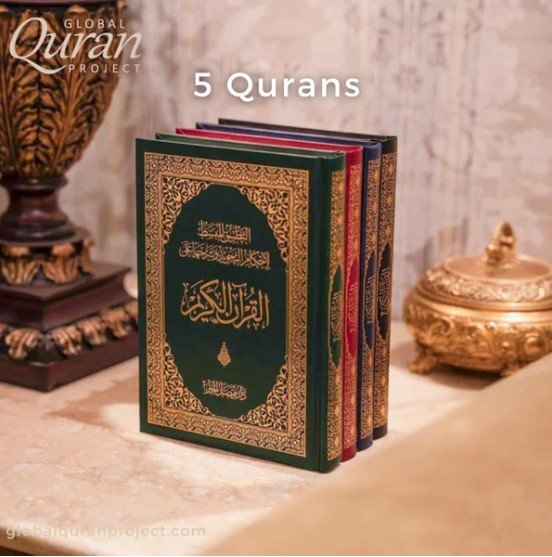
A Qur’an gift set can be a meaningful present when it is chosen for the person who will actually use it. The best set is not necessarily the most expensive box, the heaviest cover, or the one with the most accessories. Readability, translation, script, size, binding, and the recipient’s stage of learning matter much more. A typical Quran Gift Set may include a mushaf, prayer mat, tasbih, bookmark, stand, dua booklet, or presentation box. Some sets are designed for weddings and Eid, while others are intended for new Muslims, children, students of Tajweed, or people who want a large-print Qur’an for daily reading. Because the Qur’an is a religious text, it is better to choose the set with care rather than treat it like a decorative gift. The recipient should be able to read it comfortably, understand the language or translation provided, and use the accessories safely and respectfully.
This guide explains how to choose a Qur’an gift set for Ramadan, Eid, nikah, Hajj or Umrah, graduation, a new Muslim, children, older readers, and people learning Arabic. It also covers translations, Tajweed color coding, personalization, print quality, gift packaging, shipping, and respectful handling. What Is Usually Included in a Qur’an Gift Set?. Sets vary widely, but common items include: Qur’an/mushaf; prayer mat; tasbih/prayer beads; wooden or acrylic Qur’an stand; bookmark; dua booklet; gift box; personalized name plate. Do not assume more items make the set better. Start With the Qur’an Itself. The mushaf should be the first quality check. Evaluate: Arabic script; font size; page contrast; translation; paper; binding; page numbering; proofreading/publisher reputation.
Choose the Qur’an Edition for the Recipient
Arabic-Only vs. Translation. Arabic-only edition. Can be appropriate for someone who: reads Arabic fluently; already studies translation separately; wants a traditional mushaf. Arabic with translation. Can be more useful for: new Muslims; non-Arabic speakers; young learners; people studying meaning alongside recitation.
Translation, Transliteration, Tajweed, and Script
The preserved Quran.com — Qur’an Text, Translation, and Recitation is a practical way to compare translations and listen to recitation before choosing a printed edition. For someone learning Arabic or newly engaging with the Qur’an, readability, translation language, script familiarity, and page layout often matter more than decorative packaging. Transliteration can help with pronunciation practice, but it should be treated as a learning aid rather than a complete substitute for Arabic text or qualified instruction in recitation. Choose the Translation for the Recipient. English translations differ in: vocabulary; sentence style; commentary; translation philosophy. If the recipient already prefers a particular translation, choose that rather than imposing a different one. For New Muslims. A useful set may include:
Arabic text; clear English translation; basic prayer guide; simple prayer mat; bookmark. A huge collection of advanced religious books can be overwhelming. Transliteration: Helpful but Limited. Roman-letter transliteration can help complete beginners identify sounds, but it cannot fully represent Arabic pronunciation. If included, treat transliteration as a temporary learning aid rather than a substitute for learning Arabic letters. Tajweed Color-Coded Qur’ans. Some mushafs use colors to highlight Tajweed rules. These can be useful for learners who already understand what the colors mean. Check that the set includes: a clear legend; consistent coding; readable colors; teacher-compatible conventions. Color Coding Does Not Teach Tajweed by Itself. A learner still needs to understand: makharij; madd; ghunnah; qalqalah; stopping and starting. Live instruction is valuable for pronunciation. Uthmani Script vs. Other Scripts. Readers may be accustomed to different printing traditions. For example, a person raised with Indo-Pak script may find a different page layout less familiar. Ask what the recipient normally reads before buying.
Print Size, Binding, Weight, and Reading Comfort
Reading comfort is easy to overlook when shopping from photographs. Large pages can improve legibility but also increase weight; glossy paper may look luxurious yet create glare; very thin paper can allow show-through from the reverse side. A sewn or otherwise durable binding is valuable for a book that will be opened frequently. For older readers, children, or anyone with visual strain, generous font size, clear contrast, comfortable margins, and a manageable page weight can be more meaningful than an elaborate cover. Large Print for Older Readers. For someone with reduced vision, prioritize: larger font; high contrast; less crowded pages; comfortable book weight. A beautiful compact edition may be physically difficult to read. Book Weight Matters. Large presentation editions can be heavy. For a person with: arthritis; weak grip; limited mobility,. a lighter edition may be more usable.
Prayer Mat, Tasbih, Stand, and Other Accessories
Prayer Mat Quality. Check: size; material; thickness; non-slip behavior; ease of cleaning. Very thin decorative mats may look elegant but provide little comfort. Prayer Mats for Older Adults. For someone with knee or joint pain, a thicker mat may be appreciated, although medical conditions can affect prayer posture and should be addressed individually. Tasbih / Prayer Beads. If a set includes tasbih, check: string strength; bead size; comfort; absence of sharp edges. A tasbih is optional; it should not be treated as a requirement for reading the Qur’an. Qur’an Stand. A stand can help when: reading at a desk; studying for longer periods; keeping a large book at a comfortable angle. Check stability and edge smoothness. Wooden Stands. Wooden rehal designs can be traditional and attractive. Ensure: hinges move smoothly; no splinters; the opening angle supports the book safely.
Personalization, Packaging, Shipping, and Respectful Handling
Personalization. Popular options include: recipient name; wedding date; short gift message; box engraving. Be Careful Where Personalization Is Placed. Some recipients may prefer religious text and personal decoration to remain visually separate. Personalizing the presentation box rather than the mushaf itself can be a safer choice when unsure.
Choosing a Set for Ramadan, Eid, Nikah, Hajj, Umrah, or Study
The occasion can guide presentation, but it should not override the recipient’s needs. For Ramadan or Eid, a practical reading set may support regular recitation; for a nikah or housewarming, a durable edition with understated personalization can become a long-term household gift; for Hajj or Umrah, compactness and travel protection may matter more than accessories; for a student or hifz learner, page layout, consistency, and durability are usually the priority. A gift is more thoughtful when the occasion and intended use reinforce one another. Qur’an Gift Set for Ramadan. Useful features include: comfortable daily-reading size; bookmark; translation; reading stand. The goal should be to support actual reading during and after Ramadan.
Qur’an Gift Set for Eid. Eid gift sets can be simple. Consider: Qur’an; prayer mat; personal note; quality box. Avoid overpacking the set with low-quality accessories merely to increase visual size. Qur’an Gift Set for Nikah. For newlyweds, consider: a durable edition for home use; translation both spouses can understand; two bookmarks; neutral design that suits shared space. Hajj and Umrah Gifts. A compact, portable Qur’an may be useful before travel, while a larger commemorative set may be appropriate after return. Consider: weight; luggage limitations; durability. Graduation and Achievement Gifts. A Qur’an can mark a milestone without implying that academic or career success is automatically connected to receiving the gift.
Include a personal note about: gratitude; guidance; continued learning. For Children. Choose: readable font; durable binding; age-appropriate translation; manageable size. For very young children, a learning edition or separate introductory book may be more useful than an expensive presentation mushaf. For Qur’an Students. A student may appreciate: consistent page layout; Tajweed notation; wide margins for separate notes if the edition is designed for that; strong binding. For Hifz Students. Many memorization students prefer one consistent mushaf because page position becomes part of visual memory. If the student already uses a particular edition, matching it may be more useful than buying a different decorative version. For Someone Who Already Owns Several Qur’ans. Consider whether another copy is genuinely useful. Alternatives can include: quality stand; large-print edition; translation they do not have; donation to a mosque or student in their name, where appropriate.
Budget, Quality Checks, and Buying Online
When buying online, inspect sample pages as closely as the cover. Check the publisher, translation attribution, paper opacity, font size, binding method, dimensions, weight, accessory materials, personalization placement, return policy, and shipping protection. Extremely elaborate boxes can increase cost without improving the reading experience, while a modest set with a well-produced Qur’an and useful accessories may be more appropriate for regular use. Avoid sellers that promise guaranteed spiritual, financial, or medical outcomes from purchasing or gifting a particular product. If the set includes a prayer mat, beads, stand, bookmark, perfume, or other accessories, evaluate each item independently instead of assuming the bundle guarantees quality. A stable stand should support the book safely; a prayer mat should suit the recipient’s comfort and available space; personalization should not interfere with the Qur’anic text or make the item awkward to handle. For international shipping, protective packaging and a reliable delivery method matter because crushed corners, moisture, or damage to the binding can turn an otherwise thoughtful present into a disappointing one.
Print Quality. Inspect or verify: clear Arabic characters; no ink bleed; consistent diacritics; strong page attachment; accurate pagination. Publisher and Proofreading. Religious text requires careful proofreading. Buy from reputable publishers or sellers who can identify: edition; translator; publisher; printing information. Do Not Buy Based Only on Cover Design. Embossing, velvet, metallic foil, and decorative boxes do not guarantee: accurate printing; good translation; durable binding. Packaging. A strong gift box should protect the book during: shipping; storage; presentation. Avoid packaging that puts heavy accessories directly against the pages. Shipping. When ordering online, check: delivery time; tracking; damage policy; international customs; return rules for personalized products. Check the Product Photos Carefully. Confirm:
actual book size; translation; included items; box dimensions. Staged product photos can make a compact set look much larger. Respectful Storage. Store the Qur’an in a clean, respectful location where it is protected from: water; food spills; floor dirt; rough handling. Specific religious rulings about handling the mushaf can vary among scholars and circumstances; ask a qualified local scholar when a fiqh question matters. Avoid Guaranteeing Spiritual or Financial Outcomes. A Qur’an is a meaningful religious gift, but sellers should not promise that purchasing or gifting a set will automatically produce: wealth; healing; marital success; a guaranteed amount of reward. Religious reward is connected to faith, intention, action, and God’s judgment—not a commercial product claim.
Is Gifting a Qur’an Sadaqah Jariyah?. People often describe useful religious gifts as a form of ongoing charity when they continue to benefit others. Whether a particular gift qualifies in a specific religious sense should not be reduced to a guaranteed marketing statement. A safer approach is to give with sincere intention and hope that the recipient benefits from reading and learning. Budget. Set a budget based on usefulness. A simple, accurate, readable Qur’an can be a better gift than a luxury set with: uncomfortable font; poor translation; fragile accessories. A Practical Buying Checklist. Who is the recipient?; Do they read Arabic?; Which script do they prefer?; Do they need translation?; Do they need large print?; Would Tajweed color coding help?; Is the binding durable?; Is the publisher reputable?; Are accessories actually useful?; Is personalization appropriate?.
Frequently Asked Questions. What should a Qur’an gift set include?. There is no required combination. A good set may include a readable Qur’an, prayer mat, bookmark, tasbih, or stand depending on the recipient. Is a translation useful for a new Muslim?. Yes. A clear translation can help a non-Arabic-speaking reader understand meaning while learning Arabic recitation separately. Is a Tajweed color Qur’an best for everyone?. No. It is most useful when the learner understands the color system or studies with a teacher who uses it. What is most important when buying online?. Verify the edition, translation, print size, publisher, included accessories, dimensions, and return policy.
Conclusion
A Qur’an gift set becomes meaningful when it is chosen around the recipient rather than around luxury packaging. A new Muslim may need a clear translation; an older reader may need large print; a hifz student may need the exact page layout they already use; a newlywed couple may value a durable edition for their home. Check print quality, translation, script, binding, and size before accessories. Choose personalization carefully, and avoid commercial claims that promise guaranteed spiritual or material outcomes. The most thoughtful set is the one that makes reading, understanding, and respectful use easier long after the occasion has passed.