
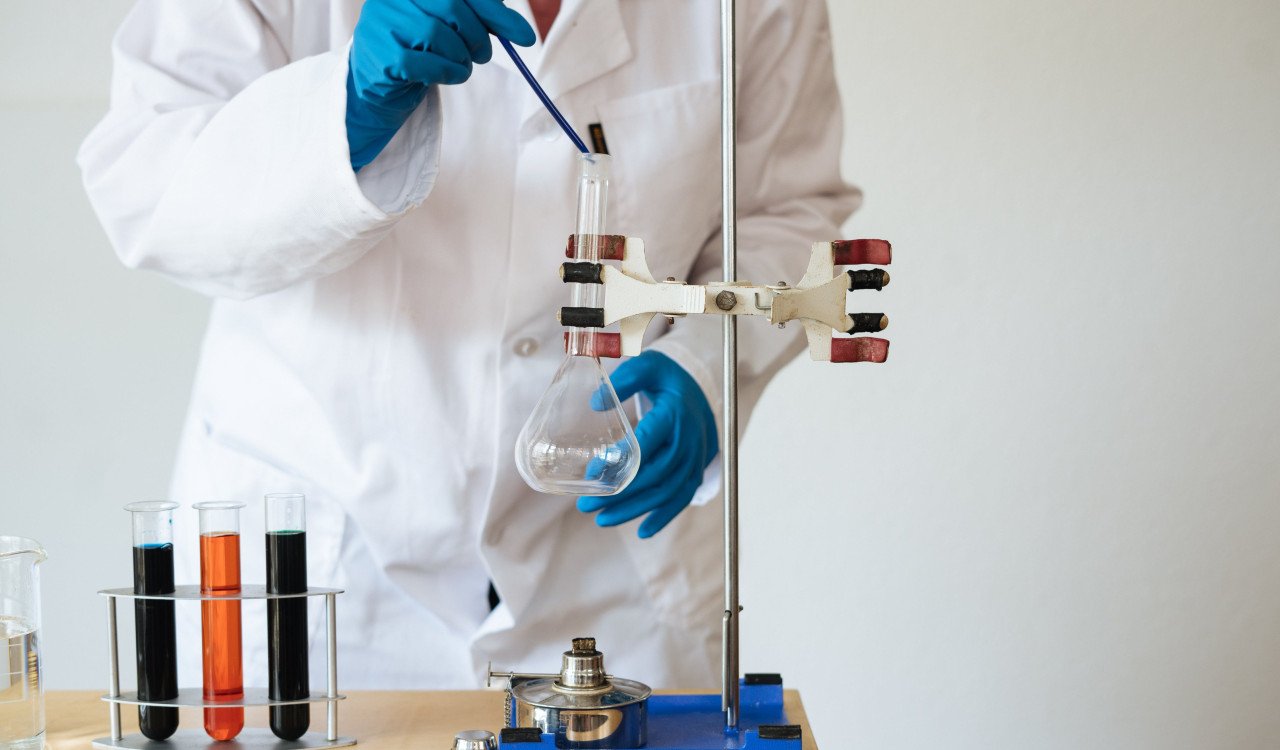
Plant design in chemical engineering is the discipline of turning a process concept into a safe, operable, economical, and maintainable industrial facility. It connects chemistry, thermodynamics, transport phenomena, process control, mechanical design, environmental engineering, economics, and project execution. A good design does more than make the desired product: it anticipates abnormal conditions, maintenance needs, utility limitations, human factors, future expansion, and the consequences of equipment failure. Modern plant design also places much greater emphasis on inherently safer design, energy efficiency, emissions reduction, automation, cybersecurity, and lifecycle performance. The strongest designs are not simply optimized for maximum throughput. They are optimized for reliable production under real operating conditions.
What Is Chemical Plant Design?
Chemical plant design is the structured process of defining how raw materials will be transformed into products at commercial scale. Engineers specify the process flow, equipment, piping, instrumentation, controls, utilities, safety systems, layout, materials of construction, waste treatment, and operating philosophy required to make the process work. The field is a practical application of Chemical engineering. It combines scientific calculations with engineering judgment and economic constraints. A plant-design project may begin with a laboratory reaction or an existing commercial process. The engineering team then asks questions such as: What production rate is required?; Which raw materials and operating conditions are practical?; How will heat and mass move through the process?; What equipment sizes are needed?; Which hazards can be eliminated rather than controlled?; How much utility demand will the process create?; How will operators start, stop, and troubleshoot the plant?; How will waste, emissions, and effluent be managed?; What capital and operating cost will the plant require?. The core principles of chemical plant design.
Mass and Energy Balances, Thermodynamics, and Fluid Flow
1. Start with material and energy balances. Material and energy balances form the quantitative foundation of a process design. Before selecting equipment, engineers need to understand what enters each process step, what leaves it, what accumulates, and how energy is transferred. A material balance establishes the flow rates and compositions of feed streams, products, recycle streams, purge streams, emissions, and wastes. An energy balance determines heating and cooling duties, phase changes, reaction heat, and other energy requirements. Errors at this stage propagate through the entire design. An incorrect flow rate can lead to an undersized pump, heat exchanger, reactor, relief system, storage tank, or wastewater unit. For that reason, balances should be checked independently and reconciled as the design develops.
2. Define the thermodynamics correctly. Thermodynamic models determine how mixtures behave at different temperatures and pressures. Engineers use them to estimate vapor-liquid equilibrium, enthalpy, density, heat capacity, phase changes, and reaction equilibrium. Choosing the wrong property method can produce misleading simulation results, especially for polar mixtures, electrolytes, hydrocarbons, or systems near critical conditions. The thermodynamic model should match the chemistry and operating range of the process. 3. Understand fluid flow. Fluid mechanics affects pipe sizes, pressure drop, pump and compressor duties, control-valve selection, mixing, two-phase flow, and equipment hydraulics. Designers must consider more than steady-state flow. Startups, shutdowns, blocked outlets, flashing, slug flow, fouling, and changing product rates can produce conditions very different from normal operation.
Heat Transfer, Reaction, and Process Control
4. Design heat transfer as a system. Heat exchangers, reboilers, condensers, heaters, coolers, furnaces, and utility systems are closely connected. Instead of sizing each exchanger independently, good plant design looks for opportunities to recover energy between hot and cold process streams. Heat integration can reduce steam, fuel, and cooling-water demand, but excessive integration can also make the plant more difficult to control or restart. Energy efficiency should therefore be balanced with operability and resilience. 5. Design for reaction performance and control. Reactor selection depends on reaction kinetics, heat effects, mixing, residence time, selectivity, catalyst behavior, phase conditions, and scale-up constraints. For exothermic reactions, heat removal may be a primary safety issue. A reactor that is stable at laboratory scale can behave differently when volume increases because heat generation and heat removal do not scale at the same rate.
PFDs, P&IDs, Equipment, and Layout
Process flow diagrams and piping and instrumentation diagrams. Plant design is communicated through progressively more detailed engineering documents. Block flow diagram. A block flow diagram shows the major process steps at a high level. It is useful during early concept development and economic screening. Process flow diagram. A process flow diagram (PFD) typically shows major equipment, principal streams, flow rates, temperatures, pressures, and key control concepts. It is detailed enough to understand the process but does not show every valve or instrument. Piping and instrumentation diagram. A piping and instrumentation diagram (P&ID) is much more detailed. It can show piping, valves, instrumentation, control loops, equipment connections, drains, vents, relief systems, and shutdown functions. P&IDs become essential inputs for hazard reviews, control-system design, operating procedures, construction, commissioning, and maintenance. Equipment selection and sizing. Each equipment item should be selected for the real process conditions it will face. Typical categories include: Reactors; Distillation columns; Absorbers and strippers; Heat exchangers; Pumps and compressors; Storage tanks; Filters and separators; Dryers; Furnaces and boilers; Cooling towers; Wastewater and emission-control systems. Engineers normally include reasonable design margins, but bigger is not always better. Oversized equipment can increase capital cost, reduce control quality, increase residence time, or create low-flow operational problems.
Inherently Safer Design and Layered Protection
The preserved AIChE Center for Chemical Process Safety: Safe Design overview provides the process-safety framework, while the 2026 AIChE: Principles of Inherently Safer Design restates four practical inherently safer design strategies: minimize, substitute, moderate, and simplify. The design team should look for ways to remove or reduce hazards before relying on alarms, relief devices, procedures, and emergency response, while still using management-of-change review because even a safety-motivated modification can introduce new risks. Inherently safer design should come before add-on protection. One of the most important principles in modern chemical-process design is to reduce hazards at the source whenever practical. The Center for Chemical Process Safety and AIChE commonly describe four inherently safer design strategies:
Minimize: reduce the quantity of hazardous material or energy present; Substitute: replace a hazardous material or process with a safer alternative; Moderate: use less severe temperatures, pressures, concentrations, or physical forms; Simplify: remove unnecessary complexity and make the process less error-prone. This hierarchy matters because eliminating a hazard is generally more reliable than depending only on alarms, procedures, or emergency response after the hazard already exists. Layered process safety. Not every hazard can be eliminated. Remaining risk is managed through multiple independent layers of protection. These may include: Robust basic process design; Control-system safeguards; Alarms and operator response; Safety instrumented functions; Pressure relief and vent systems; Physical containment; Fire and gas detection; Emergency shutdown systems; Procedures and training; Emergency response.
Hazard and operability studies (HAZOP), process hazard analyses, layers-of-protection analysis, and relief studies help identify whether the proposed safeguards are adequate. Plant layout principles. Layout has a direct impact on safety, maintenance, construction cost, and operator effectiveness. Equipment should not simply be placed wherever it fits. A good layout considers: Safe separation between hazardous equipment and occupied buildings; Emergency access and evacuation routes; Maintenance access for cranes, tube pulling, and equipment removal; Drainage and spill control; Prevailing wind direction where relevant; Pipe routing and pipe-rack economics; Operator visibility and accessibility; Firewater and emergency-response access; Future expansion. Congested layouts may save plot area but create long-term operating and maintenance problems.
Materials, Utilities, Reliability, and Maintenance
Materials of construction. Material selection must account for corrosion, erosion, temperature, pressure, contamination, mechanical strength, compatibility, and expected equipment life. Common materials include carbon steel, stainless steels, nickel alloys, polymers, glass-lined equipment, and specialty materials. The cheapest material at purchase is not necessarily the cheapest over the life of the plant if it causes frequent replacement or product contamination. Utilities are part of the process. A process cannot operate reliably without utilities. Typical plant utilities include: Steam; Cooling water; Chilled water or refrigeration; Electricity; Instrument air; Nitrogen; Fuel gas; Demineralized water; Firewater; Wastewater collection. Utility systems must be designed for normal demand, peak demand, startup demand, and credible failures. A process that depends on cooling water, for example, needs a safe response to loss of cooling.
Process control and automation. Modern plants rely on distributed control systems, programmable logic controllers, advanced control, and data historians. Automation can improve consistency and reduce routine operator workload, but it should not hide the process from the people responsible for running it. Control design should address: Normal operating variability; Startup and shutdown; Equipment switching; Sensor failure; Valve failure position; Loss of utilities; Communication failure; Manual operation. Cybersecurity has also become a plant-design consideration because control networks and connected equipment can create new operational risks. Design for maintenance and reliability. A plant that is difficult to maintain will eventually become unreliable. Designers should involve operations and maintenance personnel early rather than waiting until construction is nearly complete. Maintainability questions include: Can a pump be isolated and removed safely?; Is there space to pull exchanger bundles?; Can instruments be calibrated without shutting down the unit?; Are valves accessible?; Can filters be changed without exposing workers to hazardous material?; Are critical spare parts standardized?. Reliability-centered decisions also influence equipment redundancy. Some services justify a spare pump or parallel equipment; others do not.
Environmental and Economic Design
Environmental and sustainability considerations. Environmental performance should be addressed during process design rather than added at the end of the project. Engineers evaluate: Greenhouse-gas emissions; Volatile organic compound emissions; Wastewater loading; Solid and hazardous waste; Water consumption; Energy efficiency; Flare and vent loads; Opportunities for solvent or material recovery. Pollution prevention is generally preferable to treating waste after it has already been created. Process changes that improve yield can often reduce both cost and environmental impact. Economic evaluation. A technically feasible plant still needs to make economic sense. Engineers estimate capital cost, operating cost, raw-material consumption, utility cost, maintenance, labor, waste disposal, and expected revenue. Common economic measures include: Net present value; Internal rate of return; Payback period; Cost of production; Sensitivity to feedstock and product prices. Economic optimization should not compromise mandatory safety or environmental requirements.
Project Stages, MOC, Commissioning, and Readiness
The CCPS: Guidelines for Engineering Design for Process Safety and CCPS: Guidelines for Inherently Safer Chemical Processes support a lifecycle approach to process safety. Detailed design is only one stage: hazard analysis, constructability, pre-startup safety review, operating procedures, training, mechanical integrity, and disciplined MOC are what connect the engineering design to safe operation after startup. Design stages from concept to construction.
| Stage | Main objective |
|---|---|
| Conceptual design | Compare process routes and determine whether the project is promising |
| Front-end engineering | Define the process, major equipment, cost, schedule, and project basis |
| Detailed engineering | Produce drawings, specifications, controls, piping, electrical, civil, and procurement details |
| Construction | Build the facility according to approved design |
| Commissioning | Test systems, verify safeguards, and prepare for introduction of chemicals |
| Startup and operation | Bring the process to stable production and optimize performance |
Why management of change matters. Plant design does not end at startup. Facilities evolve. Raw materials change, production rates increase, equipment is replaced, and control logic is modified. Management of change (MOC) provides a structured way to evaluate whether a proposed modification introduces new hazards. Even changes intended to improve safety can create unintended consequences if interactions are not reviewed. Common plant-design mistakes. Optimizing only for normal steady-state conditions; Leaving operators and maintenance teams out of early design reviews; Underestimating utility demand during startup; Adding protective systems without first considering hazard elimination; Ignoring drainage, access, and maintenance space; Using overly optimistic fouling or corrosion assumptions; Failing to verify relief scenarios; Designing control systems without considering sensor or utility failures; Ignoring future debottlenecking and expansion.
A practical plant-design checklist. Before a design moves into construction, the project team should be able to demonstrate that: Material and energy balances are reconciled; Thermodynamic methods are appropriate; Major equipment is sized for credible operating ranges; Hazards have been reviewed and inherently safer alternatives considered; Relief and flare systems are adequately designed; Utilities support normal and abnormal operating needs; Materials of construction match corrosion and temperature requirements; Layout provides safe access and separation; Controls and shutdown systems have defined failure responses; Environmental permits and waste systems are addressed; Maintenance and inspection needs are practical; Capital and operating cost remain consistent with the project economics.
Commissioning and operator readiness. Commissioning is where design assumptions meet the physical plant. Teams verify equipment rotation, instrument calibration, control logic, interlocks, alarms, relief paths, utilities, line cleanliness, and operating procedures before hazardous chemicals are introduced. A pre-startup safety review should confirm that construction matches the approved design and that critical actions from hazard reviews are closed. Operator training is equally important: even a well-designed plant can perform poorly if the people running it do not understand normal operating limits, alarm responses, shutdown logic, and the reasons behind key safeguards. Good projects therefore treat training, procedures, spare parts, maintenance plans, and startup support as design deliverables rather than last-minute operational tasks. Overall design takeaway. Chemical plant design is a systems problem. Equipment selection, safety, control, layout, utilities, economics, and environmental performance cannot be optimized independently because each decision affects the others. The best plants are designed around the full lifecycle: construction, startup, routine operation, maintenance, abnormal events, expansion, and eventual shutdown. Inherently safer design should be considered early, before engineers rely on layers of alarms and protective equipment. When the process is simple, understandable, maintainable, and resilient, the result is usually safer and more economical as well.
Conclusion
Chemical plant design is an integrated engineering problem in which mass and energy balances, thermodynamics, hydraulics, heat transfer, reaction engineering, process control, equipment selection, layout, materials, utilities, safety, environmental performance, reliability, and economics must agree with one another. Good design does not optimize one item in isolation. It reduces hazards where possible, documents assumptions, tests operability, provides maintainable access, anticipates abnormal conditions, and prepares operators for startup and change. The strongest plant is therefore not merely one that can meet nameplate production, but one that can do so safely, controllably, maintainably, and economically across its lifecycle.