
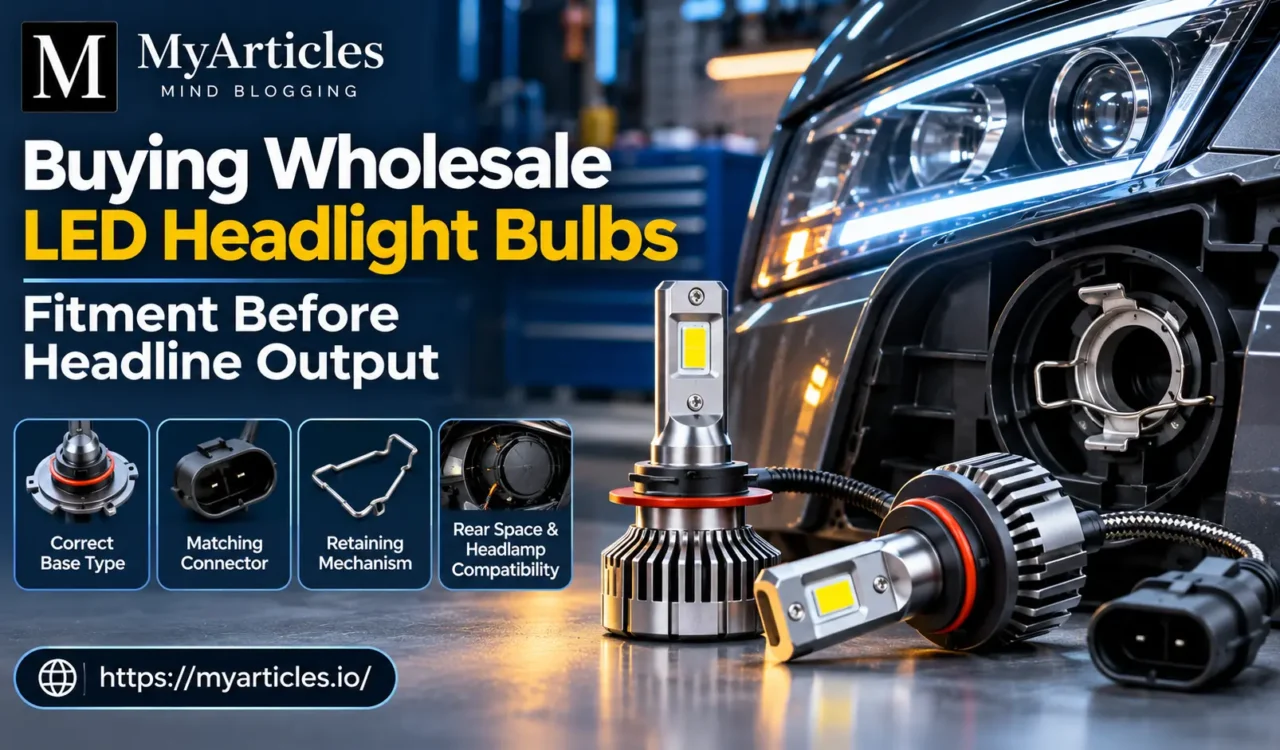
The largest lumen figure is an easy detail to copy into a purchasing spreadsheet. It is a poor substitute for knowing whether a bulb will install correctly in the headlamp the customer actually owns. For distributors, fitment is not one yes-or-no field. It combines the base, connector, retaining arrangement, rear space, cooling conditions and the resulting beam. Those questions should lead the shortlist before output becomes the deciding factor.
Start with the original bulb and the housing
Build the inquiry around the original bulb code and the intended vehicle application. Include the lamp function and any available housing identification. Then document connector shape, mounting tabs, retainers and the space behind the bulb. A base name is a useful starting point, but it does not describe everything surrounding the installed product.
TRENT’s headlight category specifically cautions that grouped H11, H8 and H9 listings do not establish interchangeability. Fitment depends on the connector, mounting tabs and lamp function, and the selected version should be tested in the intended vehicle. That distinction is especially important when distributors prepare compatibility tables: a catalog grouping is not an installation approval.
Compare usable configurations, not isolated numbers
Once physical candidates are identified, compare output figures on the same basis. Check whether a number refers to one bulb or a pair, and keep the stated model variant attached to it. A product family name without its power version can create confusion between quotations, samples and retail copy.
The TRENT category lists GH13 at 32W and 3,200 lumens per bulb, GH9 at 55W and 5,500 lumens per bulb, and GH10 in 65W and 80W variants. GH13 is described as compact and fan cooled. These facts establish different starting configurations, not a conclusion that one is best for every housing. Buyers still need to assess the installation and operating conditions of the selected option.
Put the sample inside the intended headlamp
For buyers comparing wholesale LED headlight bulbs, TRENT’s category recommends sample checks for base, connector, retaining adapter, rear clearance, beam distribution, fan space, flicker and dashboard warnings. This is a more useful procurement sequence than accepting a bulb because it illuminates on a bench. A successful electrical connection is only one part of a satisfactory installation.
Create a repeatable sample record with photographs, the exact bulb variant and the tested housing. Note whether the rear cover closes, whether wiring can be secured appropriately and whether cooling airflow remains available. Evaluate beam behavior in that housing rather than treating bulb output as a direct measure of useful illumination. Where a result is uncertain, keep the application unapproved until it receives an appropriate review.
Keep electronics and market eligibility separate
Dashboard behavior is an application-specific test question. A sample that operates normally in one vehicle does not justify a universal CANBUS compatibility statement. Record the vehicle configuration and the conditions under which flicker or warnings were checked. Confirm any additional electrical accessories separately and include their effect on installation space and instructions.
Likewise, a bulb’s listed specifications do not establish universal road legality. TRENT’s category directs buyers to seek model-specific documentation for their market. The distributor should determine which requirements apply to the proposed use and have the relevant evidence reviewed. Packaging and sales teams need the same boundaries so that a limited technical finding does not become an unrestricted road-use claim.
Build the first order around validated demand
Quantities should follow the applications the distributor can support, not simply the widest possible base assortment. The category states a minimum of 100 pairs per series, with mixed bulb bases within that series; custom development is quoted separately. That structure can support a selected mix, but it should not encourage adding untested bases just to make the order look comprehensive.
Link each purchase-order line to the approved series, variant, base and supporting fitment record. Keep unresolved applications outside broad compatibility claims. Headline output remains a relevant specification, but only after the product’s installation and beam behavior have been evaluated. A disciplined first order gives the sales team a narrower, better-supported promise and provides a sound basis for expanding the range later.